
Apothecaries and Chemists in Doncaster
Attempts to treat or cure disease are as old as disease itself. In medieval times, those who prepared and sold medicines were known as apothecaries, but they were generally attached to the grocery business. The Society of Apothecaries was established in 1617, when they broke away from the Grocers’ Company. For the first time, an apothecary was a distinct profession. The work was taken very seriously and only after a seven-year apprenticeship could a man (not a woman!) be considered a qualified apothecary.
However, the understanding of the human body was in the seventeenth century very limited. It was believed that the four humours of blood, phlegm, black bile and yellow bile existed in liquid form in the body, and illness and disease were caused when the humours were imbalanced. It was believed that each person had a unique humoral make up, and any treatment had to be tailored to the individual. Treatments for disease ranged from the bizarre to the downright dangerous. Bloodletting was a favourite cure for many ills, with blood being removed from a patient either with leeches or by cutting a vein. Compounds created from mercury or arsenic were common, as was the use of powdered Egyptian mummy. A wide variety of herbs were used in medicines, including poisonous ones such as hemlock and deadly nightshade. Many different animal parts were also ground up and administered. For all their genuine attempts at curing disease, most of the remedies provided by apothecaries were completely worthless.
Is it possible to discover how many people were working as apothecaries on Doncaster in the seventeenth century, following the establishment of the Society of Apothecaries? There are many records available to us that help us understand the diverse trades and professions in Doncaster from the nineteenth century onwards, but how do we gain an understanding of who might have worked in Doncaster before records such as census returns and trade directories begin? One method is to study the baptism records from St George’s Church, as the occupation of the child’s father was often given. This tells us that between 1632 and 1791, there were 60 baptisms of infants whose fathers were apothecaries, from a total of 21 different men. The first mention of a Doncaster apothecary is in 1632, when Zanquet Browne, the son of George Browne the Apothecary, was baptised on 12th April 1632. Rather alarmingly, George Browne himself was buried in the churchyard just three days later. The last child of an apothecary is Harriet Caley, the daughter of Francis Caley the Apothecary, who was baptised in March 1791. One of the most prominent Doncaster apothecaries was George Rasine, who had twelve children baptised between 1658 and 1677. He also became Mayor of Doncaster in 1674.
In 1791, an advert for an apothecary to work in the new Doncaster Dispensary was placed in a local newspaper. This hospital opened on Hallgate the following year and was intended to provide free medical and surgical treatment for those who could not afford to pay for professional care. The successful applicant was expected to live within the building and “devote the whole of his time to the duties of his office”. The generous salary he commanded would reflect the all-encompassing nature of the work. Potential patients had to present a letter of recommendation from a subscriber to the charity, and if selected for treatment, they were expected to grovel their thanks to their benefactor.
Towards the end of the eighteenth century the term ‘apothecary’ began to be replaced with ‘chemist’. Surviving records show that the first use of ‘Chemist’ to describe the profession in Doncaster was in an apprentice indentureship of 1768. We first see the term used in a baptism record in 1833, followed by an explosion in the number of men working as chemists in the town. Indeed, there were approximately 60 to 70 chemists or chemists’ assistants trading between 1800 and 1900. Anyone could operate as a chemist and there was no regulation covering what could or could not be sold to unsuspecting members of the public. A register of chemists was established in 1852, but adding your name to the list was entirely voluntary. Chemists made all their pills, syrups, tonics and ointments by hand, with all manner of ingredients. A chemist would typically own premises in a town centre, where they would mix and dispense medicines, and they would often sell other products like tobacco and alcohol as well. Many pills and potions were sold as cure-alls for everything and there was no benefit from most medicines, while some were downright dangerous. There was no regulation of drugs and medicines, no testing of products, and in the first part of the nineteenth century anything could be bought over the counter. Opium was a general favourite, while laudanum, which was opium dissolved in alcohol, was commonly used in medicines for babies. A popular tonic was Godfrey’s Cordial, known as ‘Mother’s Friend’, which contained opium and was essentially used for drugging babies to keep them quiet. Mrs Winslow’s Soothing Syrup for children contained morphine and was a factor in many infant deaths. Heroin was also a common ingredient in children’s cough medicine!
One of the first men in Doncaster to refer to himself as a chemist was William Dunhill, who was born in the town in 1808. The baptism record of his son William Workman Dunhill from 1837 confirms his occupation. William Dunhill operated his business from premises at 2 Frenchgate up until some point before 1871, at which time this building was occupied by Henry Woodhouse Shaw and Matthew Henry Stiles. Dunhill moved to premises on Hallgate, and died in 1879. His son William Workman also became a chemist, and developed a partnership with M H Stiles, which lasted until his death in 1887.

Dunhill’s assistant Matthew Henry Stiles eventually became one of the most well-known chemists in Doncaster. He was born in Lutterworth, Leicestershire, in 1846 and was apprenticed as a chemist and druggist in Rugby. By the time of the 1881 census, he was a pharmaceutical chemist employing three men and two boys. Matthew married Alice Hewett in 1877, and the couple went onto have six children. Despite increasing success in his business life, his personal life was one of considerable tragedy. His eldest child Harold Watson died at the age of eight months in 1878, followed by the death of his baby daughter Edith at the age of three weeks in September 1885. In June 1889, his wife Alice also died, at the age of 39, leaving him alone with four surviving children under the age of ten. Tragedy struck again in 1894, when his “dearly loved and only daughter” Alice Dorothy died suddenly at the age of eleven. His second surviving son Edgar Watson would later die from wounds sustained during the First World War in 1918.
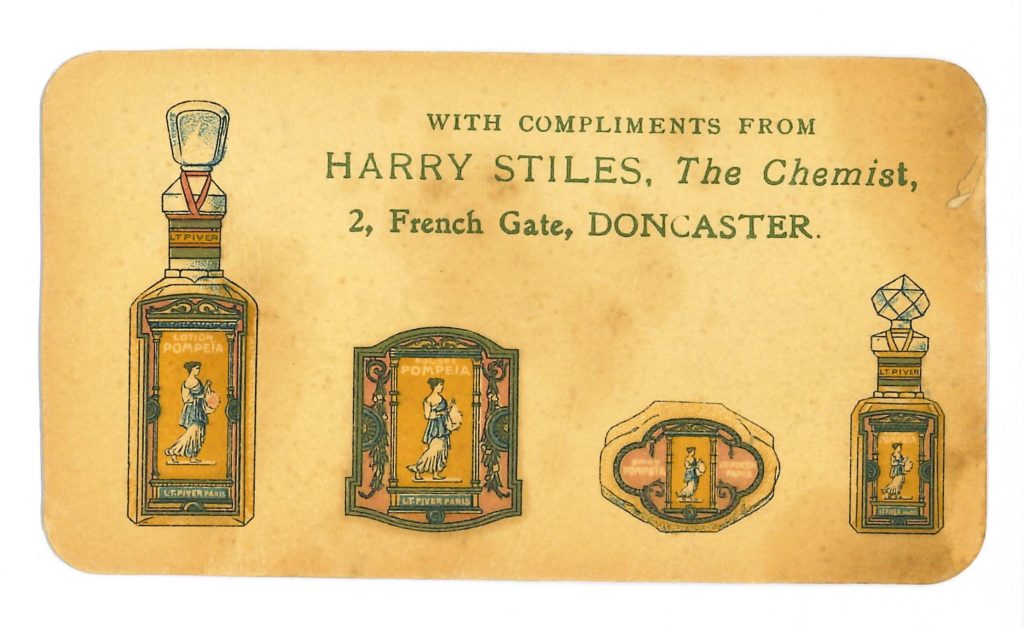
Matthew Stiles’ chemist business continued to go from strength to strength, and eventually he became the first President of the Doncaster and District Association of Pharmacists. He began a partnership with his son Henry ‘Harry’ William Stiles, who had also trained as a chemist, and they continued to work together from their premises on 2 Frenchgate, until Matthew retired in 1917, and the partnership was legally dissolved. Harry continued to operate as a chemist, and initially enjoyed the same success as his father, employing several assistants by the time of the 1921 census. However, this run of success did not continue, as Harry was forced to file for bankruptcy in 1932. He claimed that competition from other chemists, plus the failure of his venture into women’s hairdressing, had left him unable to meet his debts. This was the end of the 100-year-old business at 2 Frenchgate, Doncaster.
Matthew Stiles remained very active in the years following his retirement. He was one of the three founder members of the Doncaster Microscopical Society, a member of Doncaster’s new Museum and Art Gallery Committee, and he also became the town’s unofficial meteorologist having kept weather records for many decades. He even took up golf at the age of 60 and played until he was in his eighties. Matthew Henry Stiles died on the 9th May 1935 at the age of 89 and left a fortune of about £1.5m in today’s money. He also made it clear that his son Harry would not benefit from his estate until all his debts had been paid! However, thanks to the generosity of his father, Harry was granted his discharge from bankruptcy in December 1935. He died just over four years later, on 7th January 1940.
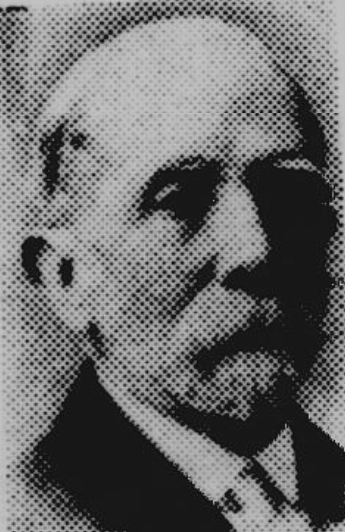
Matthew Henry Stiles’ former colleague Henry Woodhouse Shaw was born in Melton Mowbray, Leicestershire, in 1843 and married Margaret in about 1872. Their son, also named Henry Woodhouse, was born on 10th November 1874. By the time of the 1881 census the family had moved to 6 Market Place, where Henry was now a pharmaceutical chemist. Sadly, however, he died in February 1884, aged only 42. Margaret seems to have taken over the running of the chemist’s shop at 6 Market Place, but in 1890 she married another chemist by the name of Samuel Lester, who became the proprietor. However, this marriage does not seem to have been successful, as for reasons unknown to us today, Margaret began to drink following her second marriage. She separated from Samuel in about 1897, and her son Henry Woodhouse took over the shop once he qualified as a chemist and druggist. Sadly, Margaret died from alcohol poisoning in 1905. Henry Woodhouse Shaw II married Florence in 1904 and continued to operate as a chemist from 6 Market Place. The couple had no children.
The Market place in Doncaster was home to several other chemists’ shops. Stephen Atkinson, who was born in 1814, set up as a chemist in Baxtergate in the 1840s, and had relocated to premises at 5 Market Place by the time of the 1851 census. He soon moved next door and operated from 6 Market Place until his retirement in the 1870s, when the shop was taken over by Henry Woodhouse Shaw. Stephen had married in 1846, to Ann Ogley, but they did not have a child until 1854, when their son Arthur was born. Arthur seems to have led something of a charmed life, perhaps because of his unexpected arrival in his parents’ marriage, as he never had a job and lived his life as an ‘annuitant’ or a ‘gentleman’. When Stephen died in 1893, he left £900 to Arthur, who continued to live off his family’s fortune. He married Julia Ducket in 1899, but his life ended in tragic circumstances in 1910, when he hanged himself while staying in Blackpool to try and improve the bronchitis from which he suffered. A year later, his widow Julia married a farmer from Arksey who was 16 years her junior!
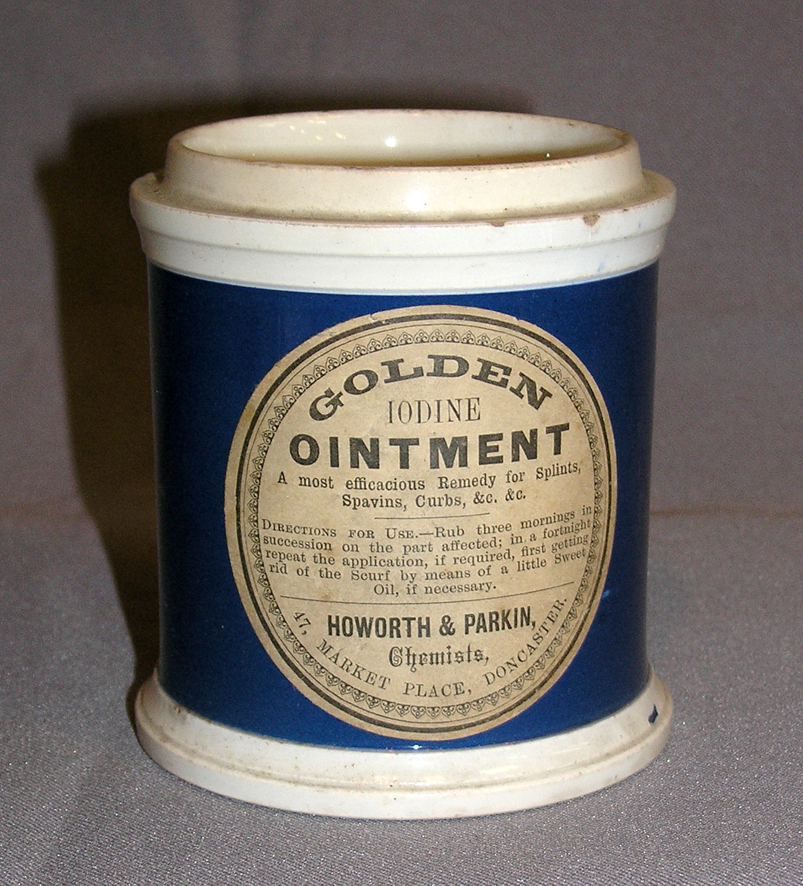
Another Market Place chemist was Charles Parkin, who started his working life as a Chemist and Druggist Assistant at a practice on East Laith Gate. By the time of the 1881 census, he had acquired premises at 47 Market Place, where he worked as a Retail Chemist and Druggist in partnership with James Howorth. He was still working from here at the time of the 1911 census, until his son Frank took over the business. Charles died in 1928, but Frank was still working as a pharmaceutical chemist from 47 Market Place when the Second World War broke out in 1939.
Like the apothecaries before them, many Doncaster chemists held senior positions in Doncaster civic life. James Howorth, the partner of Charles Parkin, was elected as Councillor for the East Ward in June 1870 and placed on the finance, watch, market and sanitary committees. He was also an Alderman for the Borough of Doncaster. His personal life, however, seems to have suffered serious strain. Following the death of his fourteen-year-old daughter Sarah Ellen in 1870, he does not seem to have lived with his wife Anne for many years. They are listed as living separately on the 1871, 1881 and 1891 censes, with Anne recorded as a ‘lodger’ or ‘visitor’ at various addresses. However, following James’s retirement, he moved from Doncaster to Bridlington, where he seems to have been reconciled with Anne by 1901, as they were living together in a house in the town. James Howorth died in 1902, and his body was brought back to Doncaster where he was buried in Hyde Park Cemetery.
John Charles Marr was born in Fishlake in 1865. He had rather a troubled early life, as his father George died when he was only two, and he was recorded as an ‘invalid’ at the age of 15 on the 1881 census. He also was admitted to the South Yorkshire Asylum for a period of three months in 1888 suffering from temporary insanity through over-study and being ‘disappointed in love’. Somewhat alarmingly, he was described as ‘not improved’ on his discharge! However, John managed to become a chemist’s assistant, and following his marriage in 1904 he set himself up as a Chemist and Druggist with premises at 5 Holmes Market in Doncaster. He was still practising as a chemist at the time of the 1921 census. He died in 1947 at the age of 82.
Like most professions in Victorian England, the role of chemist was limited to men. However, there were a few women who defied convention. Mary Ann Stables was born in Brigg in 1857, and married Harry Balderston Hart, a labourer, in Doncaster on 26th December 1881. She was unable to sign her own name on the marriage resister. When the 1891 census was taken, Mary Ann was recorded as widowed with two children, and her occupation listed as ‘Chemist and Druggist’. Her youngest child was born just a year before the census, but her husband Harry disappears from the records. He may indeed have died, but it is possible that he abandoned his family, meaning that Mary Ann chose to record herself as a widow. Ten years later, she was still working as a chemist. It was not unusual for women to take over their husbands’ profession, and Harry Hart may indeed have set himself up as a chemist before he is alleged to have died, but it is also possible that Mary Ann decided for herself to work in the role as a means of supporting her children. She died in 1943 at the age of 86.
Elizabeth Turner was born in Doncaster in 1843. She married the chemist James Sorsby in 1866, but tragedy soon followed. Their first child Alice died aged six months just a year later, and James himself died aged only 33 in November 1868. Elizabeth was pregnant again, and her son James was born the following year. She was working as a shopkeeper on Cleveland Street in 1871, and by the time of the 1881 census she was living at St James’ Street and her occupation was listed as ‘Chemist’. Ten years later, however, she was able to live on her own means rather than work. Elizabeth died in 1900 and was buried in Hyde Park Cemetery with her husband James and baby daughter Alice.
Rose Annie Brooke married chemists’ assistant Walter Woodhouse Smith in 1891. Their son Walter Reginald was born in 1896, but sadly Walter Woodhouse died at the age of only 33 in 1900. Rose Annie continued to live at their residence of 16 Market Place, and a year after Walter’s death was recorded as the employer of Frank Brooke, her brother, who was a Chemist Manager. Ten years later Rose Annie was now working independently as a chemist dealer. Sadly, her only son Walter Reginald died at the age of 20 in 1916 from wounds sustained on the battlefield during the First World War. He was buried alongside his father in Hyde Park Cemetery.
The presence of women working in chemists’ shops begins to increase considerably by the turn of the twentieth century. By the time of the 1911 census, women had begun to appear much more frequently as chemists’ assistants, or packers of goods. By 1921 a significant number of women were employed as assistants in chemists’ shops, leading the way for women’s progression in the industry. One of the first qualified female chemists from Doncaster was June Lindsey, born in 1922. She completed her studies at Cambridge University in 1944, although as a woman she was not allowed to graduate. Her work on DNA and hydrogen bonds was later used to determine the structure of DNA, but the importance of her research was never acknowledged or recognised at the time. June was finally allowed to collect her bachelor’s degree in 1998, when Cambridge University granted over 900 women the degrees they earned prior to 1948, which was when the university first permitted women to graduate. June Lindsey died in Ottawa, Canada, in 2021 at the age of 99.