Doncaster Scientists and Engineers
Doncaster has been home to many famous and influential people, including these 9 men and women who have made important contributions to science, technology, engineering and mathematics.
Madge Adam – Solar Physicist
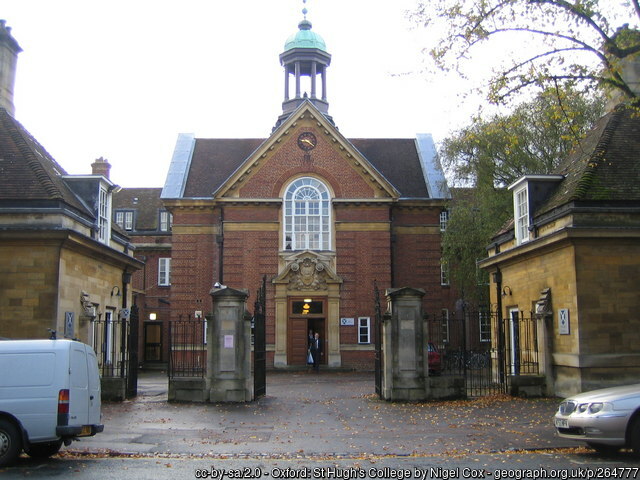
Born in London in 1912, Madge Adam’s family relocated to Yorkshire at the age of 6, after her father was killed in the First World War, and her mother had to move into her grandparents house. Madge won a scholarship to Doncaster High School, and later gained another scholarship to study physics at Oxford University.
During her time at Oxford a new solar telescope (a telescope used specifically to observe the sun) was built at the university’s observatory. Madge asked to join the research team and became the first research student, and first solar physicist, to study at the university’s observatory. She was a lecturer in the university’s astrophysics department for over 40 years and was renowned for her work on sun spots and their magnetic fields. Madge died in 2001 at the age of 89.
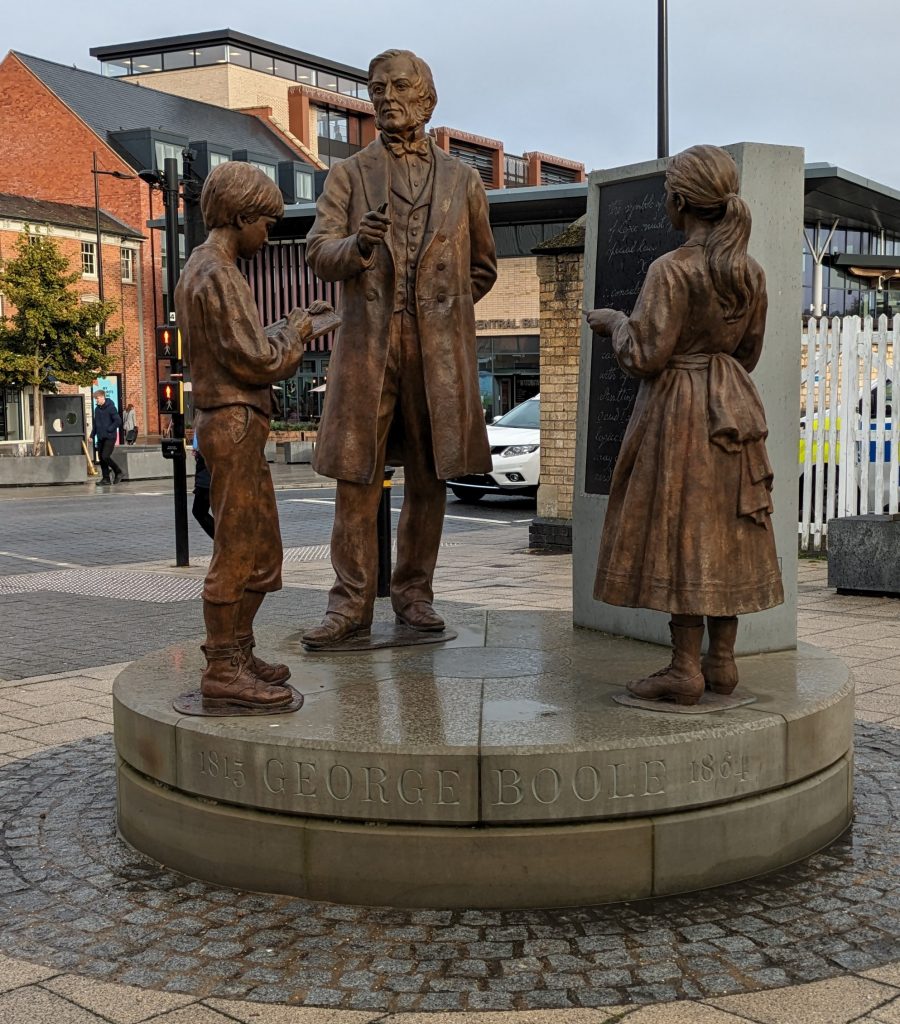
George Boole – Mathematician
Originally from Lincoln, George Boole began teaching at William Heigham’s school on South Parade, Doncaster, at the age of 16, in 1831. While walking across Town Fields one lunchtime he was thinking about mathematics and came up with a concept now known as Boolean algebra. His ideas were published in “An Investigation of the Laws of Thought on Which are Founded the Mathematical Theories of Logic and Probabilities” in 1854.
Boolean algebra is a system of rules to help people think logically. For example if only one possibility out of a choice of two is allowed, such as you can either have burgers or pizza, but not both, you can state this in the form of a mathematical equation. This is written as x Å y = (x Ú y) Ù Ø(x Ù y).
Boolean algebra is used extensively in computing. Computers contain electrical circuits, called logic gates, that are designed to obey the rules of Boolean algebra. For example, if you click the mouse and press a key, the appropriate logic gates are activated, so that the mouse-key combination always does what you expect. The apps on your phone also rely on Boolean algebra. In short, it tells the computer to do the job it was designed for. You wouldn’t be reading this web page without it.
By the time he was 19 Boole moved back to Lincoln where he set up his own school. He corresponded at length with other mathematicians and later became the first professor of mathematics at Queen’s College, Cork. He died in Ireland at the age of 49.
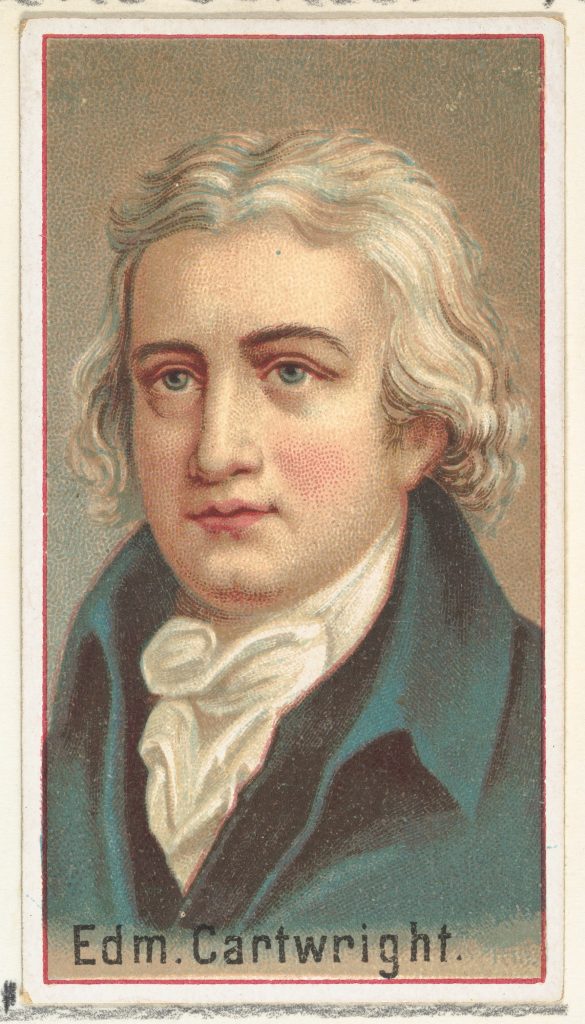
Edmund Cartwright – Inventor
Edmund Cartwright was originally from North Nottinghamshire. Educated at Oxford University, he joined the clergy. He lived in Doncaster in the 1780s, where he developed and patented the first mechanised loom. This meant that weaving could be done much more quickly and easily. He set up a weaving factory in Doncaster but he knew very little about industry and the factory closed in 1793, sending Cartwright bankrupt. Cartwright’s design was modified over the next few decades until a fully automatic loom was produced and by the 1850s, there were over ¼ million power looms in England. The textile industry played a huge role in the Industrial Revolution, and also in the use of slaves in the USA. Slaves were used to pick cotton in the American South, which was then sent to the UK for spinning and weaving. In 1809 the House of Commons voted to give Cartwright £10,000 in recognition of his invention and the fact that it paved the way for a huge industry.
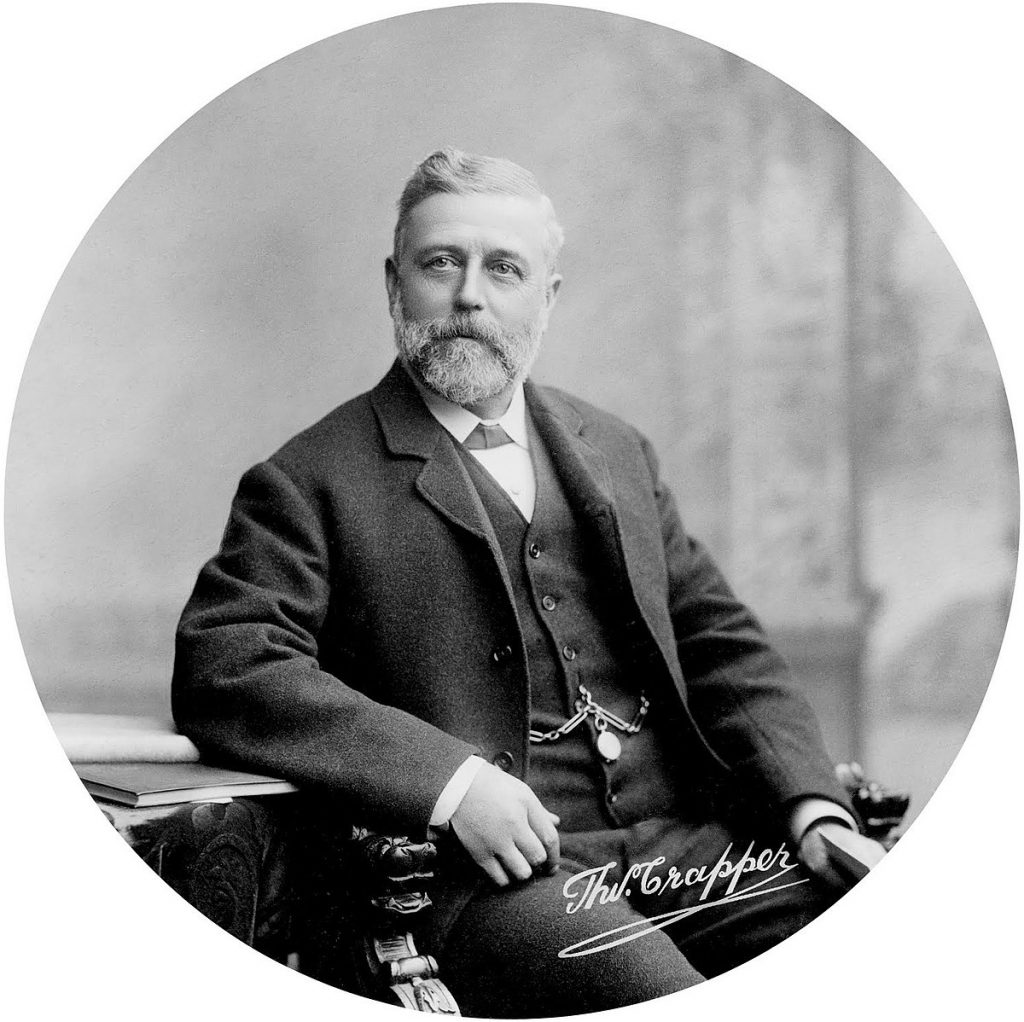
Thomas Crapper – Sanitary Engineer
Thomas Crapper was born in Thorne in 1836. At the age of 17 he moved to London, apprenticed to his brother who was a plumber. He set up his own business as a “sanitary engineer”, producing toilets for indoor use and manhole covers.
Thomas Crapper is often associated with being the person who invented the flushing toilet. Although this was not the case, he did make improvements to their design, developing ballcocks and the U bend. He was the first person to set up a bathroom showroom, which popularised the idea of having toilets in peoples’ houses rather than outside as they had been before. The Prince of Wales, later Edward VII, asked him to install 30 toilets inside Sandringham, which gave him a royal warrant. Thomas Crapper died in 1904 but the business that he founded continued for the next 60 years.
Nigel Gresley – Railway Engineer
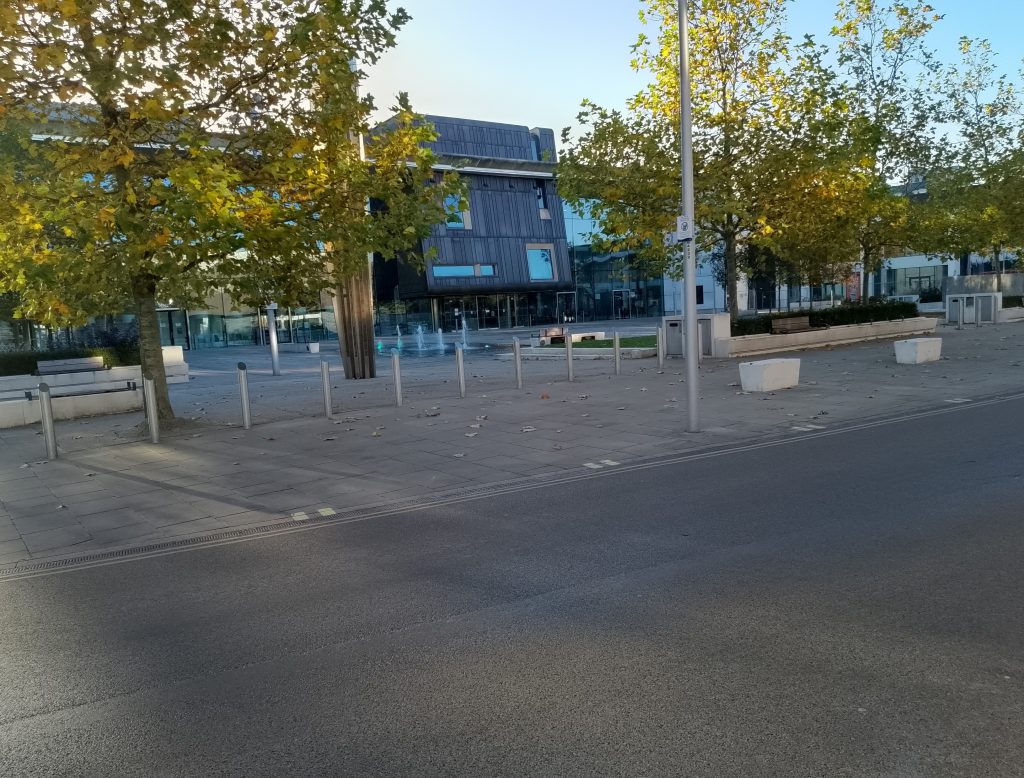
Originally from Edinburgh, Herbert Nigel Gresley was born in 1876. He was apprenticed at Crewe Railway Works, and after working for the Lancashire & Yorkshire Railway for many years, he became carriage and wagon superintendent at the Great Northern Railway in 1905, based at Doncaster Plant Works. He later became the Chief Mechanical Engineer at the GNR, later at the London & North Eastern Railway. He lived on Thorne Road, not far from the hospital.
Gresley designed several classes of locomotives, including the Pacific class A3 Flying Scotsman which was the first locomotive to reach 100mph in 1924. He also designed the A4 locomotives, including Mallard which set the fastest speed ever recorded by a steam locomotive at 126mph. One of the A4 locomotives was named after Gresley. He brought in other innovations such as a new design of valve gear, and a corridor tender, which meant trains could run non-stop for longer periods as drivers could leave the cab to have a break.
Gresley was something of a workaholic and was warned by his doctor to work less after being diagnosed with a bad heart. Gresley paid no heed as the Second World War had started and he did not want to be seen as slacking when his work was needed for the war effort. 6 months later he died in 1941. The square on Waterdale outside Cast was named after him in 2012.
Benjamin Huntsman – Steel Maker
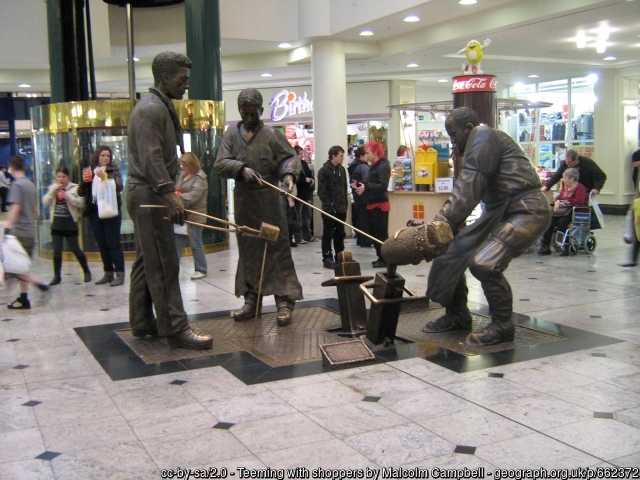
Benjamin Huntsman was born at Epworth in 1704. He went into business as a clock and tool maker in Doncaster. During this time he found the metal used for clock parts to be poor quality and started to experiment with making his own steel. In 1740 he moved to Sheffield where he was able to develop cast steel in crucibles (containers used to melt metal). He used coke, rather than coal, to heat the iron which meant it reached higher temperatures and therefore fully melted. The melting process changed its structure and made it harder.
At first the local cutlery manufacturers refused to use Huntman’s steel because they found it too hard, so he exported his steel to France, where French cutlers used the steel and imported their cutlery back to Britain. Finding themselves in competition with the French cutlers, the Sheffield cutlers had to relent and start using his steel. Steel production in Sheffield then grew rapidly and it grew from a small town into a major industrial city.
June Lindsey – DNA Researcher
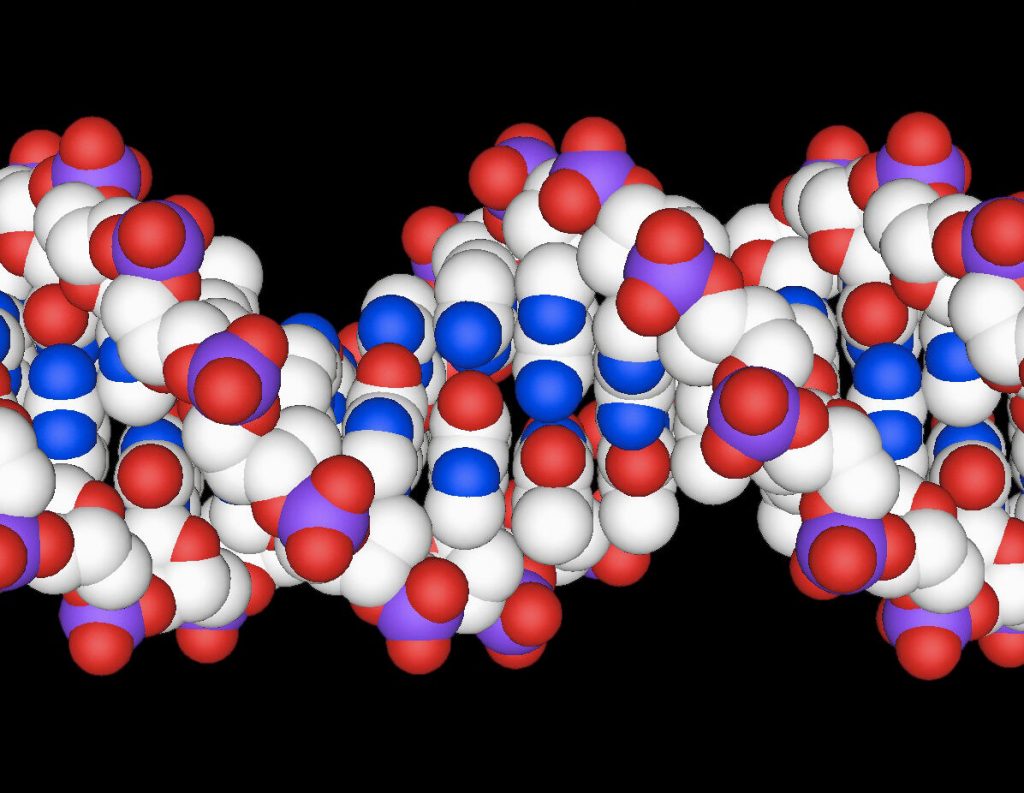
June Lindsey was born in Doncaster in 1922. She studied at Cambridge in the 1940s and continued there as a researcher after she had finished her studies. Her work on DNA and hydrogen bonds was later used by Francis Crick and James Watson to determine the structure of DNA. However the importance of her research was never acknowledged or recognised at the time. Dr Lindsey later moved to Canada where she continued her studies in Crystallography (the study of the arrangement of atoms in solid matter). She died in Ottawa at the age of 99.
George Porter – Nobel Prize winner
George Porter was born in Stainforth in 1920 and attended Thorne Grammar School. He won a scholarship to Leeds University where he studied Chemistry and went on to do a PhD at Cambridge. His research into Flash Photolysis techniques won him the Nobel Prize in 1967. Flash photolysis uses very short pulses of light to trigger chemical reactions. He won many other awards including the Copley Medal and was knighted for his work. George Porter was professor of Chemistry at Sheffield University in the 1960s and Chancellor of the University of Leicester. He died in 2002.
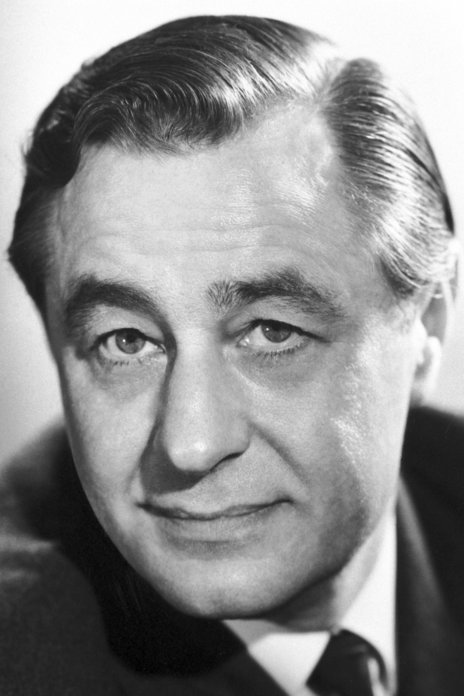
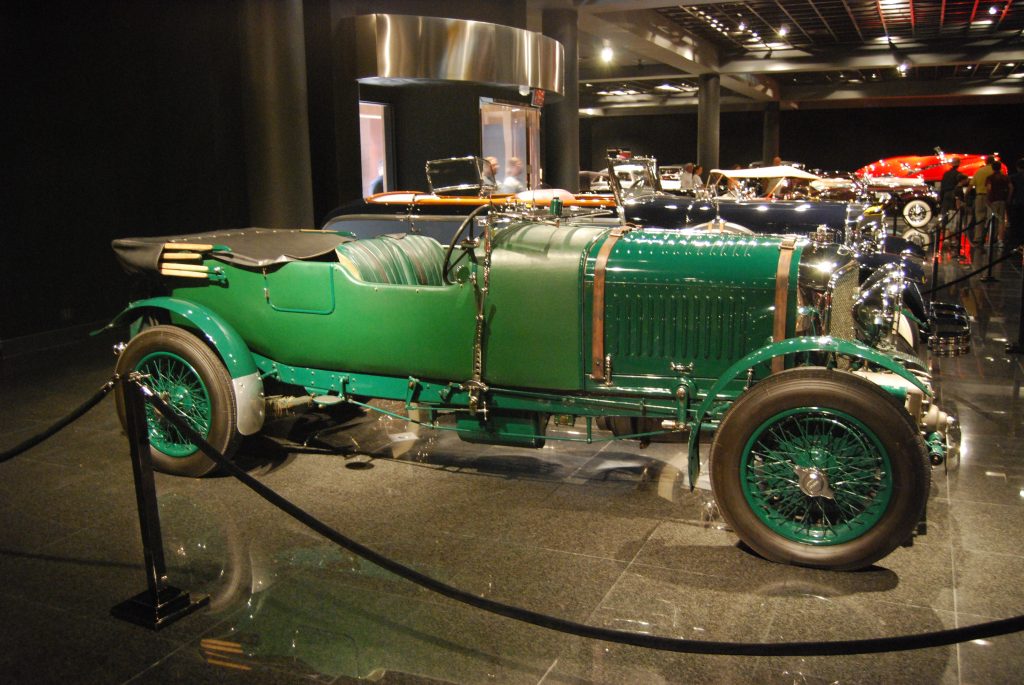
W O Bentley – Car Manufacturer
Originally from London, Walter Owen Bentley, always referred to as WO, was taken on as an apprentice engineer at Doncaster Plant in 1905, at the age of 16. After his apprenticeship he went into business with his brother selling cars. Dissatisfied with the performance of the cars they were selling, WO was inspired to use aluminium pistons in the engines rather than steel. This improved their performance and the pistons were used in Sopwith Camel aircraft during the First World War. Bentley was awarded an MBE for his contributions to the war effort. After the war, WO founded Bentley Motors. The cars were reputed to be durable and were driven in motor races such as the Indianapolis 500 and the Le Mans 24 hour race. However the cars were expensive and following the Wall Street Crash, sales fell and the company was taken over by Rolls-Royce. Bentley remained involved with the company and went on to work for companies such as Lagonda and Armstrong Siddeley, as well as working on armaments during World War 2. Bentley died in 1971.