Steps, Sticks and Swords – The Story of Doncaster’s Morris Men: Traditions and Origins
Dancing traditions
Since before recorded history, humans have been dancing for social and ritual reasons.
Dancing exists in all cultures around the globe. Many different traditions and styles have developed everywhere.
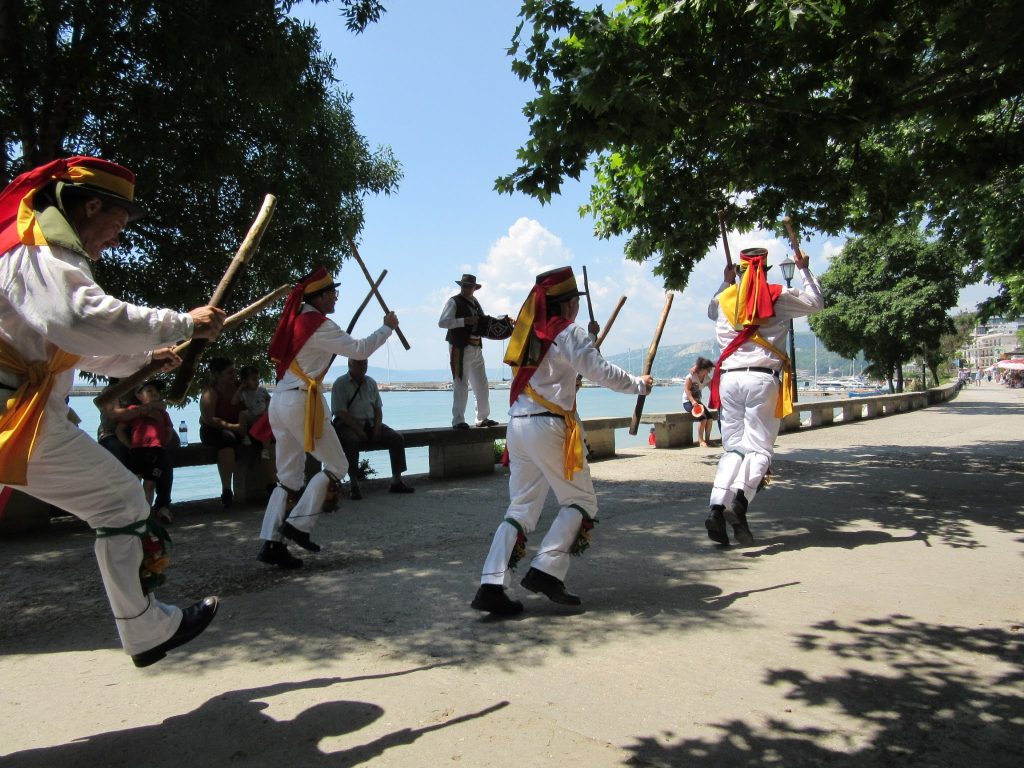
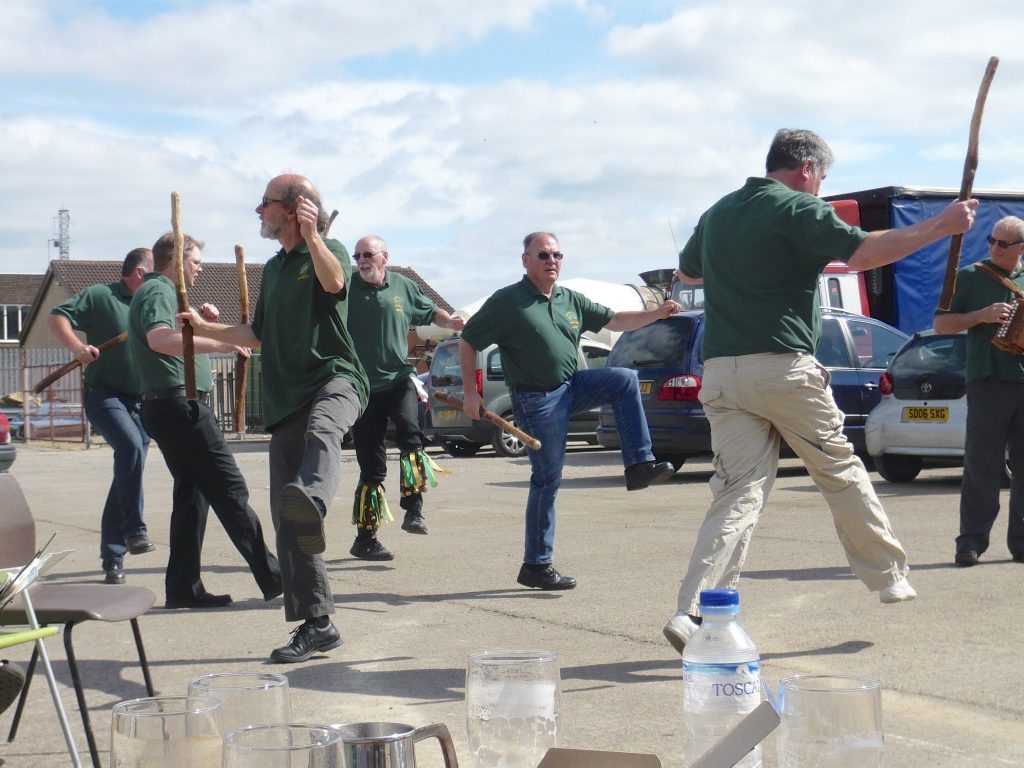
Morris dancing is a form of English folk dance. It involves rhythmic stepping and choreographed figures, usually performed by dancers wearing bell pads on their shins.
Dancers often clash sticks and swords, wave handkerchiefs, and clap hands to the rhythm of folk music.
The origins of morris dancing
The name ‘morris’ is thought to come from the word ‘moorish’. It may have arrived in Europe through the Moors in Spain.
The earliest mention of morris dancers was in 1458 when Alice de Wetehall left her heirs a silver cup sculpted with “moreys dauns”*
Over time, morris dancing became popular in agricultural communities and assumed some religious, ritual and fertility overtones.
It largely died out by the early 20th century, but was revived and documented by several enthusiastic musicians and dancers – including the best known, Cecil Sharp:
“In the Morris Dance proper, we have a dance of grace and dignity, instinct with emotion gravely restrained in a manner not unsuggestive of its older significance; full of complex coordinated rhythms of hand and foot, demanding the perfection of unrestrained muscular control” – Cecil Sharp, 1859-1924.
*source: Waddard Morris Men, programme 2002 (print)

A surviving tradition
Morris dancing has its roots in a pagan past, long before modern pastimes such as tennis, football and the like.
The tradition was passed down from father to son over the millenia, the secrets of the moves and evolutions jealously guarded. It was not for anyone to be a morris man.
Then came the Industrial Revolution. Men left the land in search of factory work. The dance suffered. By the 1850’s, only a handful of villages were able to support a morris group (often called a ‘side’).
One of the morris strongholds was the Cotswold Hills. Relatively untouched by industry, some of the Cotswold morris tradition survived and developed through Queen Victoria’s reign.
It is these dances that Green Oak Morris Men perform today. Still passed on from master to apprentice in the time-honoured way.