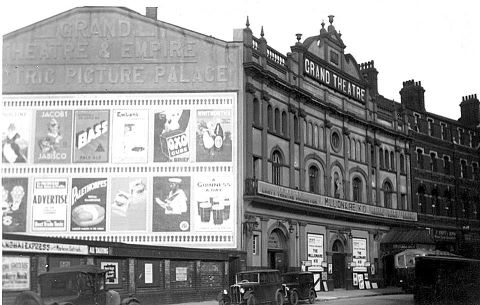
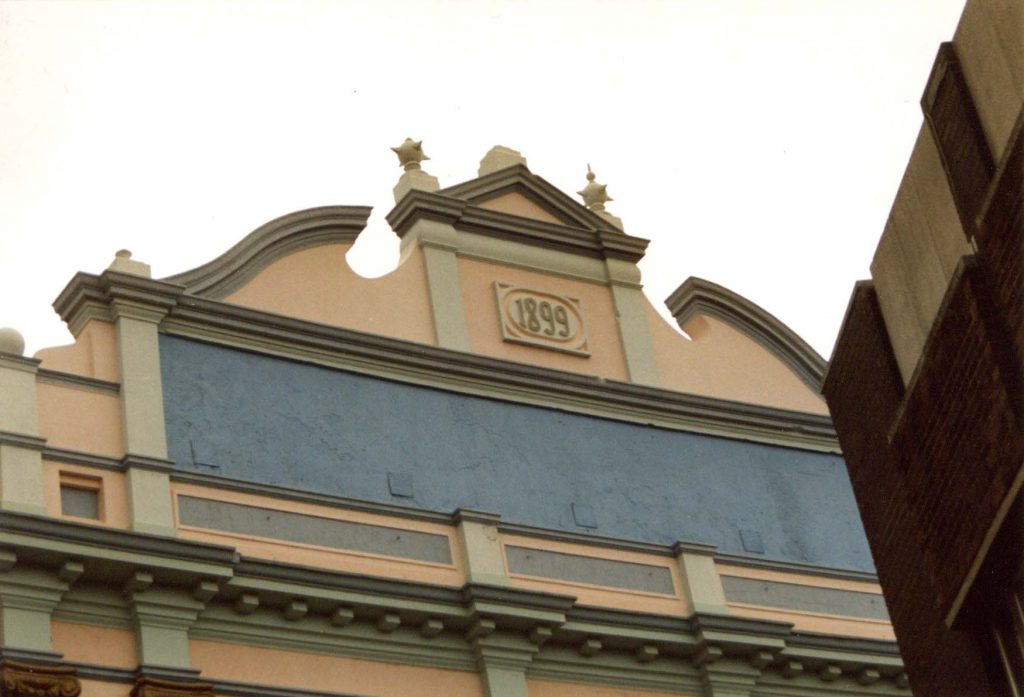
The Grand Theatre at Doncaster was constructed in 1899 and is Grade II listed, standing on what was a prominent site in a shopping street facing the main railway station. However, after improvements to the town centre in the 1970s, this ornate Victorian theatre, with its Baroquestyle façade became semi-concealed. Internally it retains an intimate auditorium.
Doncaster Grand Theatre, Heritage Doncaster
The building was threatened with demolition until an energetic local campaign eventually led to the building being listed in 1995. It remains empty and is in a poor state of repair. The Friends of Doncaster Grand Theatre is a local voluntary group, working with other stakeholders towards re-opening the theatre.
A Grand Past
The Friends of Doncaster Grand Theatre have carried out a project aimed at capturing the oral history, as recorded by individuals who remember the Grand as a working theatre and also for digitising and archiving many of the old artefacts and memorabilia from the theatre.
Material relating to the theatre from individual collections, include original posters and show programmes, as well as an 1899 account book and the original building plans. The aim of the Friends is to reserve, restore and maintain the Grand as a working theatre and to support other activities in the Grand Theatre that will enable the building to be preserved.
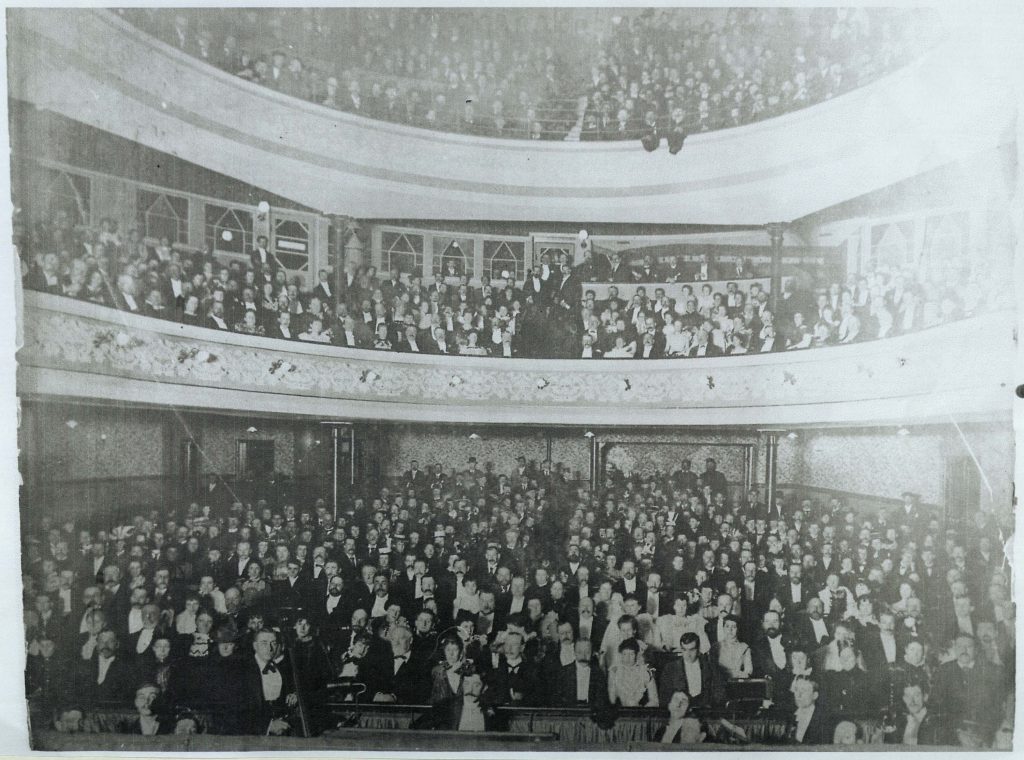
The Grand Theatre audience, by kind permission of Margaret Herbert
Key Milestones
1898
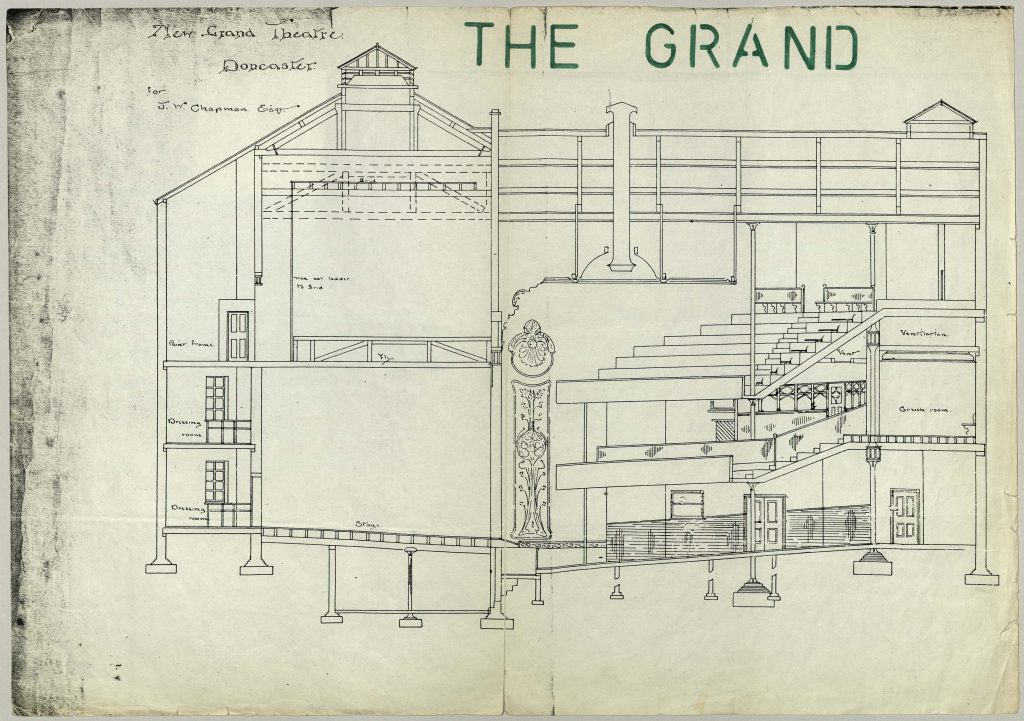
Local businessman Mr. J W Chapman, commissions local builders Arnold & Sons to construct the Grand Theatre, taking only 8 months to complete.
Plans of the Grand Theatre, by kind permission of Howard Lifsey
1899
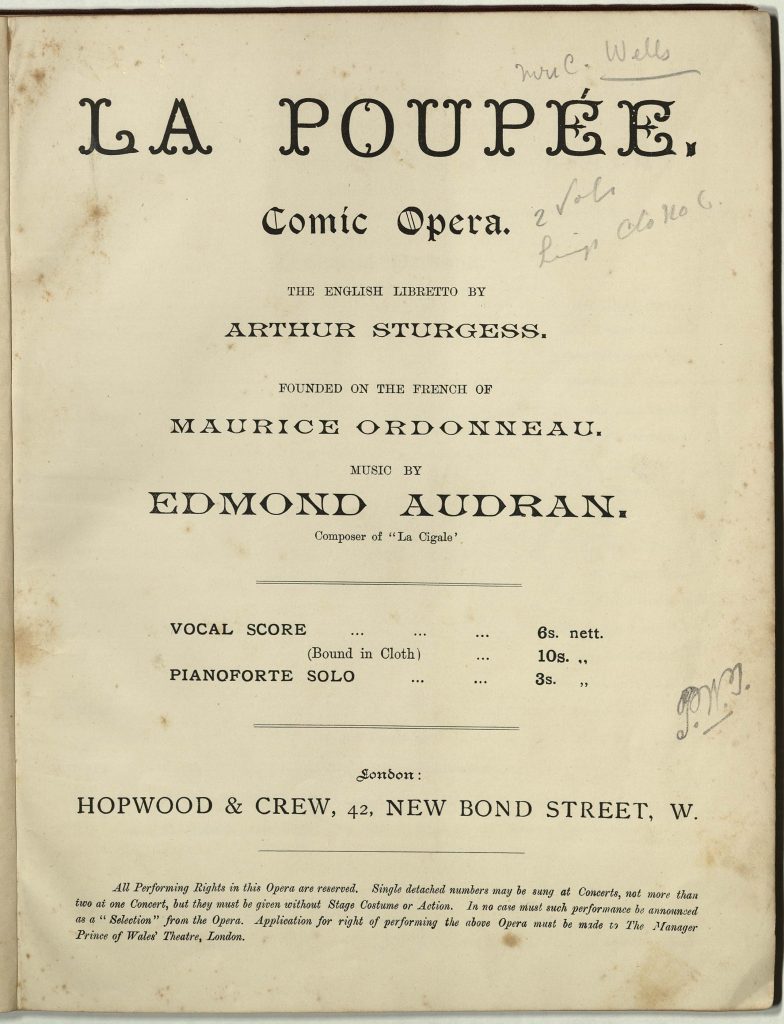
On the 27th March 1899 La Poupee was the opening night show, having come directly to Doncaster from the Prince of Wales Theatre in London.
La Poupee Score, by kind permission of Margaret Herbert
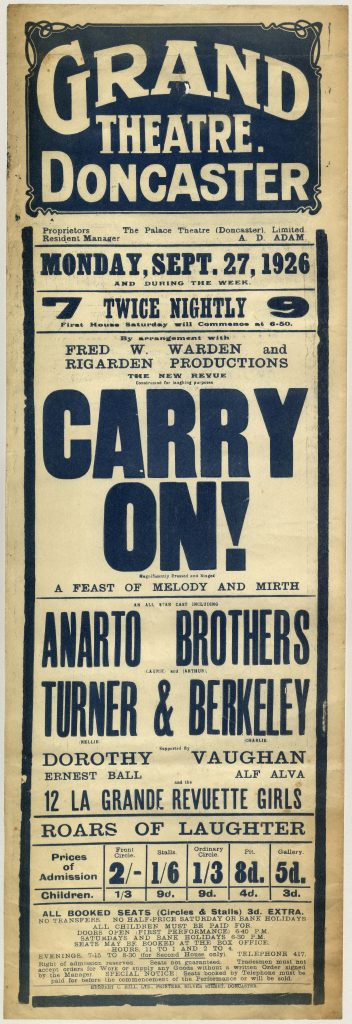
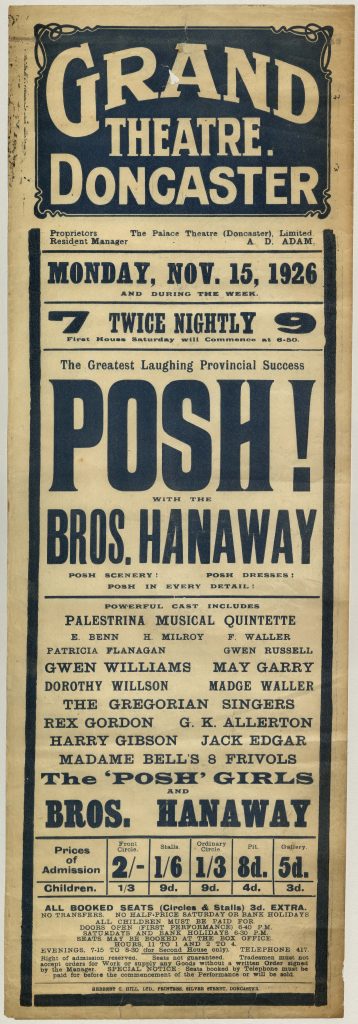
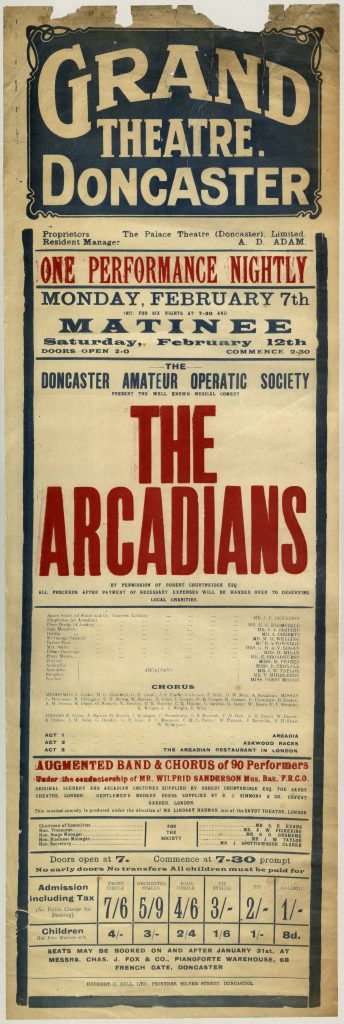
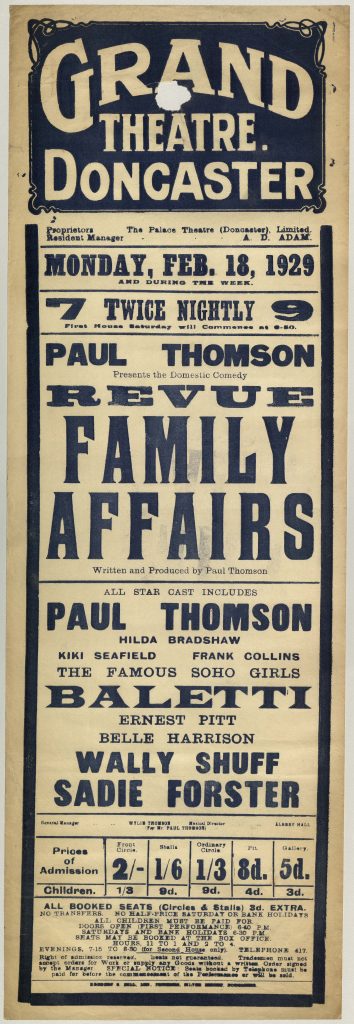
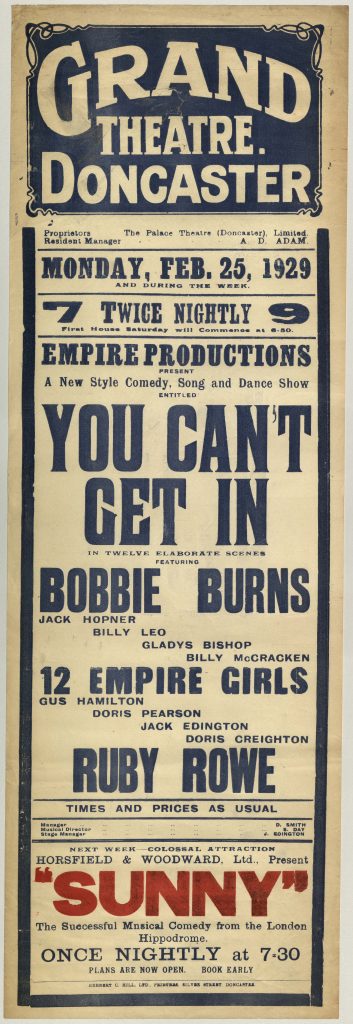
1920s Posters
Grand Theatre posters by kind permission of Howard Lifsey
1931
Structural alterations and redecoration works carried out on the theatre including extra exits from the circle connecting with the main staircase.
1958
The Grand Theatre is converted under the ownership of the Essoldo chain of cinemas. The venture was short lived with the cinema closing a year later.
1959
The Grand Theatre closes it’s doors after the final show ‘The Verdict’ and 60 years since it opened.
1961
From 1961 to 1994 the building ran as a bingo hall. Various changes were made to the internal layout and interiors during this time.
1994
The Friends of the Doncaster Grand Theatre is formed as an unincorporated group that campaigns to restore the building to use.
The Grand Theatre, by kind permission of Margaret Herbert
1995
On 20th January 1995 the theatre was Grade II listed acknowledging its historical and cultural significance after a petition was launched by The Friends of the Doncaster Grand Theatre.
1997
Doncaster Grand Theatre, the listed building consent application for the demolition of the theatre to make way for the two storey extension to the shopping centre was refused.
2021
City of Doncaster Council was awarded a grant through the Theatres Trust’s Theatres at Risk Capacity Building Programme to part fund a viability study for the Grand Theatre.
Today
City of Doncaster Council, Theatres Trust and the Friends of Doncaster Grand Theatre, working with the Frenchgate partnership who own the building strive to keep the building in the public eye.
A Grand Future
Key to its survival as a historic venue is to ensure the building does not deteriorate further, with urgent priority repairs required to arrest further decay. As the restoration would require significant investment, a phased approach with a ‘meanwhile’ use is the preferred strategy. There is a wide variety of uses that could be hosted in the large volume of the auditorium to bring community use and commercial activity back into the venue. This includes exhibition, small-scale performance, music gigs, comedy and cabaret.
“It has been saved from the bulldozers and now the emphasis should be on restoring this wonderful building into a place of entertainment and of excellence.”