
Discovering Private J: Military Discipline
Our last Military Monday blog looked at the early years Private J spent in the King’s Own Yorkshire Light Infantry (KOYLI). Born in Bedfordshire in the 1870s, he eventually found his way to Sheffield, where he joined the 2nd Battalion of the KOYLI in 1894. He served in the UK, India, and South Africa, where he fought in the Second Boer War. Health issues proved to be a consistent problem, and our research volunteers were able to find out a lot about how illness affected him and how he was treated. However, the medical entries weren’t the most unusual part of his records.
Starting in 1897, Private J was written up multiple times for disciplinary infractions. He was sentenced to 150 days in prison that year for “Using threatening language and striking”, though who exactly he struck is not recorded. After about 50 days he was released. In March of 1899 he was convicted of “1st Neglecting to obey Battalion Orders & 2nd absenting himself without leave” and served 42 days imprisonment with hard labour. Another 14 days were spent in prison early in 1900, but the cause isn’t recorded.
In October 1901 Private J is confined again, this time of “when on active service absenting himself without leave”. The sentence was 13 days. Subsequently caught trying to escape confinement, he was sentenced this time to two years in prison. His record is a little confused at this point, as multiple convictions are listed in quick order over several weeks, including “an act to the prejudice of good order and military discipline”, and “when on active service disobeying a lawful command given him by his superior officers”. This last conviction came with another 3 years in prison on top.
Maintaining discipline had been a part of life in the British Army since its inception. When significant offences against that discipline were committed, punishment could be severe. Flogging was a well-known aspect of military discipline, but the practice had been abandoned in 1888. Various kinds of confinement weren’t uncommon, with men being confined to their barracks for minor offences and imprisoned in more serious cases. Historically they would have been confined in civilian prisons, but by the start of the 20th century dedicated military prisons were in use.
After a couple of months in prison, Private J was apparently moved to the regimental depot. He was officially transferred to the 1st Battalion in February 1902 but remained in prison. In June his sentence was commuted to one year and eleven months in prison. He was released a few months early, in June 1903. Perhaps unsurprisingly, Private J transferred into the reserves almost immediately, leaving active service. After three uneventful years in the reserves, he was discharged.
Our researchers haven’t yet uncovered what happened to Private J during his time as a civilian. However, they found him in military records again in 1914, when he reenlisted with the 2nd battalion shortly after the outbreak of the First World War.
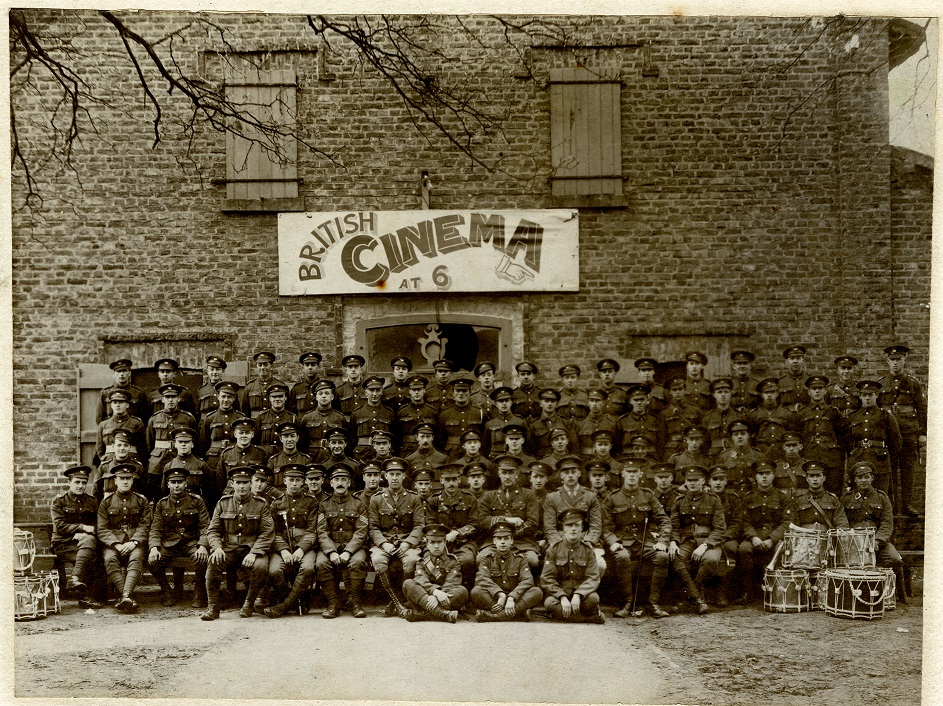
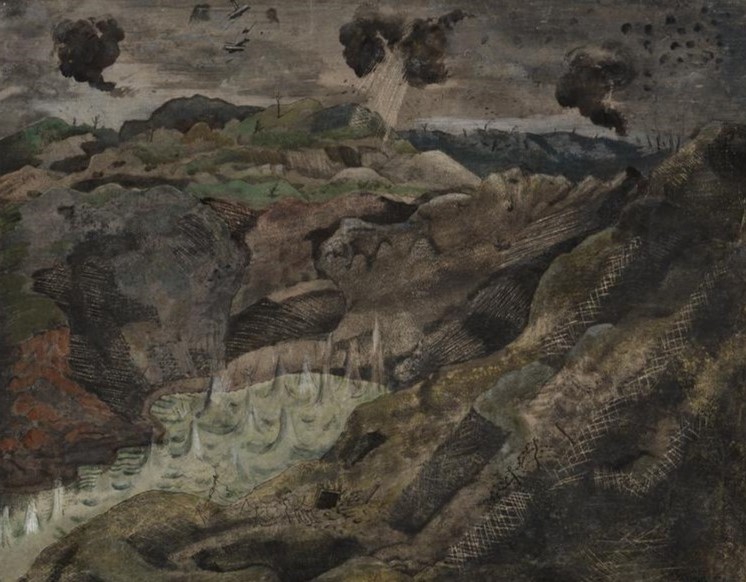
The 2nd battalion served on the Western Front, but it isn’t clear when Private J arrived there. In the spring of 1915 he took part in the Battle of Hill 60, fought near Ypres in Belgium. On the second day of the battle, on the 18 April, Private J was struck in the head with shrapnel. Exactly what happened to him immediately after that isn’t recorded, but it seems likely that he will have been moved to a Casualty Clearing Station behind the lines and perhaps to a general hospital further away from the frontlines after that. Amazingly, Private J did survive, but doesn’t seem to have fully recovered. He certainly wasn’t capable of further military service, and in July 1915 an army medical board meeting summarised him as suffering from frequent headaches, temporary loss of vision, and giddiness, all aggravated by exertion. They described him as “sleepless, weary, [and] depressed” and agreed to his immediate discharge from the army.
With that, we are unsure of what happened next with Private J. Someone of his name died in Bedford in June 1919, survived by a wife and children. However, we can’t be sure that it is him. Research continues to learn more about his life after the war.
Together with last week’s blog, you can see that our volunteers have managed to build up quite the profile on Private J. If this has piqued your interest in our research project and you’d like to learn more, or maybe even get involved, please do get in touch with us at [email protected]. We’d love to hear from you.
All images of objects from the King’s Own Yorkshire Light Infantry Collection are shared under Creative Commons Attribution 4.0 International (CC BY 4.0), credit to Heritage Doncaster.