
Uniforms of the KOYLI
At some point everyone has heard the phrase ‘the clothes make the man’, and this was doubly true for the army throughout its history. The uniforms worn by the men of the King’s Own Yorkshire Light Infantry and its predecessors showcased the thinking around how the army should function and reflected the needs of the time. Today we wanted to give a very brief overview of the sorts of uniforms you’d see when visiting the KOYLI Museum or reading about the regiment, and how they fit into trends in the army over time.
Before the 1600s most armies across the British Isles were formed for one battle, war, or campaign, and often had inconsistent equipment and training. In 1645, during the British Civil Wars, Parliament declared the formation of a standing, not temporary, army. This came to be called the New Model Army. They were expected to act and look professional and more organised than the armies of the past, and were mostly outfitted with dark red coats and hats. Uniform colours, especially between regiments, weren’t consistent initially though, with some regiments wearing grey or blue as well. By the start of the 1700s though, almost all infantry regiments were wearing a brighter red coat, normally made of wool.
Distinguishing between regiments at a glance was hard, and ‘facings’ of contrasting colours became popular. The lining of the coat was dyed a colour other than red, and the cuffs, lapels, and the edges of the coat tails were turned out and pinned in place so observers could see them quickly. The 51st Regiment of Foot, which would eventually become the KOYLI, had green facings, for example. When the 51st was raised in 1755, the standard uniform was the red coat, a black three-pointed hat called a tricorn, with a white shirt and pair of trousers or stockings, often worn with gaiters, a kind of covering for the ankle and lower leg, and black leather shoes. Officer’s uniforms were more decorated, with golden thread and decorations aplenty.
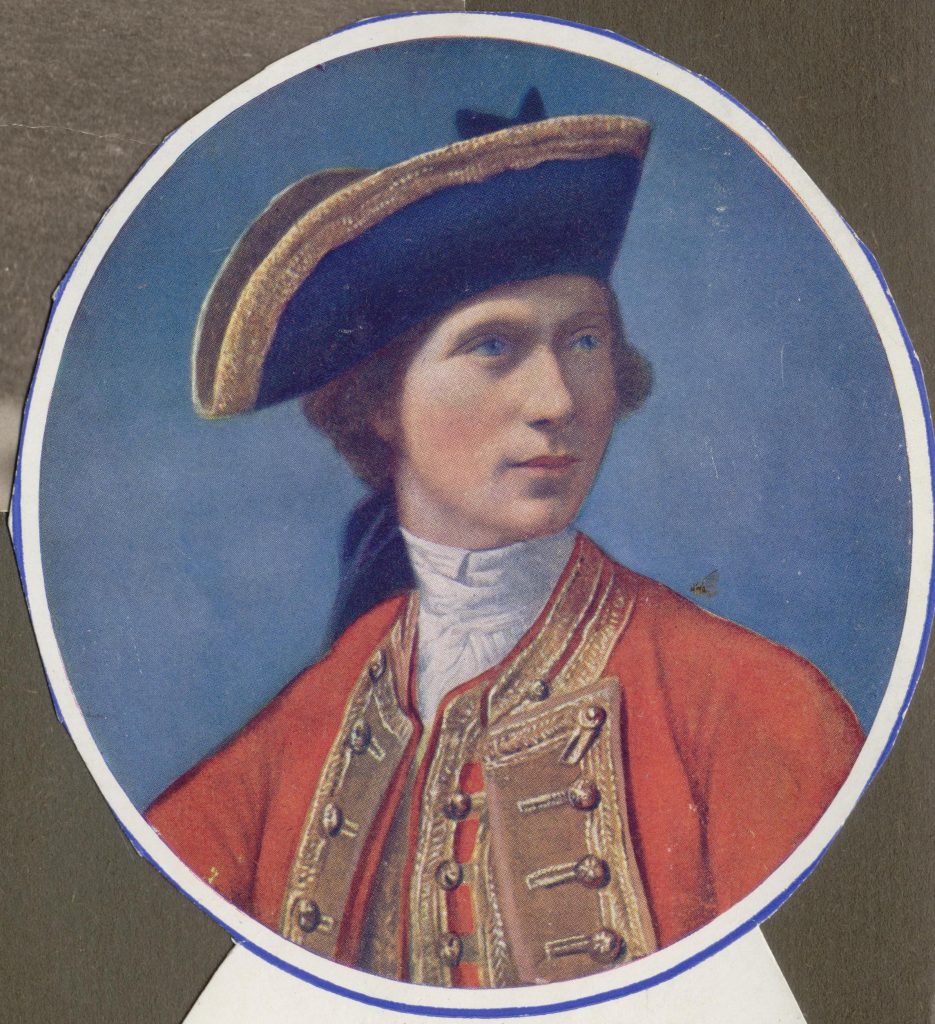
William Baillie, who was a lieutenant in the 51st at the Battle of Minden in 1759, wearing his red coat and tricorn. You can also see the fashion of the time for longer hair, kept tied back. King’s Own Yorkshire Light Infantry Regimental Collection, Heritage Doncaster
During the Napoleonic Wars through the end of the 1700s into the early 1800s the infantry were going through great changes as tactics and technology changed, and their uniforms changed with them. By the time the 51st were recategorised as a light infantry regiment in 1809, the tricorn had been replaced with the now-iconic shako, a tall, cylinder-shaped hat which often had a crest at the front. Coats had shrunk, with the tails continuing to get shorter as the 1800s progressed. Stockings had been replaced with trousers, and gaiters weren’t worn often either.

A private in the 51st, in the uniform the regiment wore at the Battle of Waterloo that year. You can see his green facings on the cuffs and collar, and the starched white crossbelt and decorations that were fashionable at the time. His tall shako hat has the badge of the 51st on it, which would evolve into the KOYLI’s own badge in years to come. Anne S K Brown Military Collection, Brown University Library.
Over the 1800s the British Empire expanded rapidly, and the army was drawn all over the world, working in climates of all sorts. This encouraged the army to continue with the changes begun at the end of the last century, with the red coats continuing to become shorter and more practical, and shoes started to give way to sturdier boots (still black though, perhaps they looked too smart to replace with another colour!). Shakos remained, though they changed in shape and size over the decades, they started to become shorter and easier to wear as well. Through all this the infantryman still wore his red coat, which had become a source of pride for the army, and was a distinctly British symbol on the international stage, at a time when many other European powers had their infantry wear other colours.
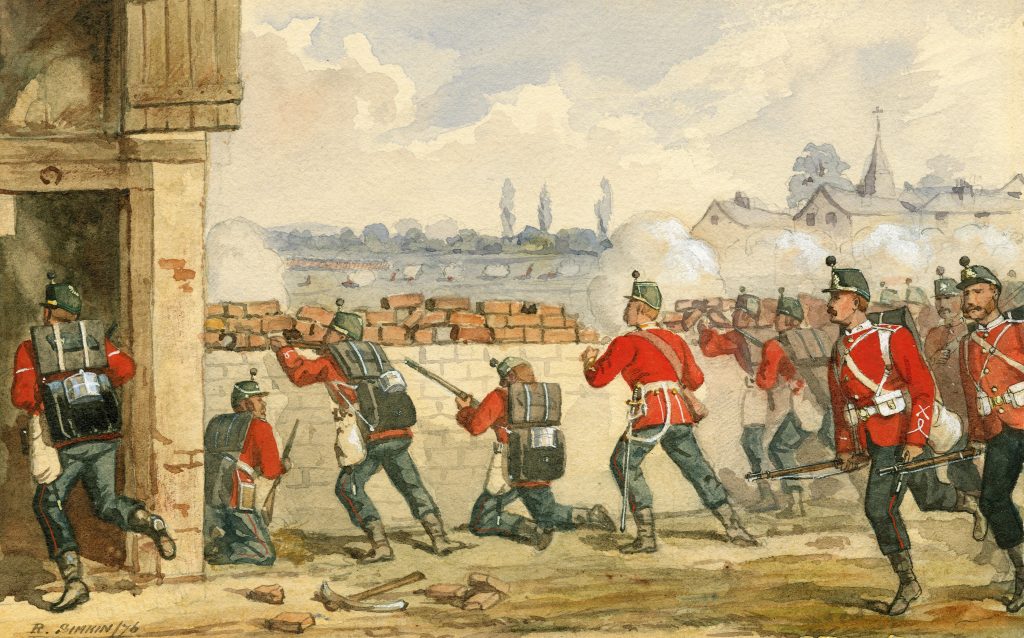
This painting depicts men of the 105th Madras Light Infantry in the 1850s. The 105th would eventually merge with the 51st to form the KOYLI, but you can see here how things have changed since 1815, with much shorter coats, sturdier boots, and shorter hats. The soldier’s heavy pack still remained a burden. Anne S K Brown Military Collection, Brown University Library.
When you think of soldiers during the reign of queen Victoria, you might think of the almost bell-shaped pith helmet, probably white, and worn by a soldier in India or somewhere in Africa. This formally replaced the shako in 1878, though it had been declining in popularity for several years before this. The pith helmet, made from a spongey plant material called sholapith, was originally used as a sunhat in tropical settings, but became part of the standard uniform for men in regiments like the KOYLI across the empire.
In 1902 the red jacket, worn in various forms for over 250 years, was retired from daily service, and a new khaki-coloured uniform became the standard. Still wool like its predecessor, khaki uniforms had been worn in desert and tropical settings like the pith helmet for several years before they became standard across the army as a whole. Changes in military technology, including firearms that were accurate over long distances, had also made men in bright red jackets tempting targets and less able to surprise the enemy. Practicality overruled tradition, and this new, modern uniform was to be formally referred to as ‘service dress.’ It remained largely unchanged from 1902 into the start of the First World War.

Serjeant John William Ormsby of the KOYLI, wearing the new woollen service dress, including the peaked cap that was introduced in 1905 and would itself remain in use for decades. You can also see the KOYLI cap badge, a descendent of the 51st badge that we saw on the private of 1815. King’s Own Yorkshire Light Infantry Regimental Collection, Heritage Doncaster.
Service dress continued to be worn in the years between the First and Second World Wars. It was still worn by members of the Home Guard during the Second World War, but the army itself had replaced it with a new uniform, known as ‘battledress serge,’ in the late 1930s, just before the war began. Still made from wool, the heavier jacket was replaced with a waist-length blouse shirt. The peaked cap was still worn, but cloth caps, berets, pith helmets, and the round steel helmet introduced in the First World War, all saw use.

A 1940 staff sergeant’s battledress. This one was worn by a soldier in the Royal Engineers, but matches the style worn by the men of the KOYLI during the war. National Army Museum, NAM. 1992-02-33-24.
Battledress made up the day-to-day wear of the men in the KOYLI from the Second World War all the way up to the regiment’s amalgamation into the Light Infantry in 1968. While at first glance the uniforms of 1755 and 1968 were very different, there were guiding principles that influenced both. Uniforms were warm, smart, and often fairly simple. They allowed the men of the KOYLI and the regiments that came before, and after, to do their work while looking professional, modern, and practical. When you look at the changes to uniforms over the decades, you can also see how small and steady most of the changes are. Who knows, perhaps a soldier of 1968 and one of 1755 might have surprised one another with how similar their uniforms really were.
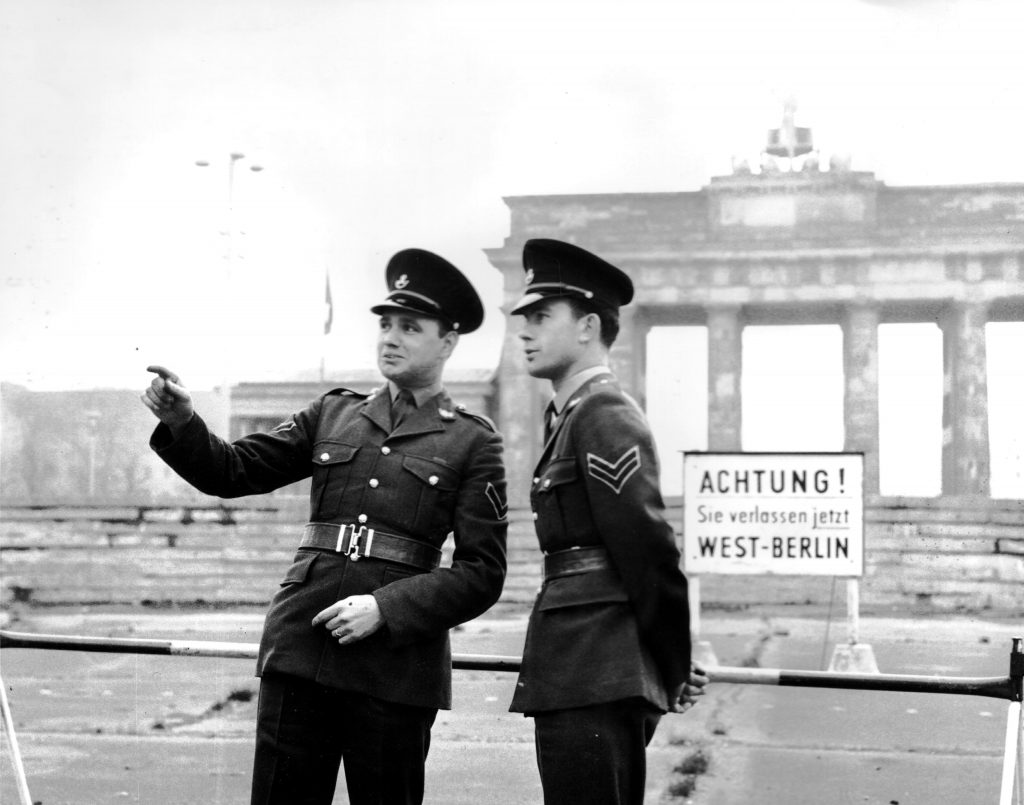
Two men of the KOYLI in Berlin on one of the regiment’s last deployments in the late 1960s. King’s Own Yorkshire Light Infantry Regimental Collection, Heritage Doncaster.
Which was your favourite uniform? Do you think you could pull off a shako? Did you or someone you know ever wear any of these uniforms? Do let us know on our social media, or you could email us at [email protected].