
Life in Schneidemuhl Prisoner of War Camp
The stories of Prisoners of War are a key part of First World War history, but sometimes go untold. Often, the imprisonment of the soldiers prevented them from making detailed records of their time in Prisoner of War camps. However, the photographs of King’s Own Yorkshire Light Infantry (KOYLI) soldier Charles James Marchant give us an insight into life behind the wire at Schneidemuhl Prisoner of War camp. The images capture the trials and tribulations of camp life.
Charles James Marchant was born on 13 February 1887 to Henry and Annie Marchant. The family lived in Dartford, Kent and Henry worked as a General Labourer. Prior to the First World War, Charles joined the Kings Own Yorkshire Light Infantry. He married Daisy M Knott, in Kent, in 1912. After 7 years of service, Charles went into the reserves. Shortly after he became a Police Officer for the Port of London Authority, policing the dangerous docks and keeping an eye on the river.
After the outbreak of the First World War in 1914, Charles was recalled back to active service. He served as a Lance Sergeant with the 2nd Battalion Kings Own Yorkshire Light Infantry. Charles arrived in France as part of the British Expeditionary Force on 16 August 1914. He immediately entered the thick of fighting at Mons and Le Cateau.
Charles distinguished himself immediately, earning a Distinguished Conduct Medal for his bravery. The medal citation states
8310 L/Sjt. C J Marchant 2nd Btn. On October 18th during an attack near Illies, went out from the supporting trench under a brisk fire and carried in a wounded man of his company who was lying exposed in the open.”
On the 1 November 1914, Charles was captured at Messines. His Prisoner of War records show he sent to Schneidemuhl camp.
Charles collected a series of postcard photographs from the Schneidemuhl prisoner of war camp. The images show scenes from the beginning of Charles’ time at the camp. This photograph is captioned ‘Our early days of captivity in “In the Dug Outs” Schneidemuhl 1914-15.’

This one is captioned ‘A group of English prisoners during their early stages of internment‘.

Another image shows prisoners being inoculated in the middle of a field, standing around a large table.

Charles’ captions touch on the hardships experienced in the camp. On the back of this image he wrote ‘A sight often witnessed. Burial of the Dead. Schneidemuhl 1915’

Although the images capture the difficulties of life in the camp, other show happier scenes with cheerier captions. They show scenes of friendship, humour, entertainment and sport.
This photograph of a group of entertainers has the caption ‘In memory of some hard times made good. English Gaff Company’.

Sports was a key part of life at the camp. Charles has captioned this image to state that this British team were ‘impregnable’.

Many different nationalities lived alongside each other in the camp. This image is captioned ‘The Long & Short of it. Two Russian Prisoners of War. Schneidemuhl 1915’

This image shows Charles, centre, with two other men. He captioned this one ‘myself, with Mr Soulie and Elbling. A french and Russian Comrade. Schneidemuhl 1916’.

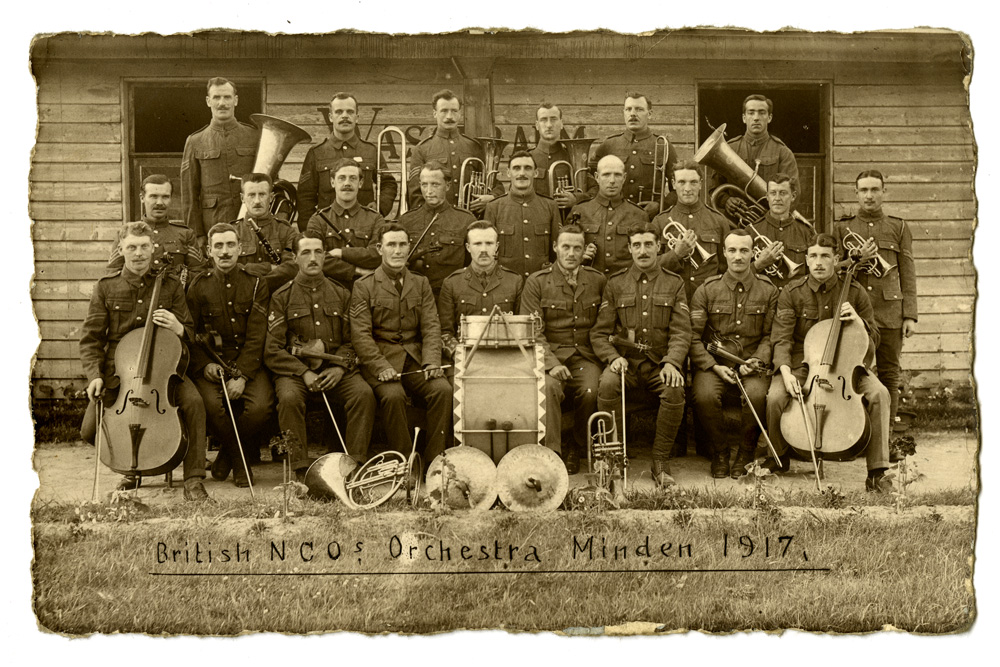
In 1917, after 2 years at Schneidemuhl, Charles moved to Minden Camp. There are far fewer images of Minden in Charles’ collection, but it’s clear that entertainment played an important role here too. This postcard from Minden shows the British Non-Commissioned Officers Orchestra in 1917.
In July 1918 Charles moved to Aachen in Holland, where nine hospitals were located for British Prisoners of War awaiting repatriation. Charles left Rotterdam on the 17 November 1918 on the ‘SS Willochra’. The British Government requisitioned this ship from New Zealand. He reached Hull on 18 November 1918, bringing to an end almost 4 long years of internment.
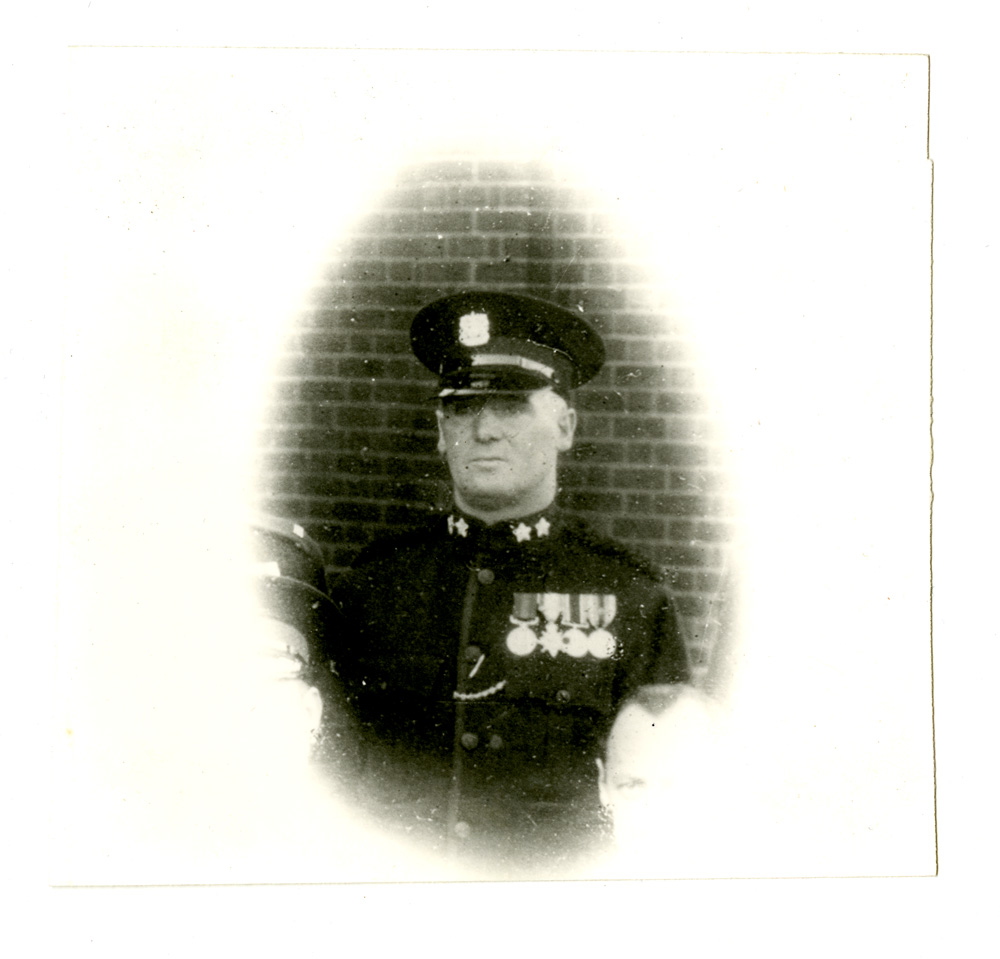
After the war, Charles re-joined the Port of London Police on the 20 February 1919. We can see from the 1939 register that Charles continued to work as a police officer for many years. His address on the register is Albion House, Bermondsey Docks. He lived here with his wife Daisy and their daughter Irene.
You can read more stories from the collection of the King’s Own Yorkshire Light Infantry on our Military History page. Find out more about upcoming events at the King’s Own Yorkshire Light Infantry Research and Collections Centre on our project page.
All images of objects from the King’s Own Yorkshire Light Infantry Collection are shared under Creative Commons Attribution 4.0 International (CC BY 4.0), credit to Heritage Doncaster.