
Harry George, A Soldier From Worksop
This week we’re exploring a collection donated to us covering the life and career of Harry George, who served in the King’s Own Yorkshire Light Infantry in the Second World War. Harry was born in Worksop and served in the 1st Battalion, and was killed in Italy in 1944. His wife kept a huge range of letters from and about Harry, as well as newspaper cuttings, photographs, and various possessions of his. Together they not only tell us the story of Harry’s life, but also his wife’s experiences after this death.
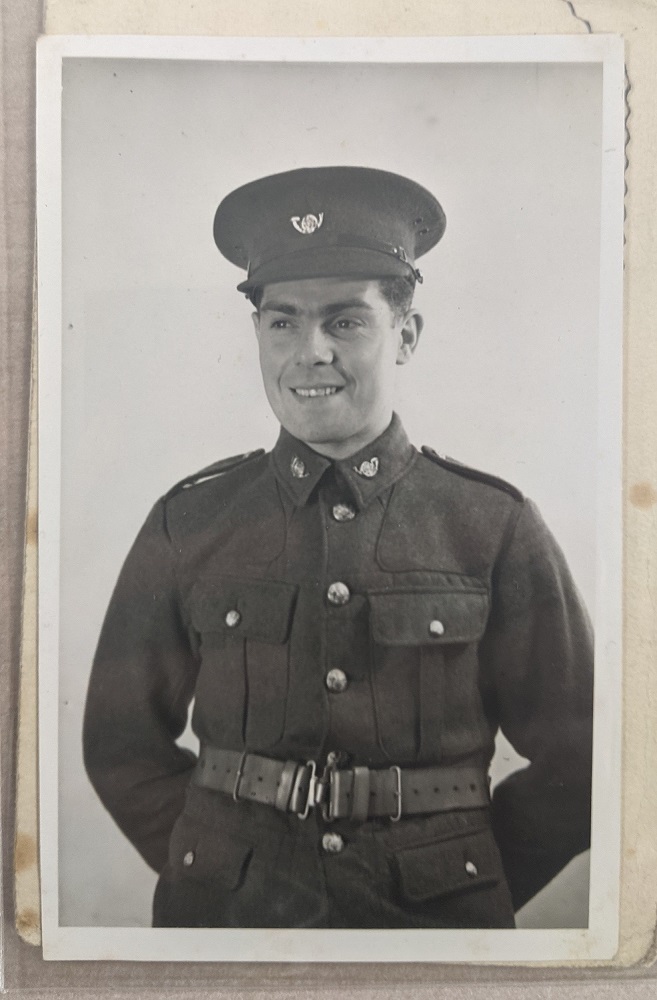
Harry George, some time after joining the King’s Own Yorkshire Light Infantry
Harry George was born on the 19 January 1919, to parents Harry and Alice. They lived on Scrooby Road in Worksop, where young Harry eventually came to work as a hauler in a colliery, working below ground like so many men in the region. Being born in 1919, Harry was about 20 when the Second World War broke out, and would have been eligible for national service as soon as it was introduced. However men working in the coal industry were partially exempt due to the importance of coal to the war effort. These restrictions were loosened over the course of the war though, and, whether through conscription or voluntary enlistment, Harry seems to have joined the 1st Battalion of the KOYLI by late 1941. It was around this time that he also married Ethel Roberta Revill. We don’t know the circumstances around their marriage, but the fact that Harry was soon to join the army might have influenced their decision to marry when they did. He’d write to her regularly through his entire service.


A photograph of Harry with an unnamed woman, possibly Ethel, and a notice in a local paper from 1941 recording their marriage.
Harry’s service with the 1st Battalion took him to the middle east and into the Mediterranean. The 1st had been part of the Allied landing in Norway in 1940, and returned to Britain to re-train and reorganise when Harry enlisted. In March 1942 they were deployed first to India and then to Iran.

Harry spent Christmas 1941 with the Battalion, sending a menu home. While serving he also received this letter commemorating his passage over the equator, straight from the desk of the god Neptune himself.
In July 1943 Harry and the 1st were part of the first waves of allied forces invading Sicily. The campaign saw heavy fighting and malaria caused heavy casualties amongst the men. They advanced north into mainland Italy and by the autumn had slowed down in mountains running through the country’s middle. The situation was made worse by wintery weather and many men wrote letters home complaining about the conditions. Harry’s many letters home did mention the cold, but were constantly optimistic, encouraging, and touching. Its clear that he loved his wife deeply and was keen to get home at the war’s end.

One of Harry’s many, many letters home to Ethel. Many are personal and very touching.
January 1944 was the start of the big push on the German defensive lines in the mountains, and this is when Harry was killed. Ethel, who had been receiving regular letters from her husband since his enlistment, now received an official notice of death from the Infantry Record Office. Alongside these came letters from Harry’s commanding officer, his platoon serjeant, and the Battalion chaplain, all expressing their sympathies. Harry’s serjeant said “he was one of the best liked NCOs that anyone could wish for, and I was with him at the time & thank God he never suffered”. The chaplain explains the circumstances surrounding Harry’s death in his letter. In their big push against the German defensive line in the mountains, men across the Battalion came under heavy fire, with Harry being killed during the attack on a village near Minturno, when the Battalion HQ was shelled. The date of death was 19 January, Harry’s 25th birthday. Reverend J W Hill wrote that that he had buried Harry and his comrades “in a pleasant spot, a garden on a green hill within sight of the sea”.


From the left, the official notice Ethel received of Harry’s death, the letter written to her by Harry’s platoon serjeant, and a notice of his death in a local paper back home.
For the families of many soldiers who died during the war, this was often where information ended. Letters of condolence were sent, and the question became what to do about Harry’s personal effects, still in Italy. The letter from the record office actually mentions this, saying that private property would be forwarded to them, but that “some delay [was] inevitable”. Among the effects that Ethel received were a small pocket dictionary and a prayer and meditations book.
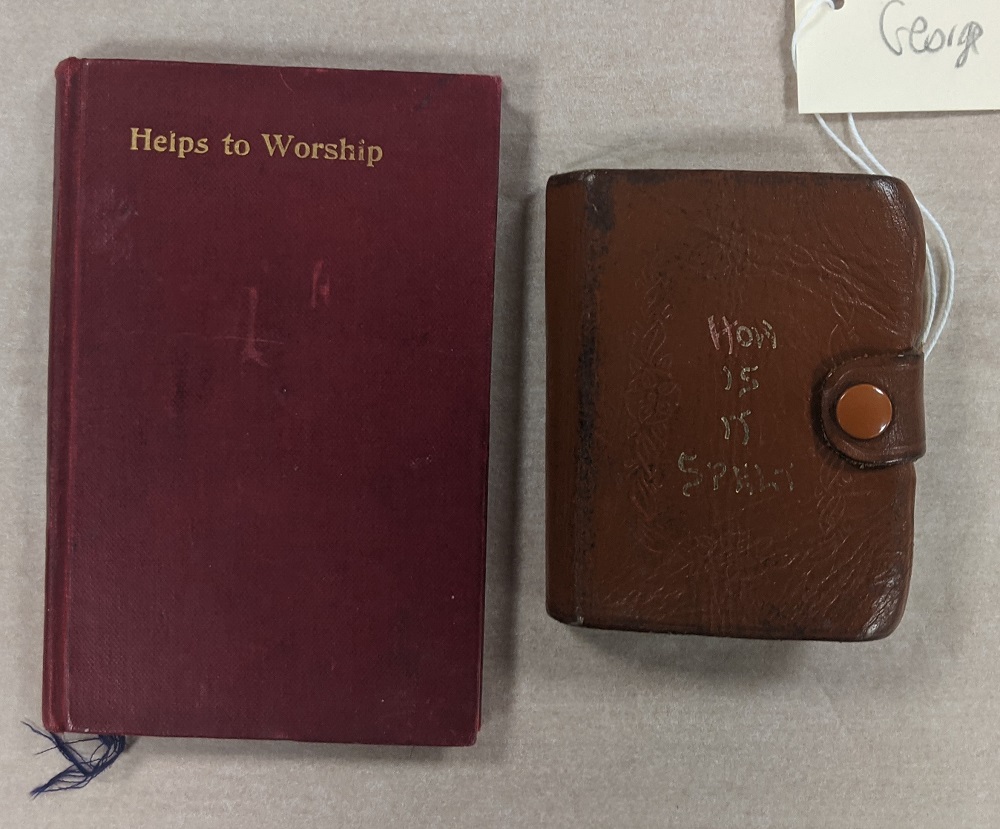
Two of Harry’s personal possessions that Ethel kept after the war, a well-thumbed pocket dictionary and book of prayers and meditations.
After the war ended, the Commonwealth War Graves Commission, which had been formed after the First World War, was able to resume work on the continent. This is an organisation that tracks and records information about graves of soldiers who were buried in foreign countries over both these wars, and Ethel ended up in communication with them about visiting her husband’s grave in the Minturno War Cemetery, not far from Naples. The Commission honoured Ethel’s request to choose the inscription on her husband’s memorial, which reads “Time brings many changes but one thing changes never. The memory of happy days when we were both together.”

Harry’s original grave, before a more permanent and inscribed memorial was added.
Do you have any family who served in Italy in the Second World War? Have you ever used the Commonwealth War Grave Commission’s website to look up a burial? We’d love to hear about your or your relative’s experiences. Do get in touch with us at [email protected], or on our social media.
All images of objects from the King’s Own Yorkshire Light Infantry Collection are shared under Creative Commons Attribution 4.0 International (CC BY 4.0), credit to Heritage Doncaster.