
Sports in the Army
Summer is slowly getting into gear and, perhaps unsurprisingly, there has been talk in the King’s Own Yorkshire Light Infantry (KOYLI) Museum about the regiment’s sporting past. Sports of all kinds have been fixtures of the Armed Forces for centuries, and the KOYLI collection includes a huge number of photographs, books, plaques, and trophies from across the regiment’s history. These can tell us a lot about how both the regiment and the army as a whole viewed sport and exercise over time.
Early sport in the army was an informal affair, often organised by the men and officers of each regiment themselves. Matches between regiments may have been organised individually, with little formal oversight. The KOYLI’s regimental magazine, the Bugle, of 1874 included a notice on the Northern India Rifle Association. The annual membership to join this association was 1 rupee. It’s perhaps not too surprising that the first sport mentioned in the magazine is shooting!
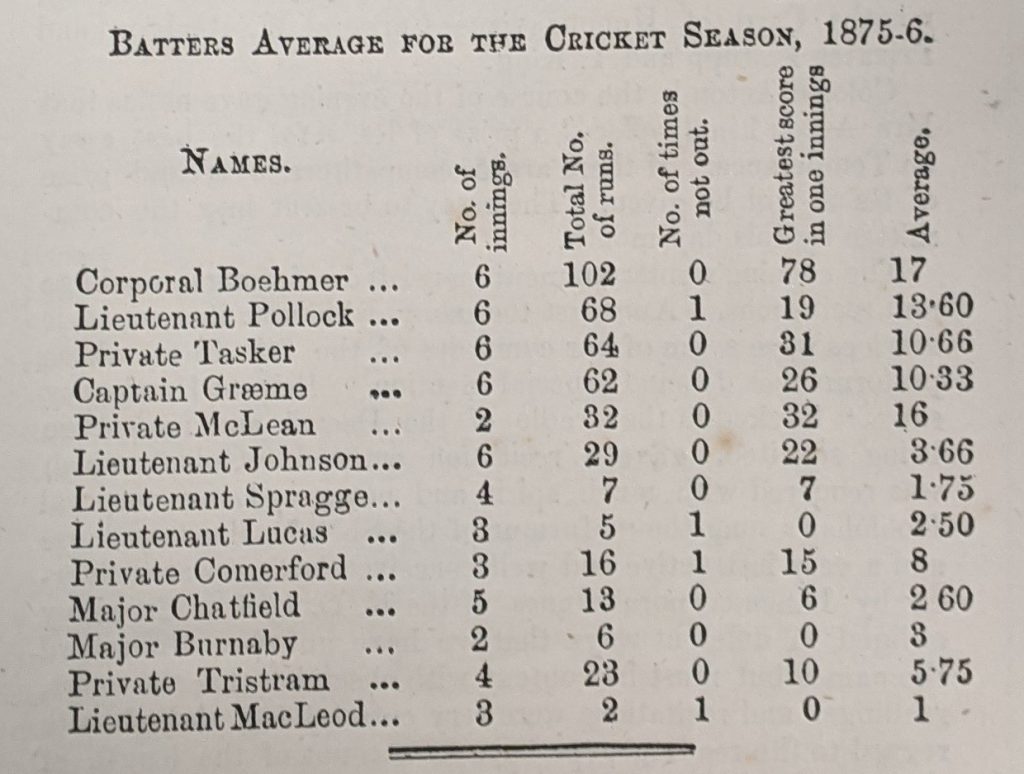
Two years later the Bugle included several pages devoted to cricket results. Over the season the regimental cricket team played the 6th Regiment of Foot, the 81st, and the 1st Royal Scots Regiment. Alongside the scores, each batters’ averages for the season were noted as well.
After the First World War sport became more heavily organised, with the Army Sport Control Board eventually standardising rules of play, team management and costings, and tournament organisation for more than 30 different sports.
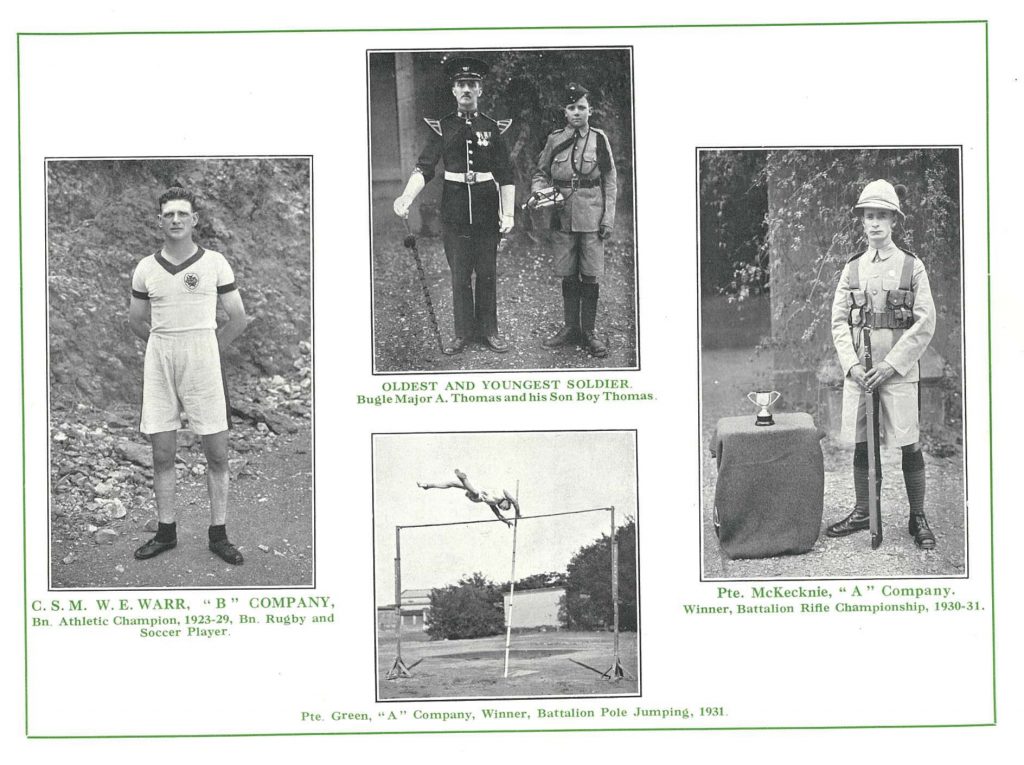
Through all this the KOYLI documented many, if not all, of its sporting outings. On display in the Danum Gallery, Library and Museum we have a photograph of men from the regiment pole vaulting in 1931. This came from the regimental journal, The Bugle, and is featured alongside other photographs of sporting success.
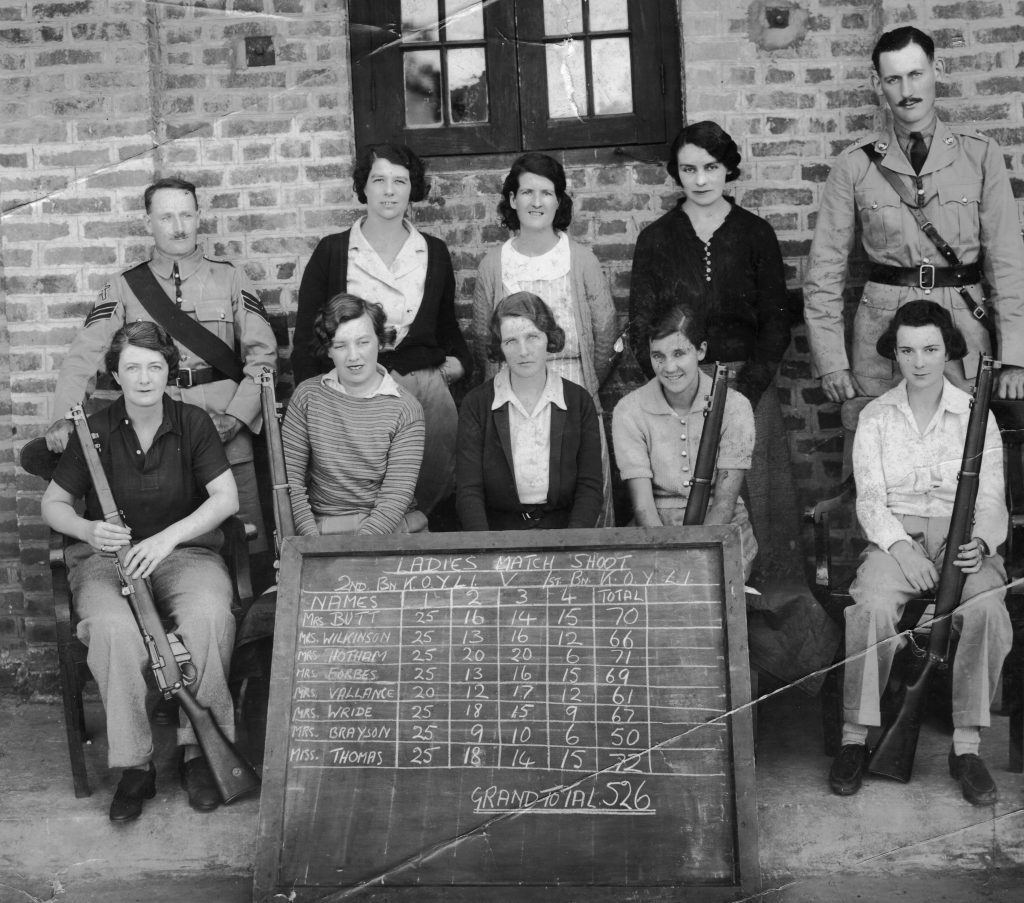
Sport was available to the soldier’s wives too. Here we see the results of the Ladies Rifle Meet in Maymyo in Burma, 1937.
For some of the years prior to the KOYLI’s amalgamation into the Light Infantry in 1968, the 1st Battalion was deployed in Aden on the Arabian Peninsula. Despite the heat of an Arabian summer, in 1966 the 1st Battalion football team took part in the Aden Joint Services football league, the Middle East Army Cup, and the Cawashee Dinshaw Cup. They finished third in the league and lost the finals of both cups to the 45 Commando Royal Marines team. It was said to be “the best soccer seen in Aden in many years”.
In these later years the range of sports available to both men and women had grown substantially. Gone were the days where the Bugle listed only shooting or cricket. By the late 1960s the Army Sport Control Board lists rules for women’s badminton, fencing, hockey, lawn tennis, netball, squash, table tennis, and swimming. Options were even more diverse for the men, who could enjoy the majority of the sports available to women, as well as football, athletics, cross country, tug-of-war, basketball, beagling, boxing, canoeing, cricket, cycling, gliding, gold, gymnastics, judo, pentathlon, mountaineering, parachuting, riding, rugby, sailing, and skiing. Many of these remain in place in the army today.
If you’d like to learn more about sport in the modern army, you might want to look at the website of Army Sport, who succeeded the Control Board. Do you have any stories about sport in the army? Possibly your own experiences, or those of friends and family? We’d love to hear them!
All images of objects from the King’s Own Yorkshire Light Infantry Collection are shared under Creative Commons Attribution 4.0 International (CC BY 4.0), credit to Heritage Doncaster.