
Music and Bandsmen in the KOYLI
If you’ve visited the King’s Own Yorkshire Light Infantry Museum in its home in Doncaster’s Danum Gallery, Library and Museum, you may have noticed the design used in regimental cap badges, and elsewhere. It depicts a French hunting horn and a white rose representing Yorkshire. While today we might not think of a hunting horn having much use on a battlefield, there’s a long history of music and musical instruments in armies, going back as long as there have been organised armies at all. The KOYLI continued this legacy, and the collection includes a number of different musical instruments, photographs, and stories all from the regiment’s many bandsmen over the centuries.
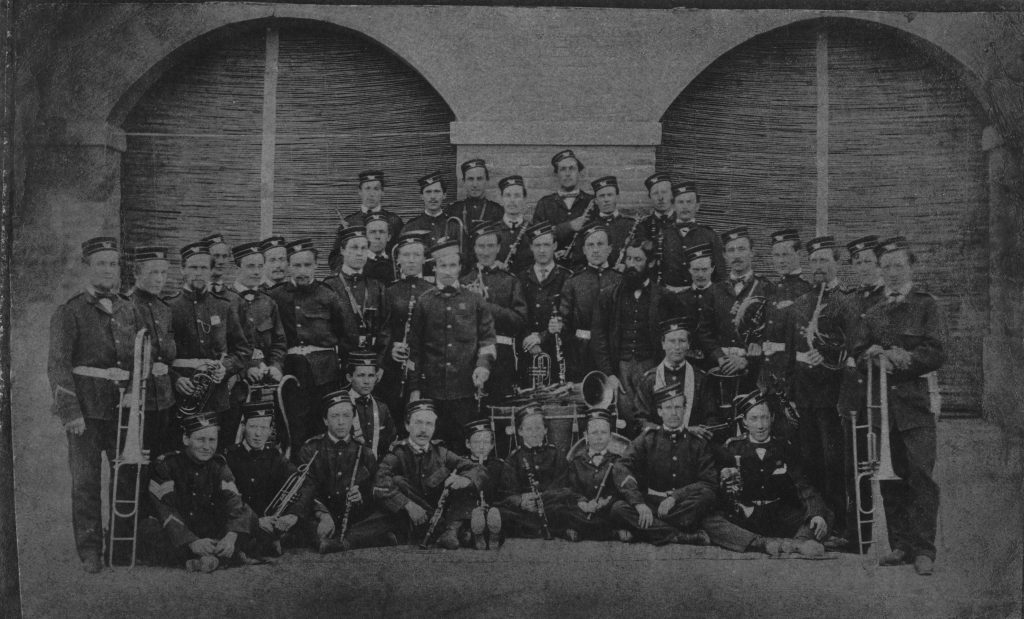
The Band of the 51st Regiment of Foot in India in 1865
Music served a variety of purposes in the army. During noisy and chaotic battles music was one of many ways to communicate orders that might otherwise have been misunderstood or missed entirely. They helped communicate over longer distances as well. Soldiers in training used music, normally drums, to learn drill and keeping in time while marching, and these drums followed the men into battle as a result. Because light infantry regiments like the KOYLI had to travel quickly and over large distances, they favoured horns and bugles over drums. This is why you see these instruments as common symbols of light infantry regiments.
Typically not combatants, bandsmen commonly helped to evacuate wounded soldiers from battlefields and assisting with other roles around camps and barracks. This didn’t prevent bandsmen being taken prisoner, as we saw with Fred Singleton, who’s time in Altengrabow camp in Germany we talked about in a previous article.

Lance Corporal Fred Singleton in about 1910
Regiments often used unique songs to keep pace during marches, training the men to associate tunes with speeds. The paces of each march, often recorded in paces per minute, has changed over time and in different branches of the armed forces, and the KOYLI had its preferred tunes like any other regiment. The three marches, Quick, Double, and Slow, were each set to Jockey to the Fair, The Keel Row, and the Minden March. You can find recordings of them online. The Quick March especially nails home how fast light infantry regiments preferred to move when they had to!
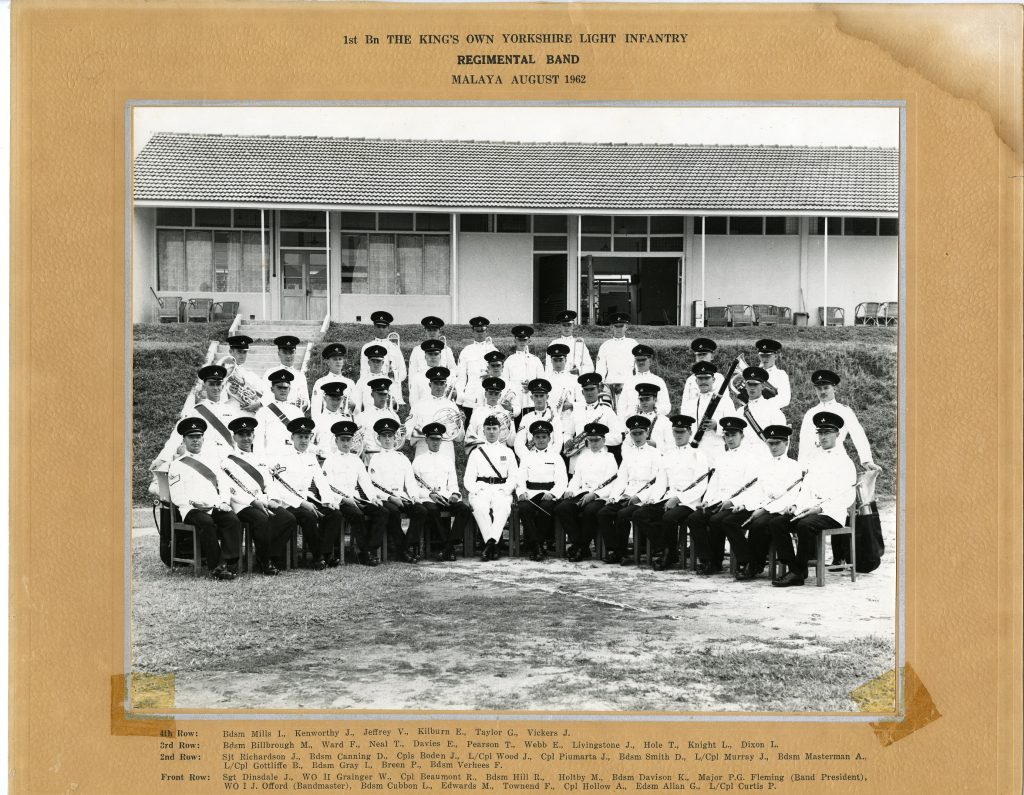
The Regimental Band in Malaya August 1962
There are still bands across the armed forces, but in the army they’re organised under the Royal Corps of Army Music, rather than being unique to each regiment. They perform music worldwide, both to military audiences and at public shows. They’re often heavily involved in state ceremonial occasions as well.
Did you serve in a military band? What were your experiences like? Where did you play? We’d love to hear from you!
All images of objects from the King’s Own Yorkshire Light Infantry Collection are shared under Creative Commons Attribution 4.0 International (CC BY 4.0), credit to Heritage Doncaster.