
Letters Home
Soldiers of the King’s Own Yorkshire Light Infantry (KOYLI) served around the world, far away from their friends and family. Many families would nervously await letters and postcards from the serving soldiers and letters and other forms of written communication form a large part of the KOYLI regimental collection. Gaining a better understanding of the letters in our collection is a fascinating part of our ongoing collections project.
One particularly striking letter was written by Hugh Henry Mitchell in the December of 1811. Hugh Mitchell was born in 1770 in Dublin and entered the army at the age of 11 as an Ensign, the lowest officer rank at the time. He served in the East Indies and in Canada, but from 1811 he commanded the 51st Regiment of Foot, who would become the KOYLI, in the Peninsular War.
This letter was written to Hugh’s wife, Lady Henrietta Isabella Somerset. We don’t know where he wrote it, but paper may have been in short supply, given he filled both sides before flipping the paper 90 degrees and doing the same again. Coupled with some very beautiful but somewhat inscrutable handwriting this letter is something of a challenge to read today.
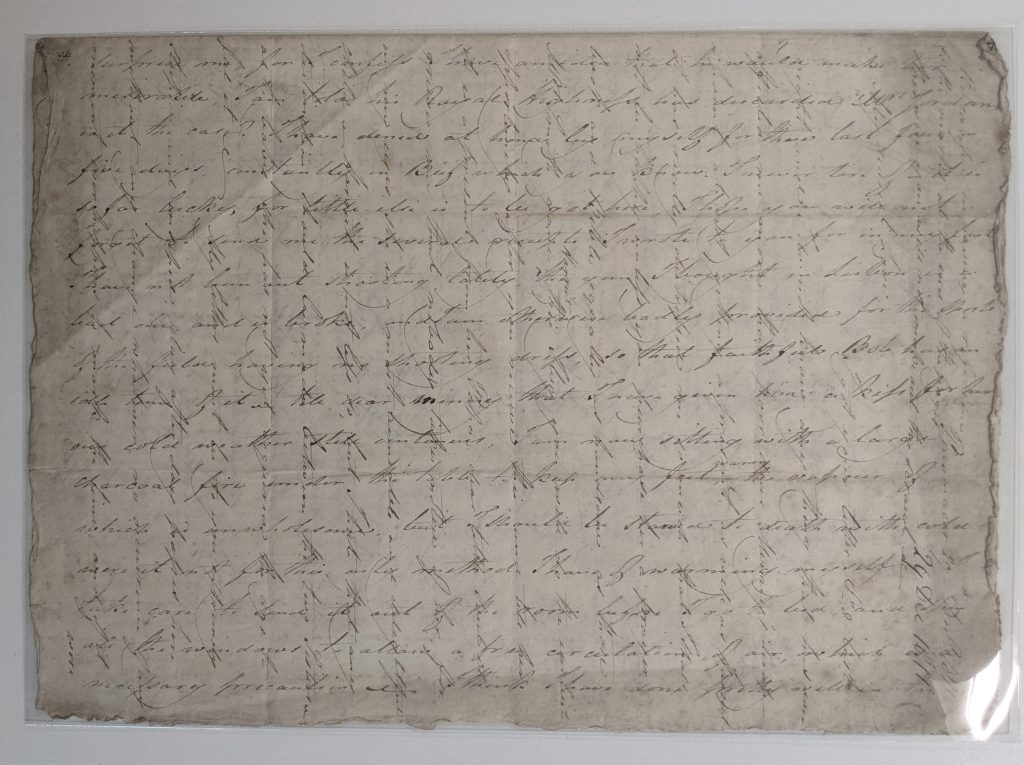
Letters couldn’t be sent from the front line consistently at the time, meaning that there was often a lot to fit into each one. Sometimes men would send weeks of letters together at once when they could. Some men wouldn’t have had the chance to do that even, given the ability to write was less common amongst the general population than it is now.
A century later literacy had improved significantly. Together with the rapid growth of the army in the First World War, we see an explosion of letters written by regular soldiers. These weren’t always for home either, as we see with this one written by G “Snowy” Woodcock.
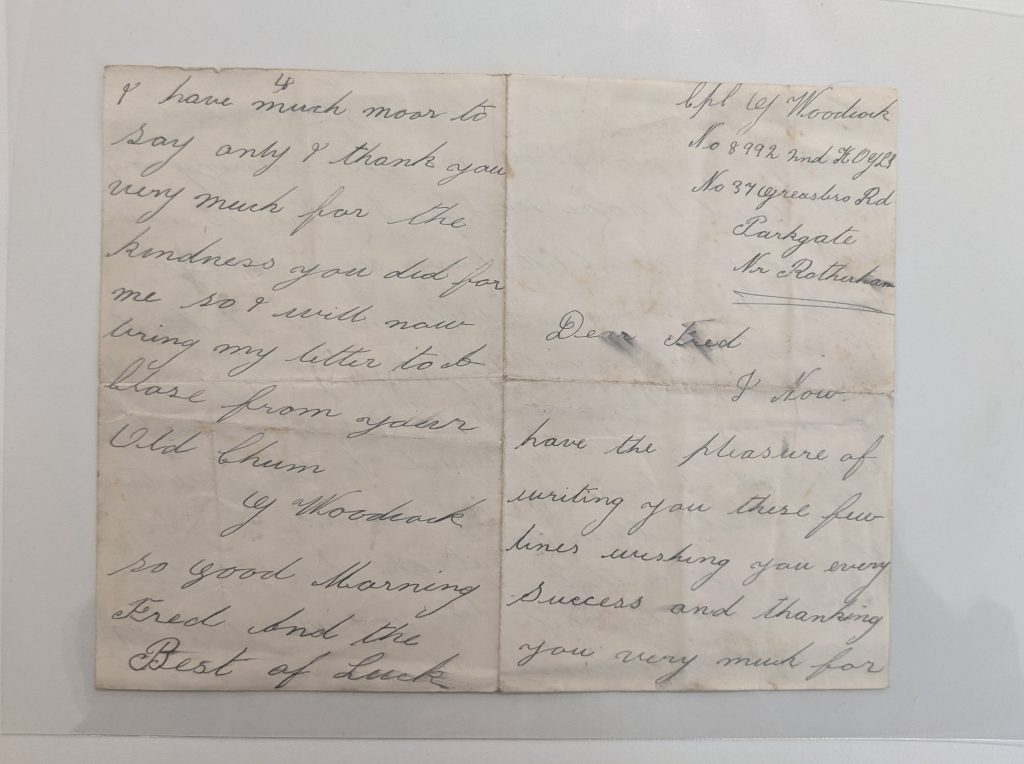
Woodcock wrote this letter in 1915, to a fellow soldier called Fred, thanking him for saving his life and asking Fred to reply. It is much shorter than the previous letter, but unlike Hugh Mitchell’s, we know a bit more about how this one was received. This letter was donated with it was a second letter, written by Fred himself in 1955. The accompanying letter was sent to someone called “Tiny”, passing the original letter onto him and asking him to find somewhere to keep it. This is what ultimately brought it into our hands. It is letters like these that make for a brilliant window into the relationships between individual soldiers, and the things they discussed amongst themselves, things they couldn’t always say to their families.
Finally we come to William Royle. Born in Doncaster in 1891, Billie, as he was known, joined the Sheffield Pals battalion of the York and Lancaster Regiment at the start of the First World War. Later, Billie became a 2nd Lieutenant in the KOYLI. He was killed on the 5 July 1916, during the Battle of the Somme. His parents were notified via telegram.

That would have been the end of the story, had William’s parents not received a letter that summer from Lillie Stones, who worked at a casualty clearing station on the front lines. She had recently treated a private called Addy, who had been with William when he was killed, and was able to forward on details of his death that the telegram didn’t provide.
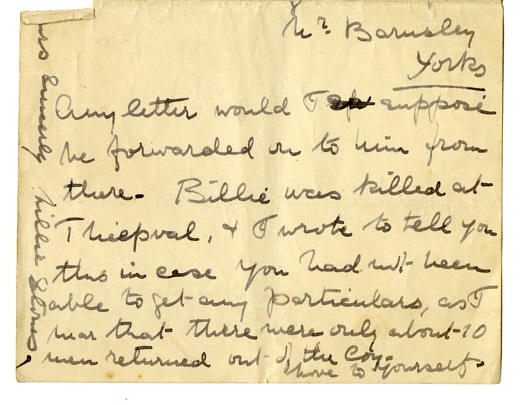
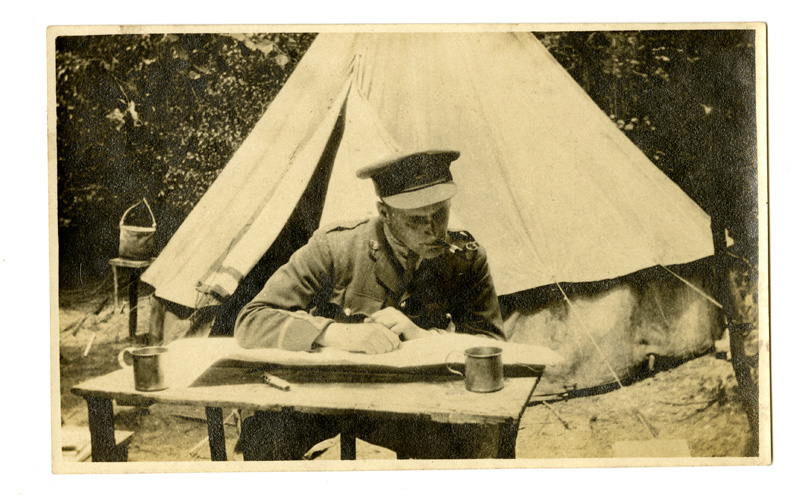
What’s more, in the spring of 1917 William’s parents received another letter, from one of William’s comrades. With the letter, the comrade shared copies of photos of William taken shortly before his death.
Whether they were written to update family, express thanks or to lessen the pain of loss, letters, postcards and notes helps us to understand what these men experienced and how they saw the world. We hope that, once our research space opens, these sorts of stories will become even more accessible to the public, to researchers with a goal or a just people with a passion for history.
All images of objects from the King’s Own Yorkshire Light Infantry Collection are shared under Creative Commons Attribution 4.0 International (CC BY 4.0), credit to Heritage Doncaster.