
Discovering Private J: Military Medical Care
Over the next two Military Monday blogs, we will be exploring the live of Private J who served in the King’s Own Yorkshire Light Infantry (KOYLI) in the years before the Second Boer War. Serving at home, in Ireland, India, and South Africa, health issues were a repeated issue in his early years. Due to some of the content of this article, we’ve decided not to publish his full name, or the names of his family members.
All the research retelling Private J’s story has been done by one of our excellent research volunteers.
J was born in a village in Bedfordshire some time in 1875 and baptised late in the next year. We don’t know much about his childhood, but he was the youngest of five siblings, with three sisters and one brother. His mother was a lacemaker and, when he was two years old, the family was noted in the records of the local Poor Law Union. These were organisations which oversaw relief efforts for poorer families and individuals. What assistance the family received from the Union, if any, isn’t clear.
In 1891 J was working locally as an agricultural worker. By 1894 he had moved to Sheffield, where he enlisted with the 2nd Battalion KOYLI in May. His enlistment papers describe him as 19 years old, unmarried, 5 feet and 6 inches tall, weighing 128lb, having a fresh complexion, with brown eyes and hair.
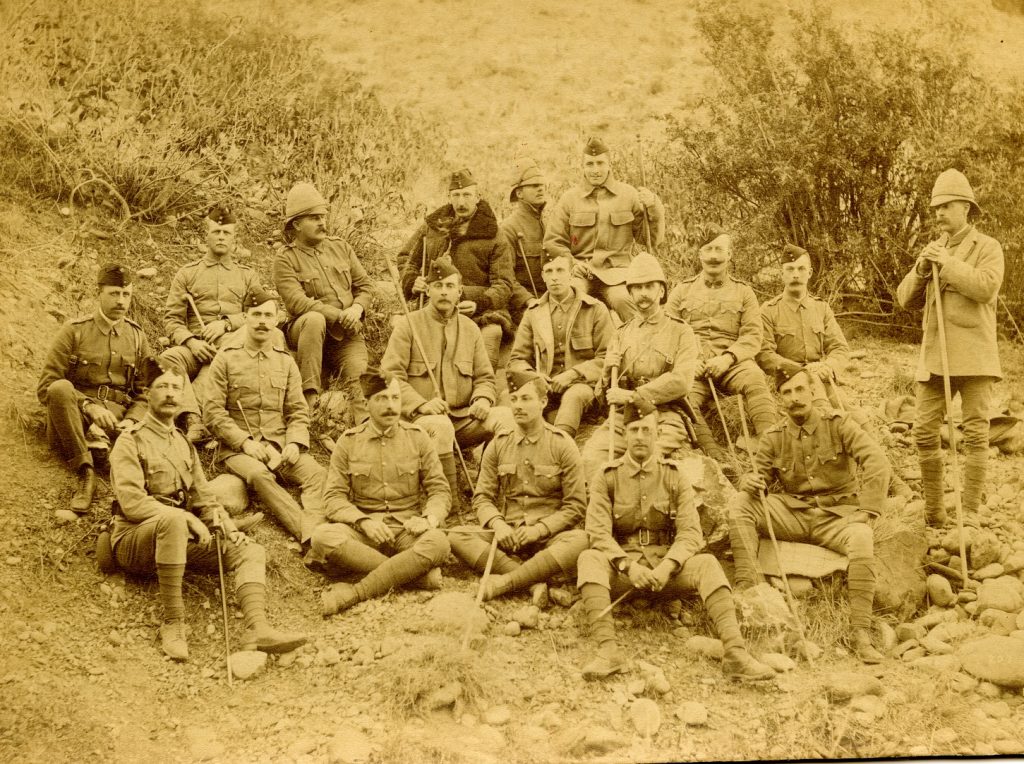
The 2nd Battalion KOYLI in the Tirah Valley in 1898.
Illness was a consistent problem in barracks of the time. Men lived in close proximity, and understanding of infectious disease and controlling its spread was still growing. Many barracks had hospitals or medical wings attached. However, they typically only allowed for treating soldiers already sickened, either by poor conditions or contact with ill comrades. The quality of care grew rapidly throughout the 1800s. Medical science advanced and the practice of nursing, particularly in the field, grew quickly through the work of high profile figures like Mary Seacole and Florence Nightingale.
J wasn’t in good health after signing up. In the KOYLI barracks in Pontefract he received treatment for jaundice after only a couple of weeks, and then for hepatitis a month later. The two may have been related, and hepatitis spread quickly in confined spaces like the barracks. We don’t know how it was treated in this case. By August he was stationed in Ireland, but spent a portion of August and all of September in hospital in Belfast, being treated for an unspecified growth. To cap the year off, he spends a portion of December hospitalised with bronchitis. Many historic remedies for bronchitis were ineffective or, like the plant ipecac, actively dangerous in large doses.
Ultimately Private J recovers from these illnesses, and the next four years are spent across Ireland, in Mullingar, Longford, and Dublin. In his second year he is diagnosed with an infectious rash, which was treated with mercury. Nowadays mercury is only used in a very small range of medicines, but it was more common historically (despite its terrible side effects), due to its effectiveness in killing bacteria. Given Private J doesn’t appear to receive further doses after this hospital stay, we can assume it was effective.
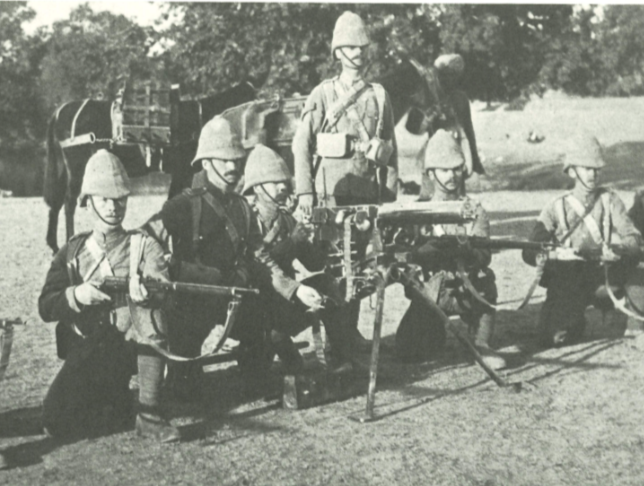
Men from the 2nd Battalion with a Maxim Gun in India in 1897
From 1897 to 1899 he was stationed in British India, including in the city of Ahmednagar, and the Tirah Valley, which is now part of Pakistan. In Ahmednagar he is hospitalised once again, for another, similar contagious infection, spending half a month confined. Illness was a consistent concern in India, due to the presence of a variety of diseases like malaria.
Most of 1899 was spent in Mauritius off the coast of Madagascar, before the 2nd Battalion was redeployed to South Africa to take part in the Second Boer War. For his service in South Africa, J received the Queen’s South Africa Medal, fighting in the South African Republic, Orange Free State, and at the Battle of Modder River.
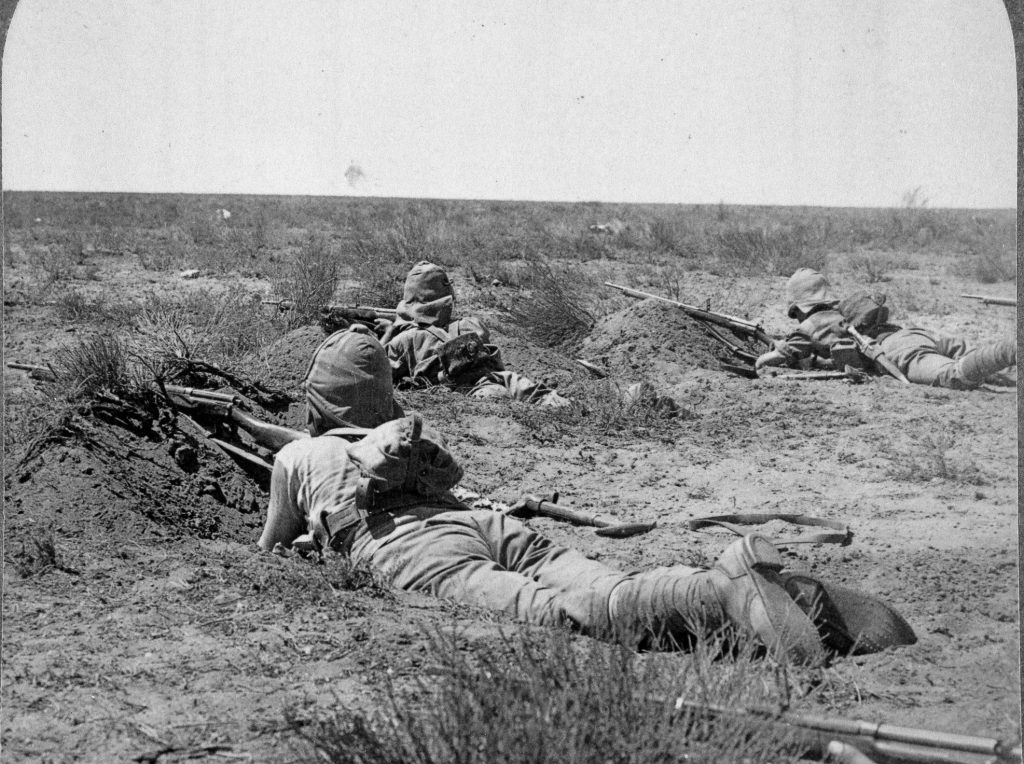
Men of the KOYLI, during the Second Boer War
Private J’s early years in the army appear in our records to have been dominated by his health. Although his periods in hospital only account for about 6 months or so over a period of five years, the standard of medical treatment was not as high as in a modern military hospital. Private J lived in a time when medicine was evolving rapidly, and his continuing return to service after his illnesses is a testament to the treatment he received.
In next week’s article, we will see what happened to Private J. With his health issues largely resolved, one would expect to see his military records transition into a more common list of deployments, actions, and awards. Our volunteers found that this certainly wasn’t the case though, as a significant portion of Private J’s service following these years was spent in a military prison.
All images of objects from the King’s Own Yorkshire Light Infantry Collection are shared under Creative Commons Attribution 4.0 International (CC BY 4.0), credit to Heritage Doncaster.