
Herbert John Darley: Prisoner of War
In April 1919, a large Prisoners of War Fund dinner and concert was held at Doncaster Mansion House. 125 local prisoners of war attended from across the borough including Arksey, Bawtry, Conisbrough and Thorne. Among them was Herbert John Darley of the 7th Battalion King’s Own Yorkshire Light Infantry. Many returned Prisoners of War could not attend as they were still in the army at home or abroad and could not be relieved of their duties.


Herbert John Darley was born in Conisbrough in 1892. Before the war he worked as a farm labourer and lived at 2 Morley Place, Conisbrough, with his family.

During the First World War Herbert served with the 7th Battalion of the KOYLI. Among Herbert’s belongings donated to the King’s Own Yorkshire Light Infantry Museum were a collection of German and French money. They are likely to have been collected by Herbert while he was at the Front, as the dates on the notes range from 1914 to 1918.

In April 1918 Herbert was taken prisoner by German forces and reported missing. He was a prisoner for seven months and was responsible for tending to horses. He was released upon armistice and returned to Conisbrough. This letter was sent by the King to returned Prisoners of War in 1918. In the letter, the prisoners are welcomed home from the ‘miseries and hardships’ that they had endured while imprisoned.

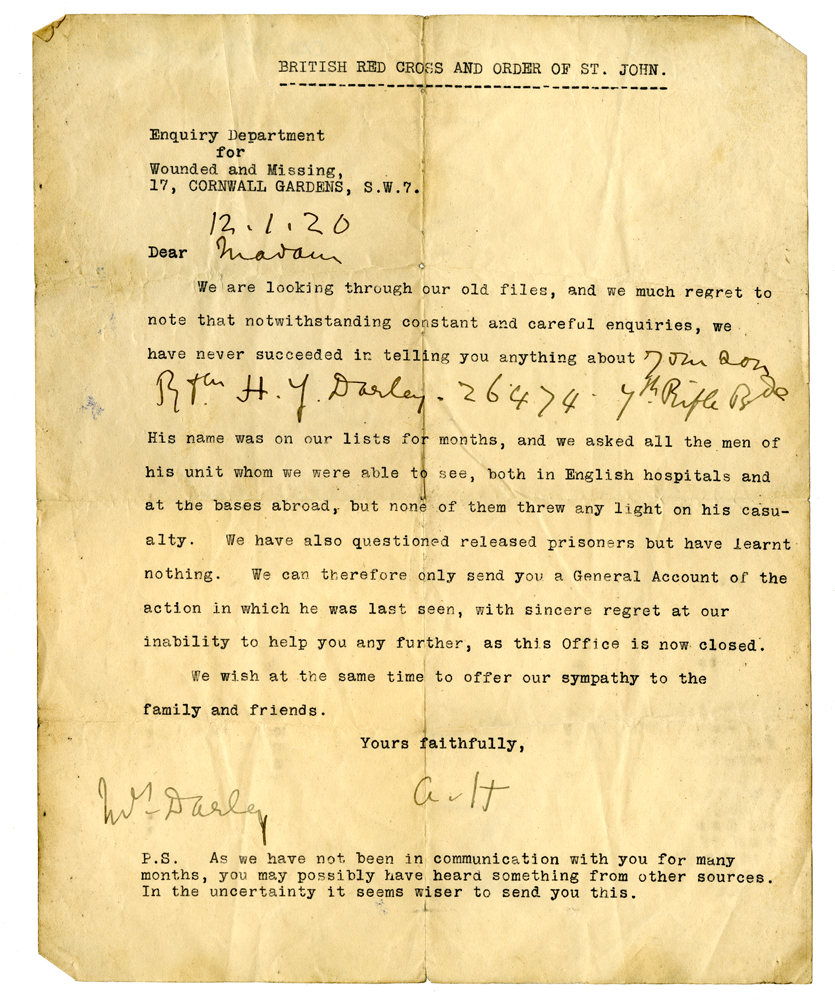
The Red Cross was instrumental in helping family members locate their missing loved ones during the First World War. The Red Cross sent this letter to Herbert’s family in 1920, confirming that they had been unable to give them any information in response to their enquiry. Unbeknown to the Red Cross, Herbert was already back in Conisbrough!
In 1925, Herbert married Lily Hanby. The couple lived together at 11 Athelstane Road in Conisbrough while Herbert worked as a dolomite quarryman. He died in Doncaster in June 1977, aged 84.
All images of objects from the King’s Own Yorkshire Light Infantry Collection are shared under Creative Commons Attribution 4.0 International (CC BY 4.0), credit to Heritage Doncaster.