
Letters from France: Lancelot Spicer in the First World War
A couple of weeks ago we wrote about Roger Spicer, who served with the King’s Own Yorkshire Light Infantry in the Second World War. Roger’s father, Lancelot, published his son’s letters home after the war, which are a major source for Roger’s life. Lancelot had served in the King’s Own Yorkshire Light Infantry (KOYLI) himself in the First World War, and his letters home formed their own book, published in 1979. Just like his son’s, they’re a fantastic view into the thoughts and concerns of a young officer at a time.

Lancelot Dykes Spicer, or Lance to his friends, was born on 22 March 1893 in Woodford, Essex. He was the son of Sir Albert Spicer, who was an MP for the Monmouth Boroughs. The youngest of three sons, and with eight sisters, he went first to Rugby School and then was studying at the University of Cambridge when the First World War began in 1914. It was the summer holiday and Lance was in London, but rather than join his family on a trip to Scotland, he volunteered at once with the Officers Training Corps back in Cambridge, and several weeks later found himself posted with the King’s Own Yorkshire Light Infantry as a lieutenant. When he arrived the large influx of recruits who’d enlisted when the war started were training in civilian clothes and carrying wooden rifles, but by September of the next year, Lancelot and his men were in France, ready for battle.
In his letters home, primarily written to his mother, Lancelot describes taking part in the battle of Loos within weeks of arriving in France. In a letter after the battle he says “I could not give you a coherent idea [of the battle] if I tried because I don’t really know what did happen”. He spent several days with his men first advancing over captured ground, then preventing confused or retreating British soldiers from passing through them. He later called the battle, a British and French defeat, “a fiasco”.
Later letters cover a variety of topics, from food (“we seem to have breakfast at every meal, that is we never seem to have anything but eggs and bacon”), to shouted conversations with German soldiers in their trenches. In one he complains about spending his evenings constantly writing reports “…which only get to the Battalion or Brigade Office and are then lost. One knows they love them, because they will ask for exactly the same report to be sent in a week later”.
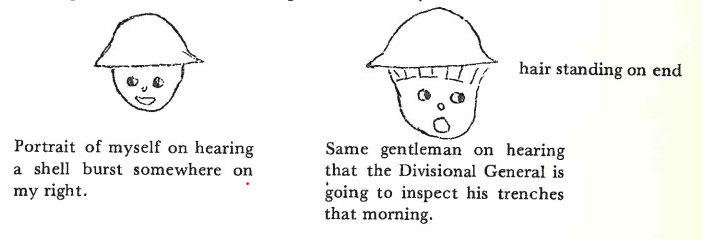
In September 1916 Lancelot, now a captain, was wounded by an explosion and transferred to a Red Cross hospital away from the front lines. He had a minor wound to the chest and a more substantial one to his left arm, pierced through by a piece of shrapnel. His wound went septic, but luckily it was properly cleaned and, after some home leave, he found himself back on the western front 6 months later.
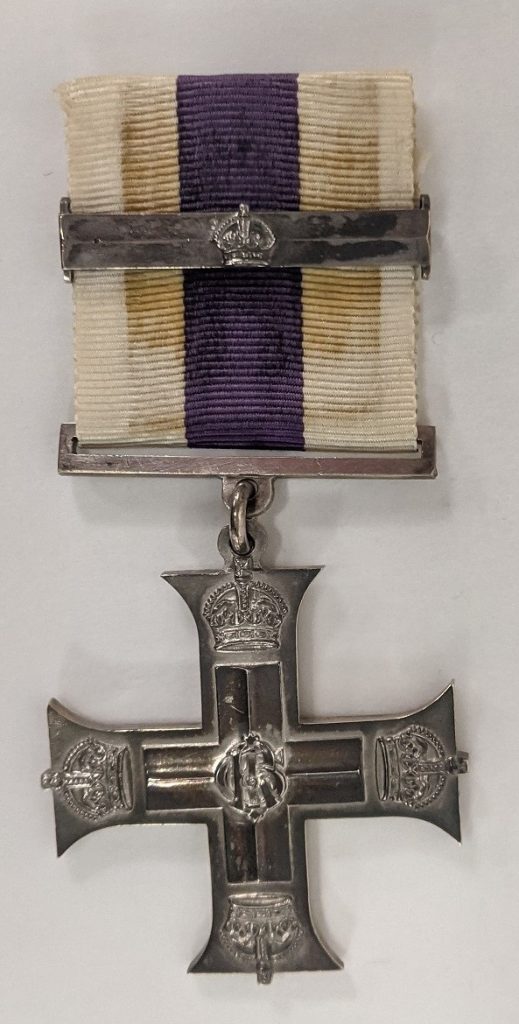
In October 1917 Lancelot and his men were seeing heavy fighting. He received the Military Cross for carrying out dangerous reconnaissance missions and, on an occasion when his brigade was being flanked by the Germans, he helped the reserve forces position themselves, and “encouraged the men by his example under heavy fire”. The Military Cross is one of the highest-level awards for officers in the British Army, awarded for gallantry in combat, and is typically a career highlight for the officers who receive one.
The only period where there is a substantial break in Lancelot’s record is from June to September 1918, as the letters have been lost. This is an unfortunate gap for us in the KOYLI Museum, as not only is it the period when the last big Allied offensive on the western front began, but it is also when Lancelot received his second Military Cross. A record of his actions, published in The Times reads “He assembled the assaulting companies before the attack under very heavy shell fire. During the whole night and the following day he prepared reports and issued orders under heavy fire with the utmost clearness and ability. Later, under heavy machine-gun fire, he made a reconnaissance of the position and sent in most valuable information.” Lancelot’s second Military Cross award was recognised with a bar to wear on the ribbon of the first medal.
In the later months of the war Lancelot was acting up as a major during an advance. During this time he received another gallantry award, his final, a Distinguished Service Order, for “highly successful command and leadership during active operations”. When his commanding officer was wounded during an advance, Lancelot took over the brigade and secured the position they had been ordered to take. He organised the defence and saw off multiple counter-attacks. Eventually his force was surrounded, but he managed to crawl through difficult ground to bring back a report that allowed reinforcements to be brought in to save the brigade. Writing home, Lancelot said “I am entirely overcome with embarrassment! …It came as an entire surprise and bombshell to me this morning to see this – I had no idea that my name had been sent in”.

Surprised though he might have been, this was one of Lancelot’s very last letters home. He wrote one more on 11 November 1918, the day the war ended. After thanking his mother for all her letters in return during the war, he ruminates on the men under his command, and their futures in peacetime. “The men cannot grasp it – they have become so used to this soldier life, so numbed to endurance that they find it hard to believe they can live otherwise”.
After the war Lancelot took up a job in the family business, a paper manufacturer. He married in 1920 and had one child, Roger Lancelot Spicer, who we’ve explored in a previous article. Through the 1940s he had a career as a Liberal party politician, and eventually ran his family’s paper business. He published his letters in 1979, under the title Letters From France 1915-1918. He died later the same year.
In Summer 2024, Heritage Doncaster worked with a group of young people to create audio stories based on the history of the King’s Own Yorkshire Light Infantry. You can listen to Lancelot’s story below.
King’s Own Yorkshire Light Infantry Research and Collection Centre Open Days and Medal Room Tours
Upcoming dates
- Wednesday 12 March | Open Day, 10am – 4pm drop in
- Wednesday 26 March | Medal Room Tours, 10am, 11am, 1pm and 2pm
Discover the fascinating archives of the King’s Own Yorkshire Light Infantry collection. Explore medals awarded across 200 years of the regiment’s history and find out more about the lives of the soldiers they were awarded to. Learn more about researching your families military history.
At our medal room tours, explore some of the highlights of the King’s Own Yorkshire Light Infantry medal collection. Tours will take place at 10am, 11am, 1pm and 2pm but the room will be open to general visitors from 10am until 3pm.
No booking required.
All images of objects from the King’s Own Yorkshire Light Infantry Collection are shared under Creative Commons Attribution 4.0 International (CC BY 4.0), credit to Heritage Doncaster.