
Cataloguing and digitising the King’s Own Yorkshire Light Infantry Collection
A core part of museums work that our volunteers are getting involved with is producing digital records of our collections. These records cover objects as well as our documents and photographs. Digitised records help us understand exactly what each object is and where they all are at any time. As many museum collections contain thousands upon thousands of objects, keeping track of everything is quite important!
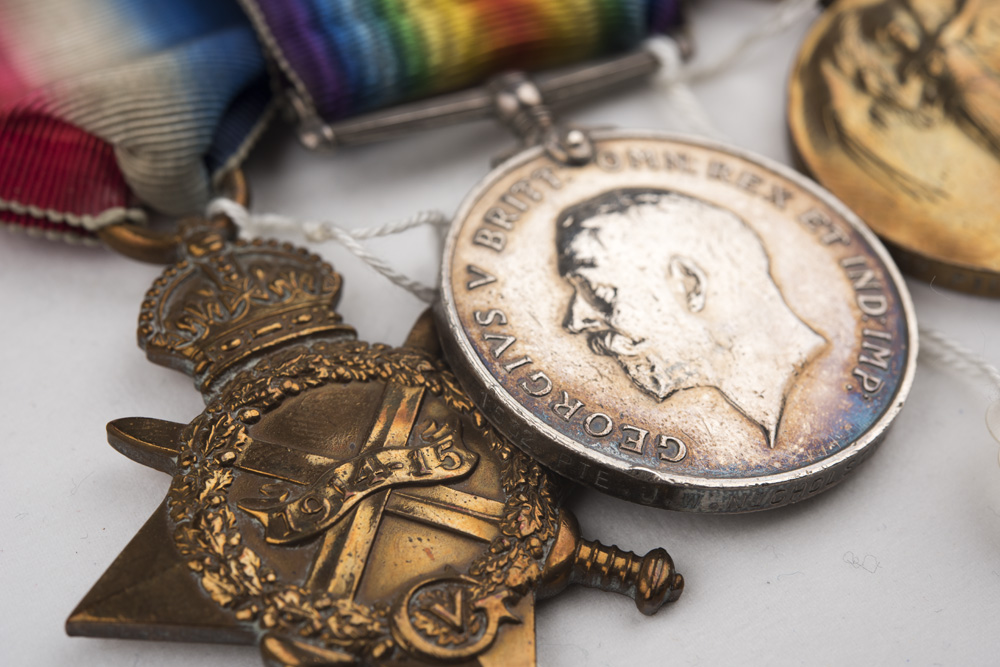
Most museums use specialised Collections Management Software to help them do this efficiently, and our digitisation volunteers have been learning to use ours recently. There’s lots of information we might want to record about each object. They each get a unique number and a description to help us identify and track them. These are followed by their location, dimensions, and what condition they’re in. This last one lets the museum look after the objects appropriately, and to see if there have been any changes in an object’s condition over time. Digital records also note any details of associated people, conflicts and events. Since our volunteers are focussing on the medal collections at the moment, this includes how and when medals are won. Therefore, if anyone wants to find every First World War medal in the collection for example, we can provide that information quickly and easily. We also note how an object came to the museum, whether it was a gift or donation, or bequeathed to us or bought in years past, for example.
Finally, we need images of objects and scans of documents. All our volunteers are being trained in how to safely handle objects and documents. They then lay them out and photograph or scan them before returning them to storage, safely packed and secure once again.
When volunteers are making a digital record of a medal, they’d want to start with finding out its collections number, which also lets us work out how it was acquired. It could have been a gift from a specific person, so this would want recording alongside the number. They check that the location is correct. They’d then describe it, measure it, and note anything important regarding its condition including any damage or unusual features.
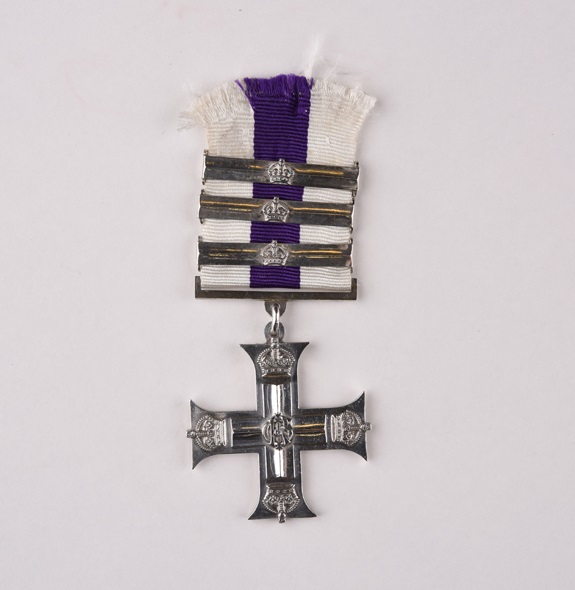
For example this Military Cross, awarded to Captain Percy Bentley, has a frayed ribbon. This ribbon also has 3 bars across it. These bars recognise further awards of the Military Cross to Percy Bentley, meaning he was awarded the Military Cross four times in total! It is thought he is one of only four soldiers to receive this high honour.
All four of Percy’s Military Cross citations describe how he moved forward under heavy fire to organise and gather information. The citation for his third bar describes how throughout the dangerous operations he was ‘indefatigable and showed great courage.’
Then comes time to photograph it, and for some medals they would want to take photographs of the box they were presented in, since they came to us together as one object. Finally, if it was decided that it needed any extra packing to make it more secure, they’d then do that as well.
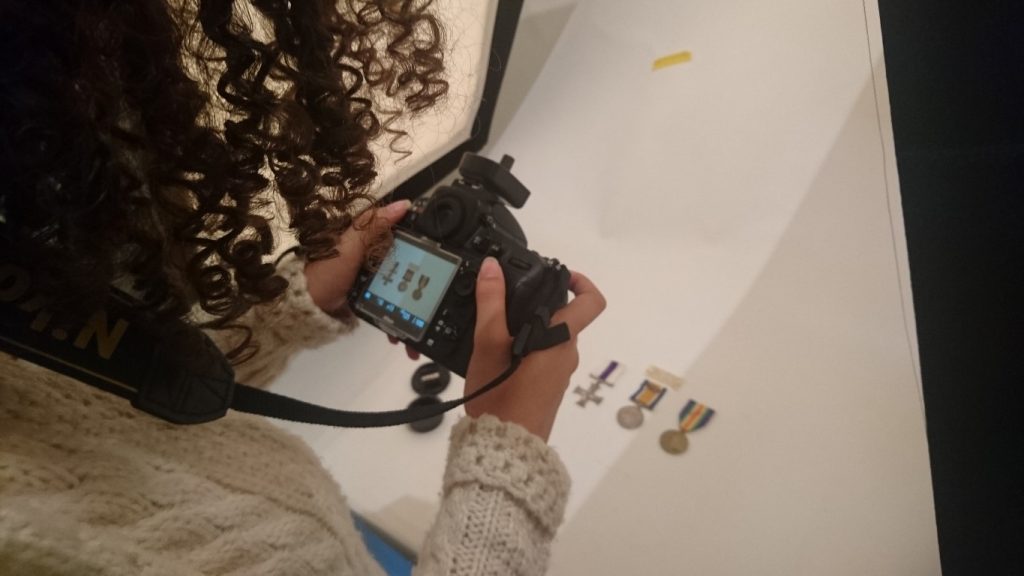
As you can see, it can be quite an involved process even for smaller objects, but we’re chipping away at them together. Cataloguing and digitisation work is great way to get some hands-on experience with the collections, and many of our volunteers swap between the two to keep things fresh. Just like with our research volunteering, if you’re interested in learning more you can get in touch with us at [email protected]. We’d love to hear from you!
All images of objects from the King’s Own Yorkshire Light Infantry Collection are shared under Creative Commons Attribution 4.0 International (CC BY 4.0), credit to Heritage Doncaster.