
Food in the Army
You’ve most likely have heard the phrase “an army marches on its stomach” at some point in your life. Traditionally attributed to Napoleon, how and what to feed an army was a constant problem at the time, and before and since. The British Army was no different, and a great number of changes have been made over the centuries to how and what the men were fed.
In many ways the story of the British Army begins with the New Model Army, formed during the Civil Wars of the 1600s. It was the first professional, standing army in Britain. Supplies were rudimentary, and facilities even more so. The men received a daily ration of bread and cheese, and often ale or beer, but were largely left to their own devices to secure other food and cooking spaces. This led to soldiers taking whatever they could beg, borrow, or steal, a problem that would persist in the centuries to come.
In the 1700s and 1800s, the army provided men with two meals a day, every day. This consistency, together with a substantial alcohol ration, was one of the things used to entice men to sign up at times when life was hard, and money and food were difficult to come by. Rations were built around staples like dried peas, salt beef and pork, and flour or long-lasting, dry biscuits. These weren’t always stored properly, and complaints about maggots and weevils in the food weren’t unheard of. A soldier was entitled to a daily ration of alcohol as well, with every man supplied with a third of a pint of rum, or one of wine, or two of beer, each day. Drunkenness was a consistent issue as a result.
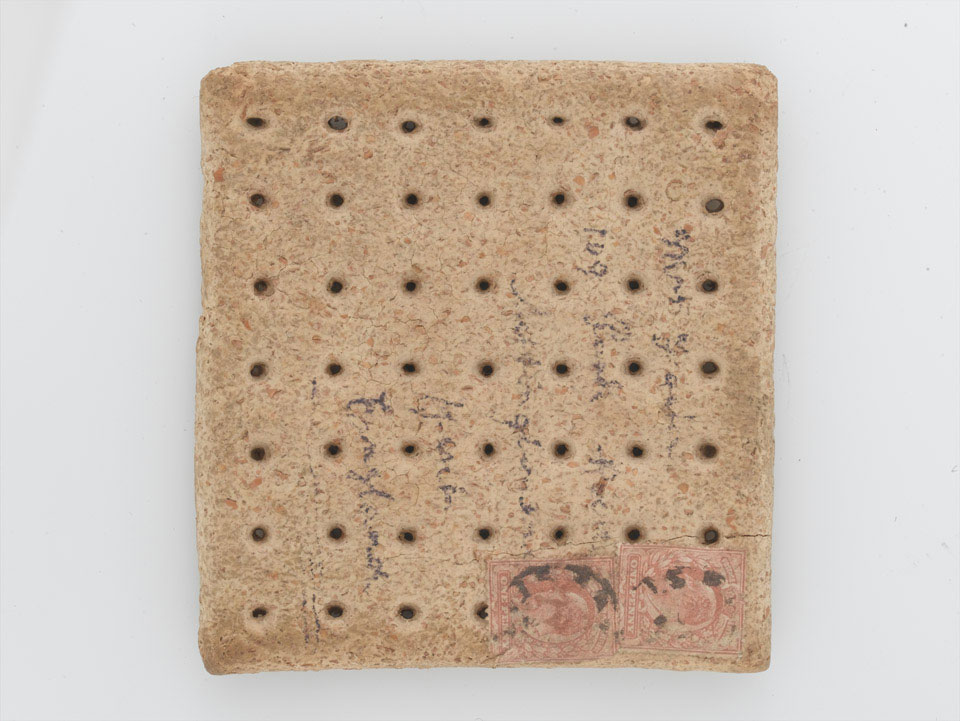
In perfect conditions biscuits could last for years. This one was produced in 1902 (NAM. 1960-05-268-1)
Men would supplement their diet using whatever means were at their disposal. In the early 1800s Private William Wheeler was serving with the 51st Regiment of Foot, a predecessor of the King’s Own Yorkshire Light Infantry. He wrote in letters home about men in the Chichester barracks sneaking into a neighbouring cherry orchard. Then, in Spain, he recounts an episode in November 1812, near Salamanca, where the regiment found a forest full of pigs feeding on the acorns on the forest floor. They proceeded to kill the pigs and roast the acorns. Apparently, they tasted like chestnuts (the acorns, not the pigs!). Whether men could get away with actions like this largely depended on their commanding officer, with some turning a blind eye and others being staunch disciplinarians, and quick to punish soldiers found poaching or stealing.
At this time the army was supplied through the efforts of civilian Commissaries, appointed and paid by the Crown. The actual cooking was organised within the regiment however, and this would continue through the 1800s. Sometimes the men took turns to cook, sometimes the men’s wives, who travelled with the army until the 1850s, would cook for their husbands. Other times a civilian cook may be employed for the task.
The outbreak of the First World War came with a huge increase in the numbers of men needing feeding, but brought with it a greater understanding of the nutritional needs of a soldier. At the outbreak of the war the army aimed to provide each man with just under 4500 calories each day, but they weren’t always able to supply this due to threats to supply chains caused largely by submarine warfare. The bulk of these calories came from bread, biscuits, sweet tea, jams, hearty root vegetables, greens and meat. Tinning of meat had replaced salting as the preferred preservation method in the 1800s. Soups, stews, pies, and puddings were all popular in the kitchens behind the frontlines, while men on the front made use of the small, portable Tommy Cooker to heat tinned foods when they could.
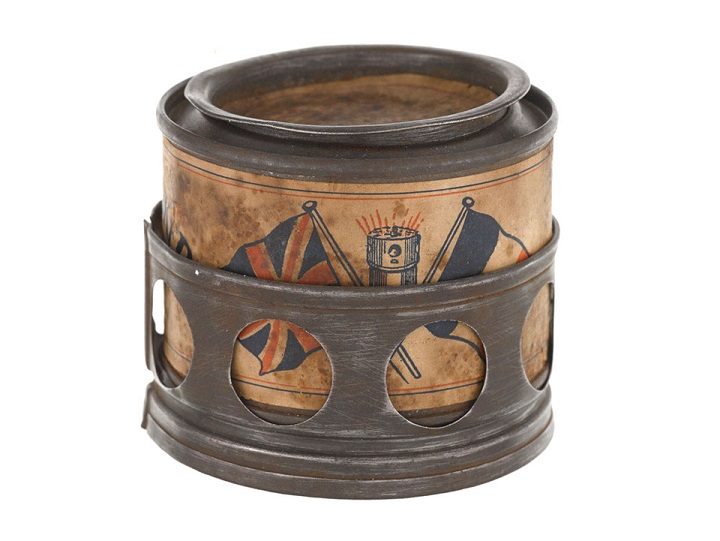
In some cases Tommy Cookers like this were the only thing providing the men in the trenches with hot food (NAM. 1984-02-23-1).
Even before the outbreak of the War, cooking and catering in the Army was changing. The National Army Museum have an excellent article about the Army Catering Corps on their website. The first army catering schools were established in Aldershot in 1913, followed by another in Poona in India. In 1938 a Chief Inspector of Catering was appointed for the first time, and three years later a dedicated Catering Corps was formed which took over the duties of feeding the army. It was folded into the new Royal Logistic Corps in 1993.
The travel that came with military service gave men the chances to try new types of food as well. Roger Lancelot Spicer served with the KOYLI in the Second World War in Italy and took leave in a hotel in Naples, catering to American officers with American food. He recounted amazement at the waiter pouring treacle on his sausages and serving them with flapjacks (pancakes). The complete absence of bread proved to be similarly unusual, though Roger claimed to be much taken with an American breakfast!
In general, the quality and variety of food available in the army increased steadily in the decades after the Second World War, to match changes in tastes and standards. The British Army field ration menu from last year includes everything from hunter’s chicken to multiple curries to Indonesian inspired dishes and the more traditional steak, vegetables, and dumplings. The technology behind ration packs has changed too, with the modern soldier using flameless ration heaters to warm food without producing smoke or ash. A bit of a change from roasted acorns in a Spanish forest!

Food remained a part of army life even after leaving active service. For the branches of the Regimental Association formal dinners were great ways to catch up with old friends and comrades.
Soldiers do great amounts of physical work and keeping them fit and healthy is a complicated job. Doubly so when you consider the need to keep them happy and interested in their food as well. From cold bread and cheese to modern, 24 hour multi-meal ration packs, there are nearly 400 years of experimentation and research going into a soldier’s diet, and one thing that we can guarantee is that it will continue to change for as long as there is a British Army.
All images of objects from the King’s Own Yorkshire Light Infantry Collection are shared under Creative Commons Attribution 4.0 International (CC BY 4.0), credit to Heritage Doncaster.