
The Life of William Hewitt
Last week we explored the life of a young officer from the 51st Regiment of Foot, Francis De Visme. Despite everything he had to deal with, De Visme’s was in good health during his time in the army. He had a long life after his retirement, seemingly living quite comfortably. Unfortunately, the same can’t be said for many soldiers in the 1800s, as another of our volunteer researchers found when building up a biography of a man called William Hewitt.
William Hewitt was born in Sheffield in 1863. The city was dirty and overcrowded, its population exploding over the preceding decades as people moved in droves to find work in its still relatively new factories, mills, foundries, and workshops. William’s earliest years saw him growing up around the time of the ‘Sheffield Outrages’ when violence between trade unionists, anti-unionists, and employers spilled into the city. Regardless of their positions on the matter, life for those working in the city’s industries was hard and occasionally cut short by accident and bad health. It’s not surprising then that the army, with its guarantees of pay, travel, and adventure, made for an attractive prospect for many young men.
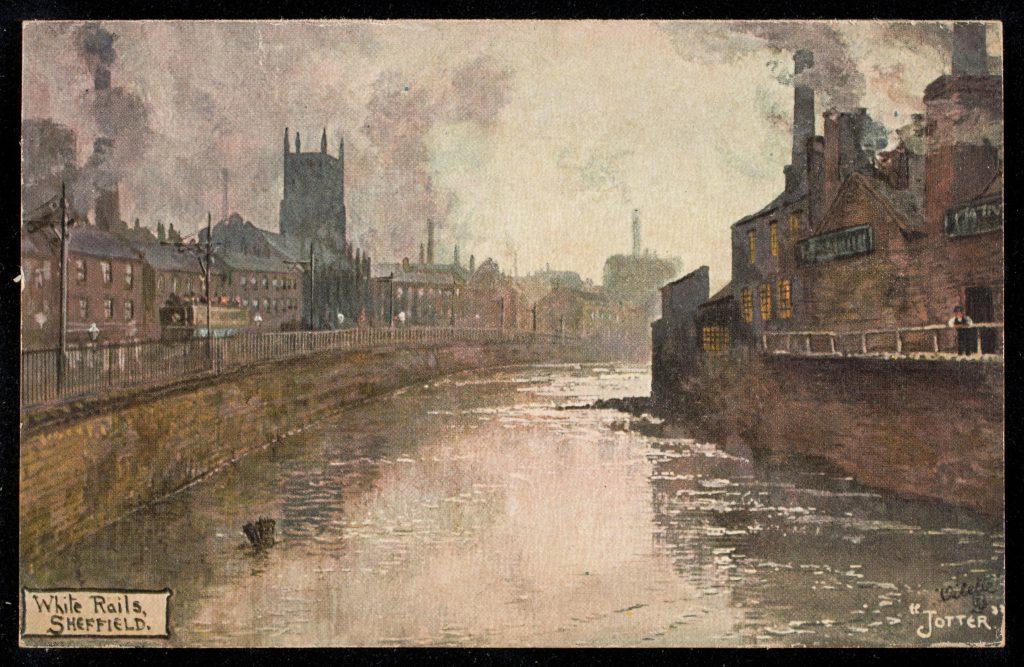
A postcard depicting central Sheffield in 1903. Even 40 years after William was born, the city was heavily polluted. (The Newberry, NBY_444267).
We don’t know whether William went to school but we do know though that he followed his father, a table blade forger and sticker, into the cutlery trade. At some point before the summer of 1882 William joined the third battalion of the newly formed King’s Own Light Infantry (South Yorkshire Regiment), who would become the King’s Own Yorkshire Light Infantry before the century was out. The third battalion was specifically a militia battalion, where recruits went through a period of training before returning to their civilian lives. They were paid a small retaining fee through the year in return for attending several weeks paid training once a year and the risk of being called to regular service in the outbreak of a war. We know William joined the militia battalion before August 1882, as in that month, all of 19 years old, he transferred into the regular army.
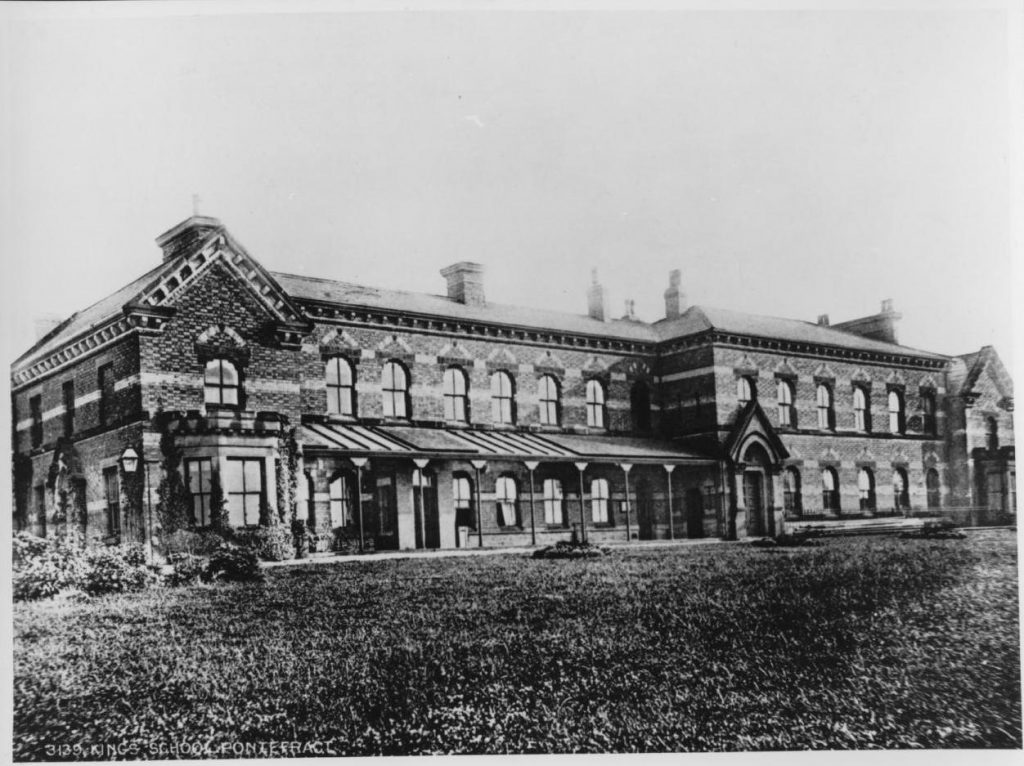
The 3rd Battalion had offices in the King’s School in Pontefract, and trained there for most years. William may have spent weeks training there before joining the regular army. King’s Own Yorkshire Light Infantry Collection, Heritage Doncaster.
One of the best resources we have when researching soldiers from this period is their attestation papers, a set of documents filled in when they join the army. These include everything from address, occupation, and next of kin, to a physical description of the new recruit. They’re often updated over the course of the man’s military career too, making them an excellent guide to their experiences. William’s papers describe a man only five feet and four inches tall, weighing only eight stone and five pounds. He had brown eyes and hair, and scars on his right hand and both forearms.
In autumn 1883, a year or so after signing up, William was deployed to India, where he would remain for the next four years. India was changing as dramatically as Britain at the time, so there was a lot to keep a soldier in India busy even during times of peace. That is, if illness didn’t catch up to you first.
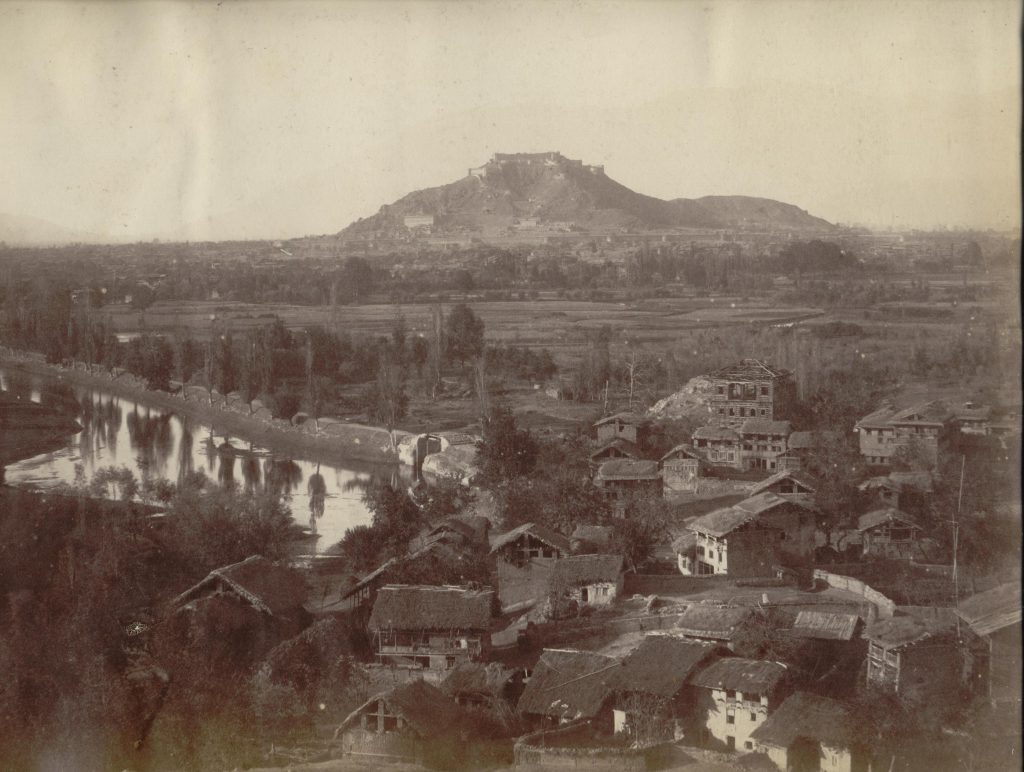
India must have been a huge change to William, considering his previous deployments were all in the British Isles. King’s Own Yorkshire Light Infantry Collection, Heritage Doncaster.
We looked at medicine in the army in a previous Military Mondays blog. It’s worth remembering that many of the men from large industrial cities brought with them the scars, injuries, and underlying health issues that growing up in dangerous and dirty environments created. Military life was hard, with physical labour, injury, and the risk of exposure to exotic diseases all present. William Hewitt was unfortunately no exception to this, and his health plagued him throughout his time in the KOYLI.
In October 1882, stationed in Ireland, he was treated for gonorrhoea, and then again in India the next year. While in India he also suffered from ‘the ague‘, now known as malaria. Throughout his time in India he suffered through smaller episodes of dyspepsia and colic (both stomach issues), diarrhoea, and his gonorrhoea returned as well. Eventually his health issues were bad enough that he was recommended for transfer to Darjeeling in the Himalayas. Upon returning to home service in 1887, William’s health issues seem to have largely resolved themselves.
The next seven years of his career progressed without incident, and in 1894, having completed 12 years of service, he transferred into the reserves, leaving active service. William returned to Sheffield and found work as a silver finisher and lived with his now-widowed mother, and one of his younger brothers. In 1891 he had married a woman called Florence Bradshaw, already a widow, and the couple eventually moved to Blackburn Street in Sheffield.
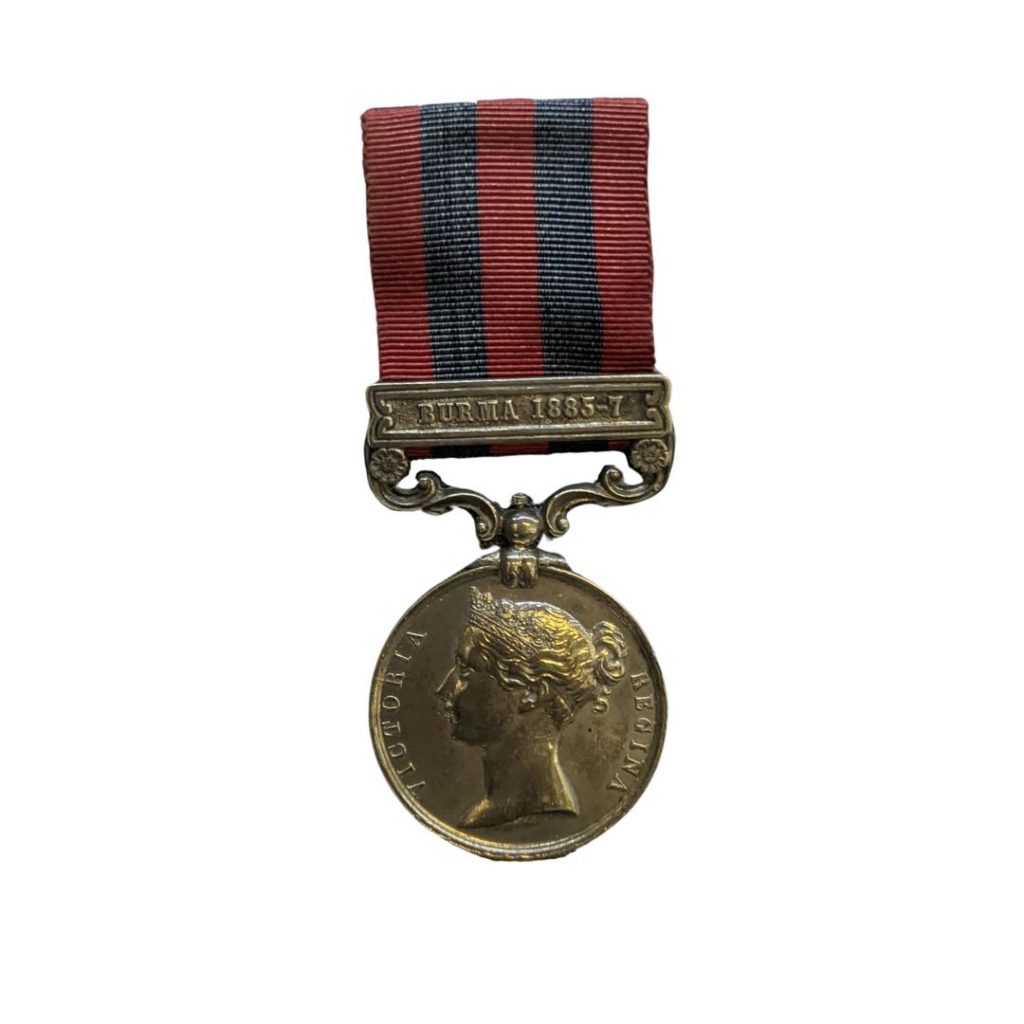
William’s India General Service Medal, in the medal room within our Research and Collections Centre. He has a clasp for service in Burma.
In March 1900, now about 37, William re-joined the army. He only signed up for a short service period of one year though, joining the Royal Reserve Regiment. This was a regiment set up the month before to organise ex-soldiers to be deployed on home defence duties. Many gaps had been left as regular soldiers were redeployed to South Africa to fight in the Boer War. This year seems to have passed without incident for William, who returned to civilian work when the regiment was disbanded in 1901 after the war ended. His army paperwork at the time lists his profession as a ‘table blade smither’. He and Florence had an eight-year-old daughter, Teresa. He died three years later, aged 40, in the neighbourhood of Ecclesall Bierlow, still in Sheffield. A cause of death isn’t listed, but deaths that we would now consider quite young were unfortunately all too common in industrial communities at this time.
William’s story was put together by one of our excellent volunteer researchers, who work with us in the KOYLI Research and Collections Centre on a variety of projects. If you’d like to learn more about volunteering with us (including our new at-home volunteering project) please don’t hesitate to get in touch with us at [email protected].
All images of objects from the King’s Own Yorkshire Light Infantry Collection are shared under Creative Commons Attribution 4.0 International (CC BY 4.0), credit to Heritage Doncaster.