
The Game Book
Our project volunteers have been busy scanning in original books from the King’s Own Yorkshire Light Infantry collection. We’ve previously looked at the Wager Book and this week we wanted to show you some pages from the Game Book.
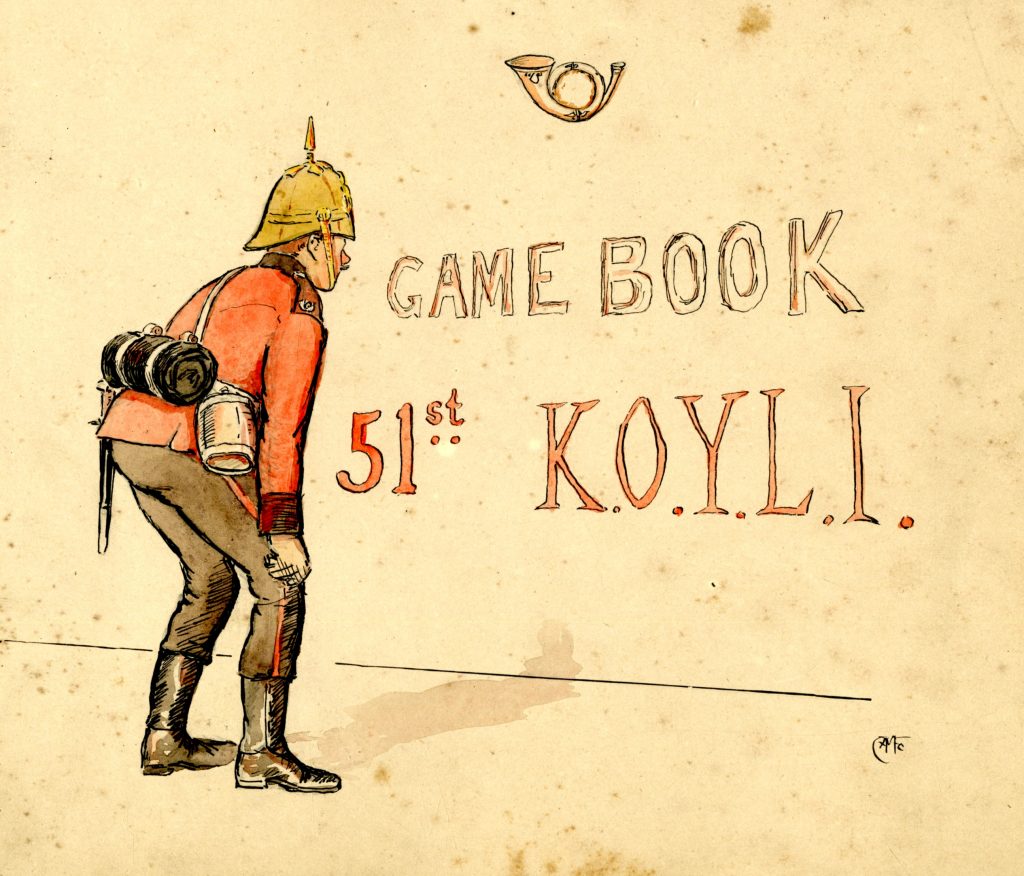
The ‘game’ in the game book refers to hunting and fishing, rather than anything like a board or card game. The book is where officers recorded their successes, and failures, on these hunting and fishing trips, from the years 1893 to 1902. It’s worth considering that, while nowadays hunting is quite controversial in the UK, for large parts of the country’s history, it was a social activity that gentlemen were expected to take part in. This is doubly true for military officers, who were largely recruited from the upper classes as well. What makes this game book so exciting is the extremely detailed drawings of animals, men, and landscapes, often with an excellent sense of humour and short stories included. Here are some of our favourites.
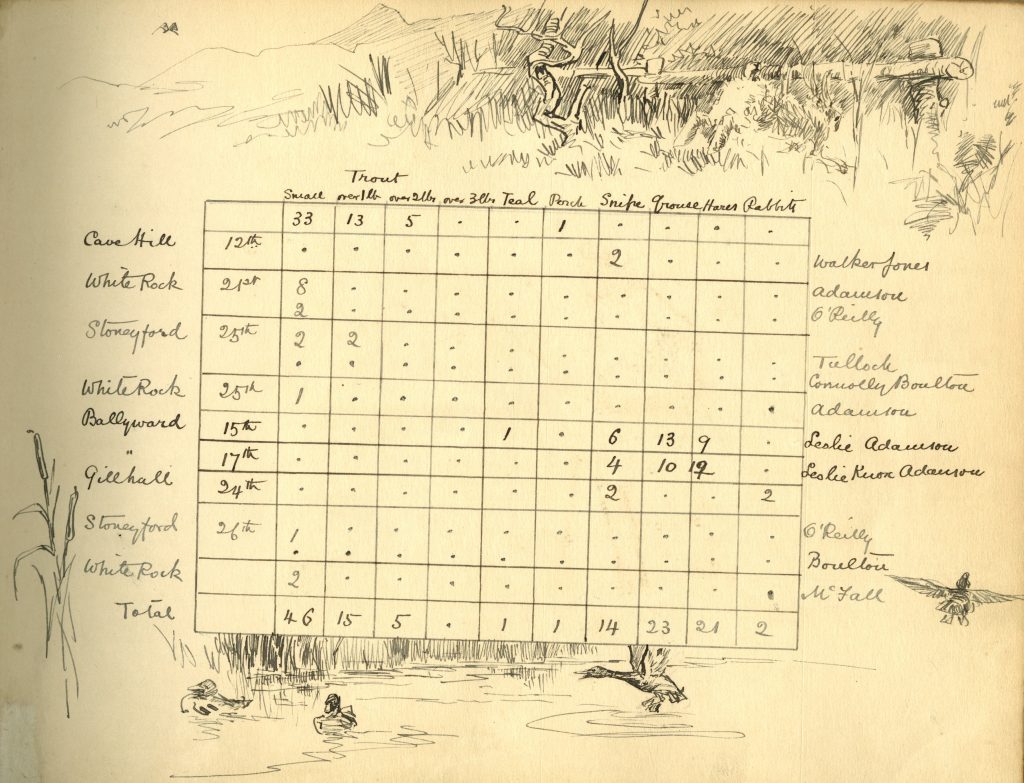
This table from 1893 shows us how most of the hunting and fishing trips were recorded throughout the book. On this occasion, the locations of each trip and the days of the month are listed on the left side, with columns for each animal and the number of catches filling the table. These trips were all in Ireland. The names along the right are the men who made the catches. The drawings around the edge show us a lot of the environment of these trips, with marshy, boggy ground, lots of water birds, and great hills in the distance at the top of the page.
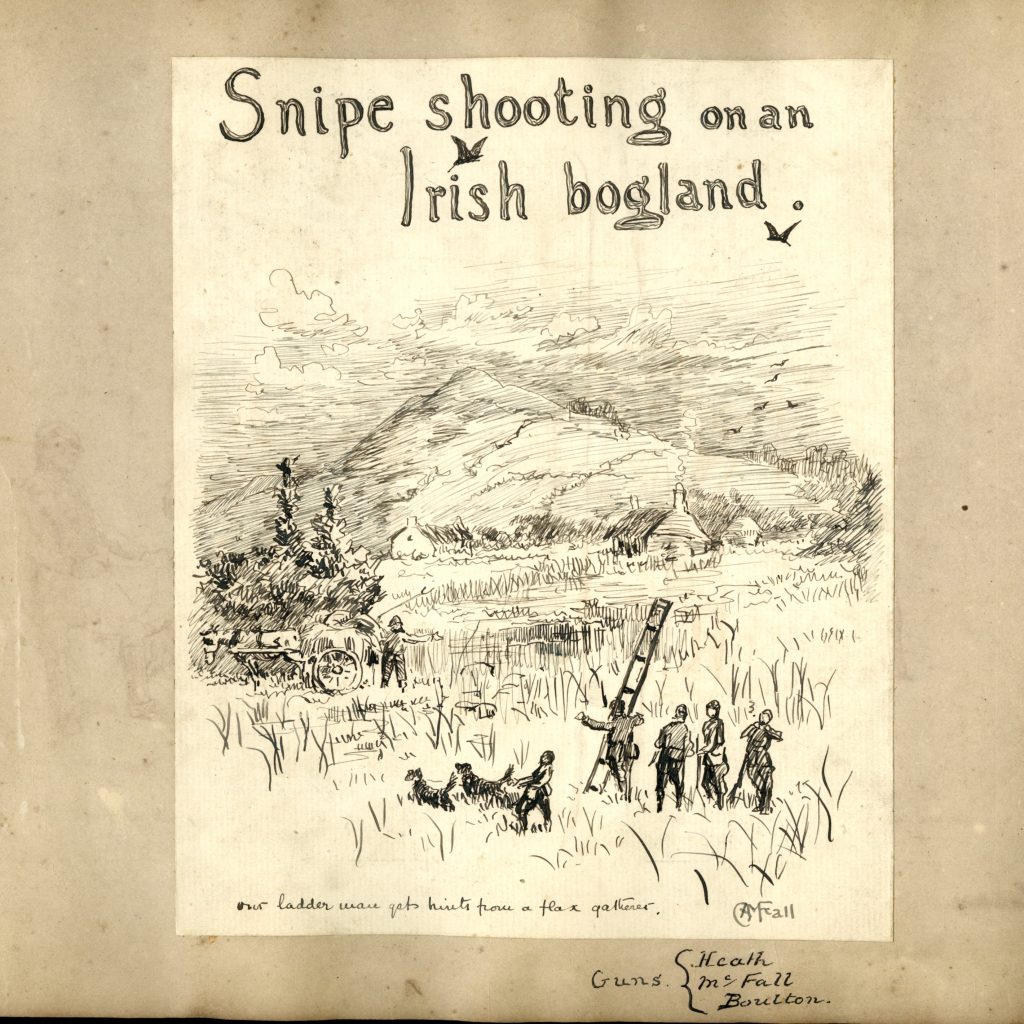
Snipes are a kind of water bird. They live in marshlands, wet grasslands, and moors. Snipes were a popular target for hunters, thanks to the bird’s tendency to fly away at slight disturbances, and their complicated movement when flying. This page forms the first in a series of about a dozen, recording a trip out of three men, Heath, Boulton and McFall, out into the marshes with local guides to hunt snipes. McFall did a lot of the drawings throughout the book. The ladder was used to cross bodies of water like streams and rivers, to save the men from having to go around…
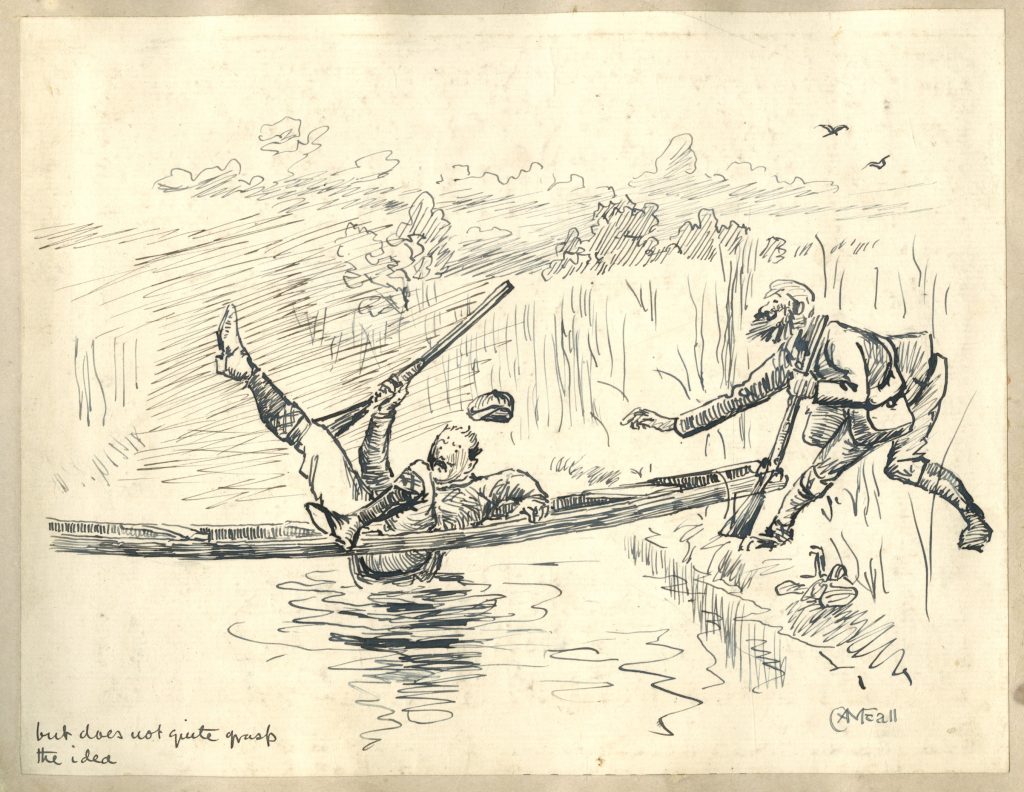
Apparently not every crossing was successful, as this hunter found. Unfortunately, it’s not clear which of the men this is. The previous page has him dashing quickly across the ladder, and only refers to him as ‘the Chicken’. Here we see him paying for his haste. The next few pages depict the whole ladder coming loose, and man and ladder floating downstream to be picked up again nearby, only to have him take shelter in a local cottage to get dry.
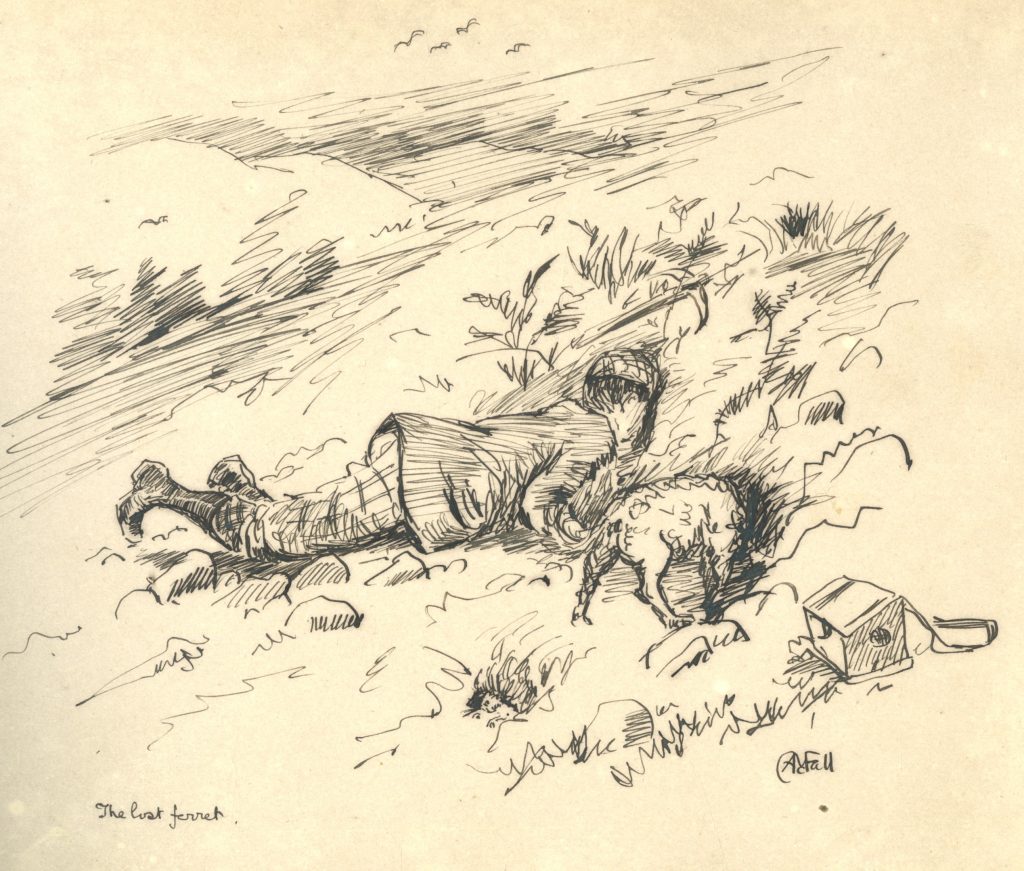
This drawing is slipped into the book between a pair of campaign scenes from the Boer Wars. There are no other references to ferrets elsewhere in the book. Ferreting was the act of using a ferret to flush out rabbits and other pests from their burrows, which in this case would be caught by the dog in the drawing. Whether we’re looking at a real or imagined scene, it seems the ferret hasn’t returned to his owner, who has the unfortunate task of sticking his head into the rabbit warren to find it! At least his dog is eager to help.
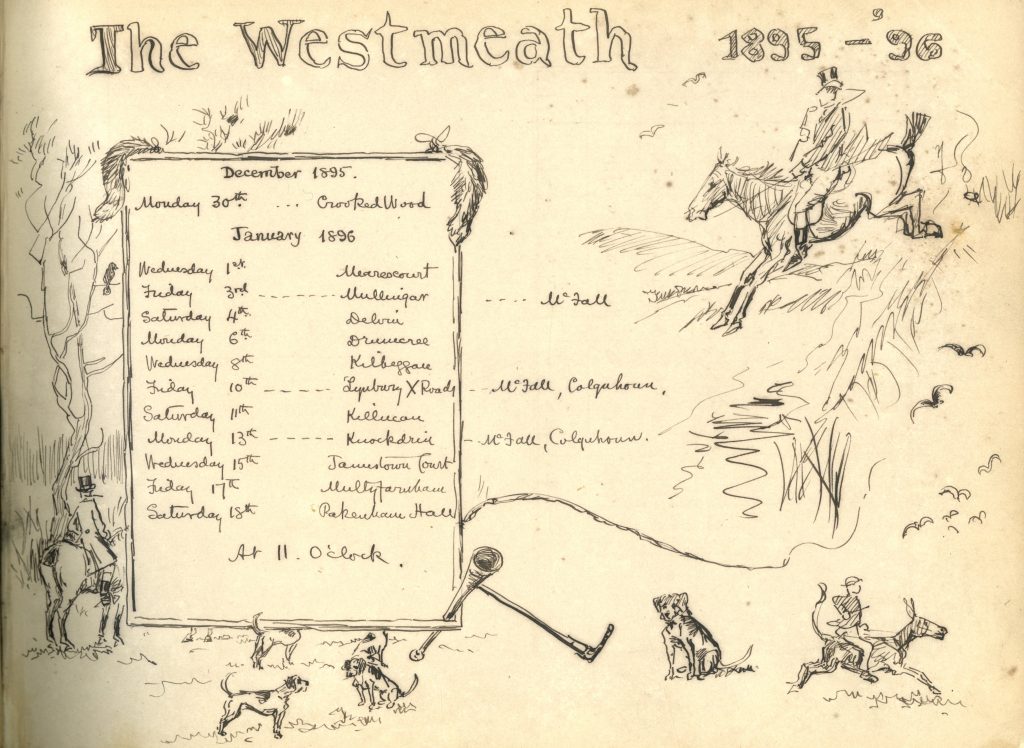
Lastly we have a hunting schedule for Westmeath, now in the Republic of Ireland, for the end of 1895 and all of January 1896. This shows us just how popular hunting was, with a different hunt about every other day. The names to the right of the locations, McFall and Colquhoun, are the soldiers who took part or will be taking part on those dates. Judging by the drawings accompanying the list of dates, these would be fox hunts.
We have a huge collection of books, letters, ledgers, and diaries in the new KOYLI Research and Collection Centre. Our next open day is on Wednesday 11 December, 10am – 4pm. Bookings aren’t required, and we’d love to see you if you’d like to visit us there.
The KOYLI Museum inside the Danum Gallery, Library and Museum is open every day except for Sundays as well. If you’re interested in helping out with some of the work we do with documents like these, either in person or by volunteering from home, please don’t hesitate to get in touch with us in person or by email at [email protected].
All images of objects from the King’s Own Yorkshire Light Infantry Collection are shared under Creative Commons Attribution 4.0 International (CC BY 4.0), credit to Heritage Doncaster.