
An Officer’s Mess Suggestions Book
From turkeys to Christmas puddings, the holidays are a time when food is on everyone’s minds. This was just as true for people in the past, and not just at Christmas! For soldiers, mealtimes were not only a chance for a break from their duties, but time to socialise and relax. Traditions and rules grew over the years, resulting in the development of the officer’s mess.
A mess is an area laid out for men to take their meals in. Their organisation can be a little complicated since it changes a lot over time, but generally in the British army there are about three messes; one for the commissioned officers (lieutenants, captains, majors, ETC), one for non-commissioned officers like sergeants and warrant officers, and then a general mess for regular soldiers. Although men from a more senior mess can dine in the lower-ranked ones, they’re expected not to.
An officer’s mess in particular is run by a committee of elected officers, and the members often pay a subscription fee covering all the services and supplies used by the mess. There was an expectation that, as long as members paid their dues and obeyed rules like the dress code, they would be fed regularly and well. Part of the traditions surrounding the mess was the suggestions book, where feedback was written and reviewed by the committee. We’ve recently been working with a suggestions book filled in between the 1890s and the 1930s. Given we’re part way through the traditional 12 days of Christmas, we thought it would be interesting to look at 12 of our favourite suggestions, to see what the men of the time thought about their food, and what it tells us about food in Britain and the army in the period.
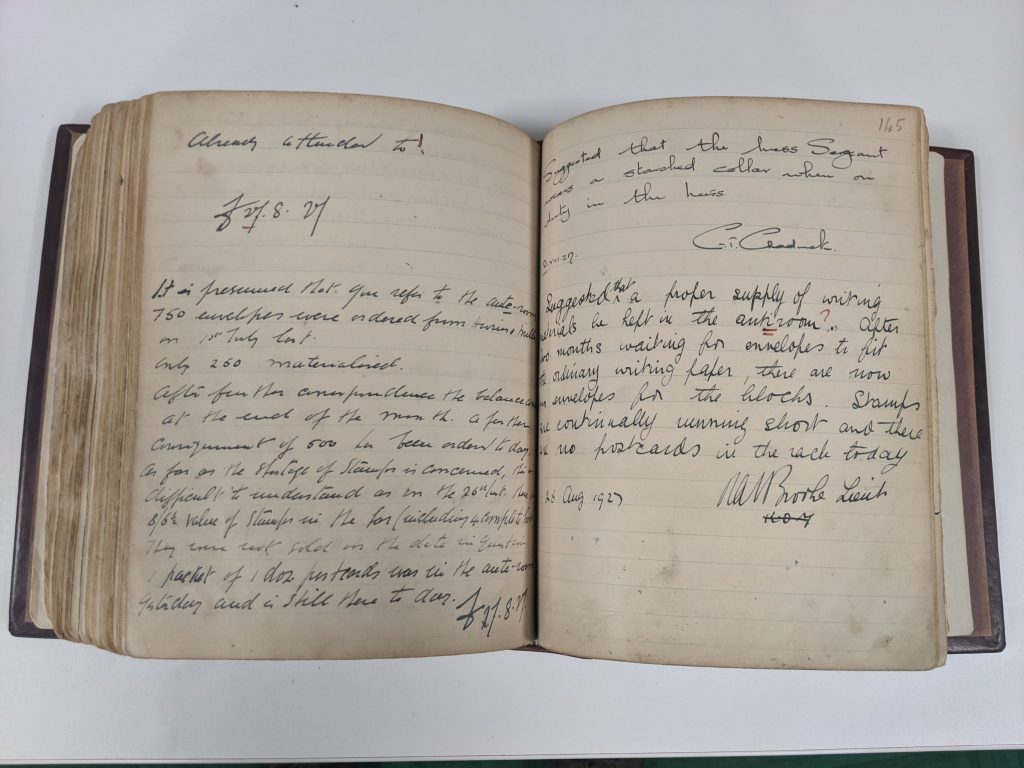
The Suggestions Book, found in our Research and Collections Centre, King’s Own Yorkshire Light Infantry Collection, Heritage Doncaster
19 October 1892
Suggestion: ‘Suggests that the flowers on the mess table be more frequently changed: at dinner last night they were in a state of decay. Yet they appeared again at breakfast this morning.’
Reply: ‘Flowers are only ordered for the mess table once a week, orders have been given that they are to be removed when withered.’
One of the first suggestions in the book, this might strike you as not a very soldierly concern, but given this was a space to relax, eat, and socialise, efforts were always made to make the officer’s mess look welcoming. Combined with the army’s penchant for neatness we can perhaps see why wilting flowers wouldn’t be approved of.
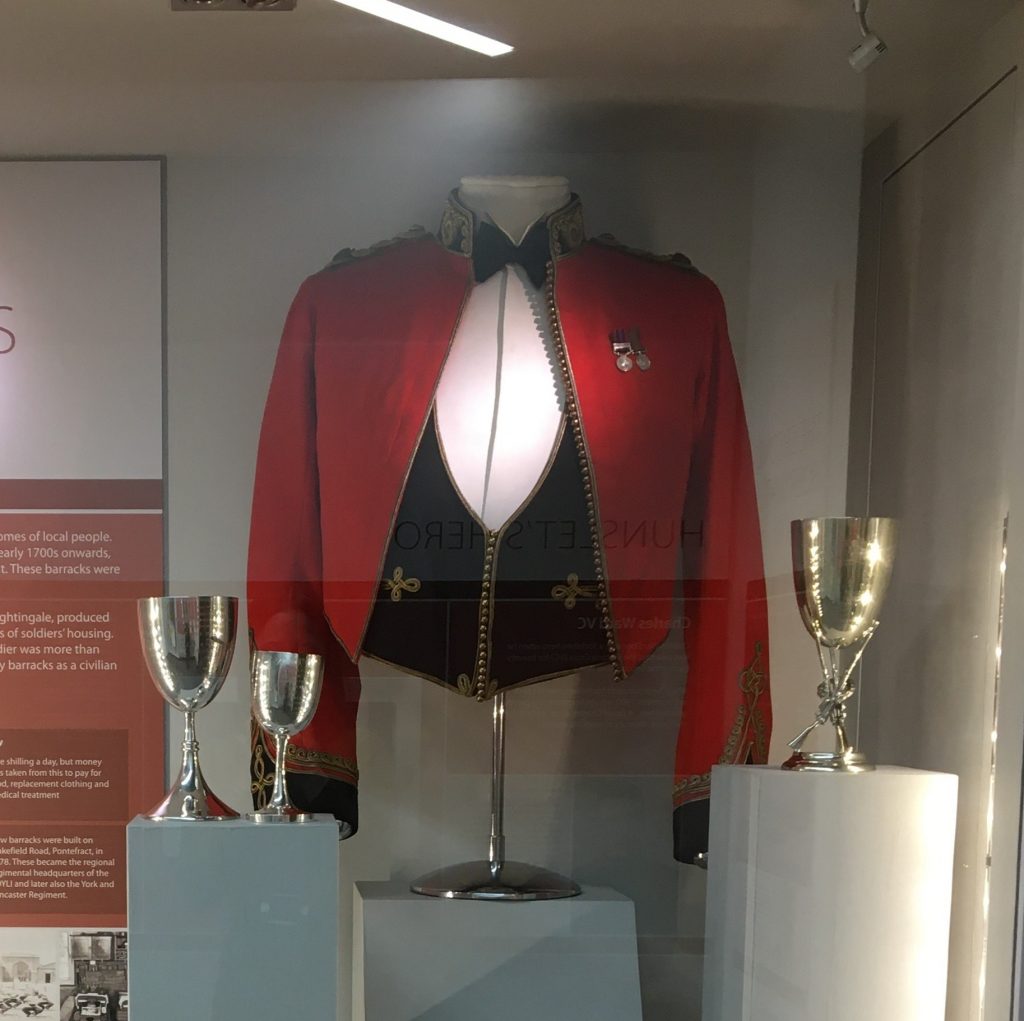
Officer’s Mess Dress, around 1890. On display in the King’s Own Yorkshire Light Infantry Museum in Danum Gallery, Library and Museum. King’s Own Yorkshire Light Infantry Collection, Heritage Doncaster
No Date, Perhaps July 1893
Suggestion: ‘That one method be afforded for improving the cooking. Sunday’s dinner the 4th July. The soup was burnt and no one could eat it. The fish was burnt on the outside and raw inside, no one could eat it. No one could eat the entrée. The Savoury – cheese straws – were soft and as thick as sausages and cold, no one could eat them. There were 7 members dining. No one could eat the Yorkshire pudding provided with the joint.’
Reply: ‘The chef is under notice to leave.’
Oh dear. No one wants a bad Yorkshire pudding. Even if this meal sounds like it didn’t go very well, it does lay out the kinds of food officers ate at this time, with an emphasis on warm, hearty food like soup and a joint of meat, even if nowadays most meals we eat wouldn’t have separate courses for fish and other meats. Cheese straws might seem quite modern as well, but go back to at least the middle of the 1800s, and would probably have been very familiar to men and officers alike.
April or May 1895
Suggestion: ‘That cocoa be obtainable in the mess in lieu of coffee and tea for Breakfast etc’
Reply: ‘Noted and ordered.’
This is the most common format of the suggestions in the book, when they are simply acknowledged by the mess committee and a change is made. By this point there was already a long history of consuming chocolate in Britain. Large manufacturers of eating chocolate were well-established, but chocolate had been drunk for centuries longer, and of course is still popular today.
14 April 1898
Suggestion: ‘That tainted fish not be served for lunch in the future.’
Interestingly the reply to this suggestion isn’t clear, as the matching of suggestions to replies in this stretch of the book is quite confused. Sometimes this is the case when working with historic texts in our collection. Many weren’t written with the expectation that someone would be reading them more than a hundred years later, and this means they aren’t always easy to make sense of, especially when they’re entirely handwritten. Even if we don’t have a reply to this suggestion, we’d hope that the comment was taken to heart!
July 1898
Suggestion: ‘That some other dish beyond bacon and eggs be provided for breakfast.’
Reply: ‘Curried eggs are always on the bill of fare I am told in addition, chef has been instructed to provide other delicacies.’
Modern breakfasts might be dominated by breakfast cereal, but they weren’t yet popular in the army by this point. Even today heartier breakfasts are a favourite of the hard-working soldier. Curried eggs probably aren’t too popular today though.
15 August 1898
Suggestion: ‘That the waiter on duty at night does not retire to his bed and fall fast asleep. The hour is 12 midnight but the mess seldom remains open so late.’
Reply: ‘Noted and enquired with.’
Waiting staff were often enlisted soldiers whose services were requested for the day, who were able to retire when the mess closed for the night. Hours weren’t always fixed though, and it looked like it remained open unusually late this night.
6 March 1899
Suggestion: ‘That there was only one dish to be had for breakfast this morning, eggs and bacon; suggested that Findon haddock, kippered herrings, curried eggs be added to the breakfast menu when fresh fish is not available.’
Reply: ‘This has been seen to.’
Another common breakfast dish that has fallen out of fashion in recent decades is fish, particularly kippers. Once more curried eggs return. Evidently they didn’t remain on the menu after being mentioned a year early.
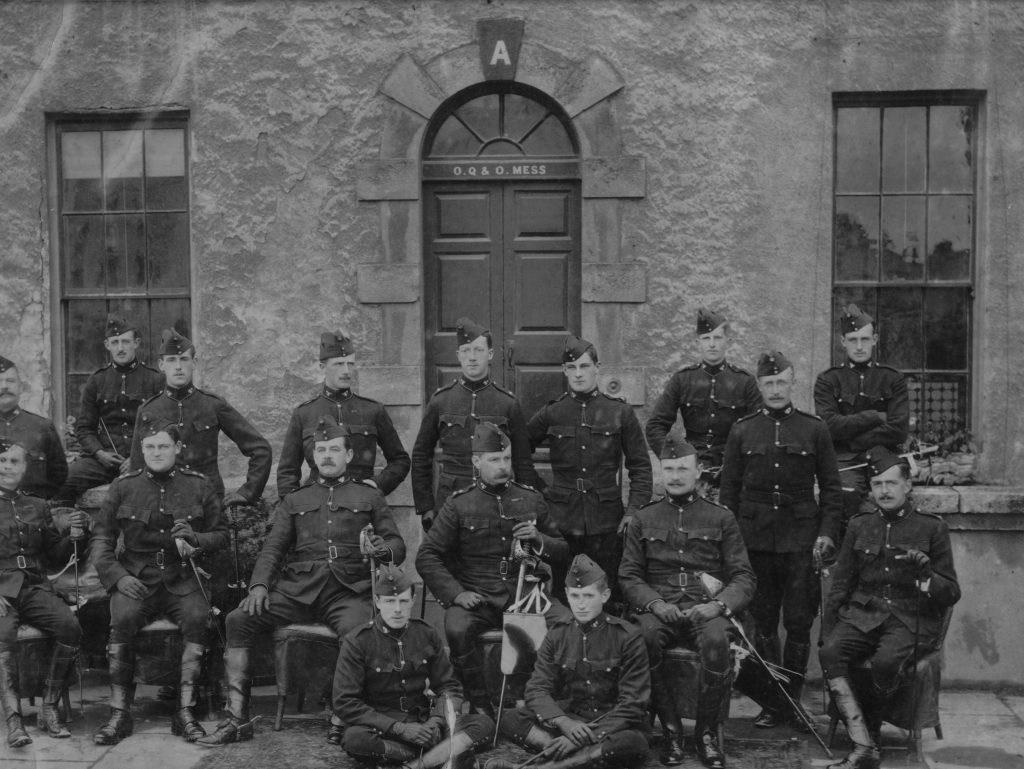
1st Battalion King’s Own Yorkshire Light Infantry, around 1900 outside the mess. King’s Own Yorkshire Light Infantry Collection, Heritage Doncaster
19 August 1926
Suggestion: ‘Suggested that
- Arrangements might be made that lunch is still hot for officers who come in late. I came in today at 1.10 PM everything was stone cold. This is the third time this week.
- Some action be taken re suggestion dated 15th August. Yesterday the joint came in swimming with gravy. Today there was none for the steak.
- The Mess Sgt or Mess Cpl take some interest in the meal. I have not seen I have not seen the former at this meal for days and the mess Cpl never appears.
Reply: ‘i. ii. And iii. Noted. Necessary action will be taken. The Catering officer is being sacked next month. Can you suggest suitable relief.’
Even in the officer’s mess, the quality of the food could vary massively depending on what food was available for purchase, and the chef’s ability. A chef who could make poorer ingredients go further when necessary was a great asset, but when the food failed to meet expectations change could be quick.
14 November 1926
Suggestion: ‘Tonight there was no draught beer, bottled beer or stout in the mess, It is suggested that provision be made against these contingencies.’
Reply: ‘Noted.’
Alcohol was a core part of the mess, with many regiments having traditions around drinking, such as toasts. The King’s Own Yorkshire Light Infantry toast to “Dyas and the Stormers”. The costs of drinks were normally covered at least partially, and sometimes fully, by everyone’s membership fees, and guests of the mess were often forbidden from paying for their own drinks.
21 June 1927
Suggestion: ‘Suggested that it is about-time something drastic was done as regards the supply of liquor, tobacco etc in the mess. Every day something runs out. Today for the second time within a week the whiskey has run dry. I quite realise that officers are doing hard work at company training! But if the mess sergeant checks the wine etc every morning there should be no difficulty in arranging for an ample supply to be ordered every morning from the cellar – normally officers when coming in from training like a little refreshment but perhaps D Company is too busy to eat or drink.’
Reply: ‘The bar is checked, daily, between 7 and 7.30 a.m. This shortage, which is regretted, has been due, sometimes, to the demands of married officers. In future, the daily issue by the officer i/e wine and tobacco from the cellar to the bar will take place before breakfast.
Married officers will be supplied from the cellar at the time of issue and not from the bar. They should, therefore, give the wine officer warning of their requirements.
I should be grateful if you could endeavour to shorten your suggestions in view of paper economy.’
The wine officer was a member of the mess committee responsible for keeping the bar stocked. Married officers would often not live in the mess like unmarried officers but could still pay for membership and take meals there. Their wives were welcome guests too, but weren’t paid members themselves.
21 June 1932
Suggestion: ‘Suggested that a coffee strainer be purchased and used in the mess. This evening the coffee I had was like badly sifted gravel.’
Reply: ‘Perhaps you would like to buy the mess one?’
Like many institutions in life, be they in the Armed Forces or civilian, the mess and its members ran on an ample supply of caffeine. Part of the collections on display in our new Research and Collections Centre on Chequer Road includes silver coffee services. Methods for making coffee have changed dramatically over the centuries. While we might expect reasonably filtered coffee today, this was not always the case, which clearly wasn’t to the satisfaction of the officer above.
27 October 1932
Suggestion: ‘Suggested that the hot milk, served with coffee, should be strained before being served’
Reply: ‘Ye Gods! Noted.’
Not a lot needs to be said for this one!
In the new year we’ll be continuing our work in the KOYLI Museum on exploring the various records and documents in the Research and Collections Centre, as part of the ongoing KOYLI Collections Project, funded by the National Lottery Heritage Fund.
Our new Research and Collections Centre is open in January on the below dates:
Wednesday 8 January | Open Day, 10am – 4pm drop in
Wednesday 22 January | Medal Room Tours, 10am, 11am, 1pm and 2pm
All images of objects from the King’s Own Yorkshire Light Infantry Collection are shared under Creative Commons Attribution 4.0 International (CC BY 4.0), credit to Heritage Doncaster.