
Letters From My Son: Roger Spicer in the Second World War
Over the summer we worked with a group of young people from across Doncaster on a series of audio recordings. One of these was about Roger Spicer, who served with the King’s Own Yorkshire Light Infantry (KOYLI) during the Second World War. Roger followed in his father’s footsteps, both in joining the KOYLI and in sending many letters home during this service. His father collated and published many of them after the war, which formed the core of the book Letters From My Son. Together with his medals they tell us his story.
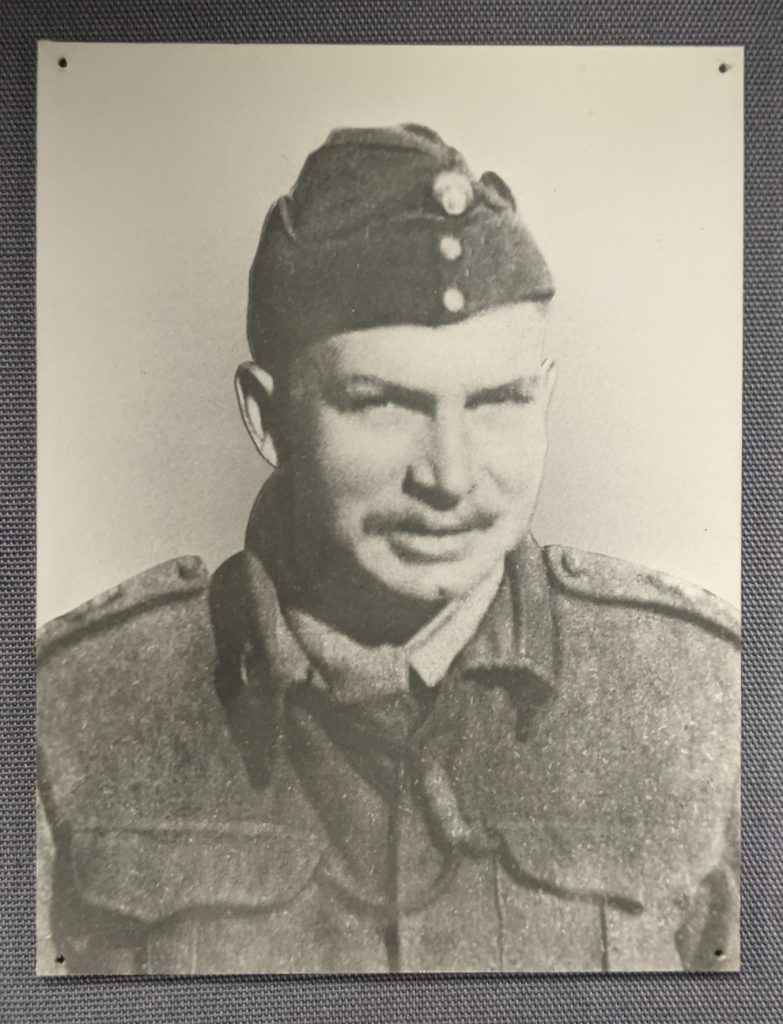
Roger Spicer, probably in the early 1940s, King’s Own Yorkshire Light Infantry Museum, Heritage Doncaster
Roger Lancelot Spicer was born on 15 January 1922 to his mother, Iris Spencer and his father Lancelot Spicer, who had himself served in the KOYLI during the First World War. Roger was largely privately educated, attending schools first in London and Folkestone and finally Eton. By his father’s account, “School life had no terrors for Roger” and he enjoyed his time in education. The school holidays were full of activity, and he apparently like fishing very much, but did not enjoy shooting. In 1939 he went on a trip to Newfoundland with the Public Schoolboys; Exploration Society, claiming that “On that trip he learnt more than he could have believed possible”.
The start of the Second World War would have loomed large in the mind of any young man who was could have expected to join the army, and Roger was likely no exception. In June 1940 he sent his father a message asking if he could leave school early to join the army, with Lancelot telling him to decide for himself. Roger then spent a year in the Royal Berkshire Regiment, advancing to corporal before moving to Sandhurst for officer training. After this he joined the King’s Own Yorkshire Light Infantry.
January 1942 saw Roger as part of the 1st Battalion, stationed in Ireland. In March they set sail to India via Cape Town. His letters through the war cover a huge range of topics, from his work to the weather, his fellow officers and men, health, the people he met, and the food he ate. Recounting all of them would take a very long time, but highlights include the efforts to keep his men fed and watered in India, ruminations on his upcoming birthday (“I’m twenty-one in five days time and regret it”), and a trip to Cairo.
By July 1943 Roger and the 1st Battalion were in Sicily. The fighting was intense and in some of his letters Roger discusses how he manages his nerves and fears and by September they had crossed to the Italian mainland. The letters continue, describing the countryside and towns, the food and drink, issues with supplies, encounters with Italian locals and German soldiers, and, in February 1944, a period of leave in a hotel in Sorrento.
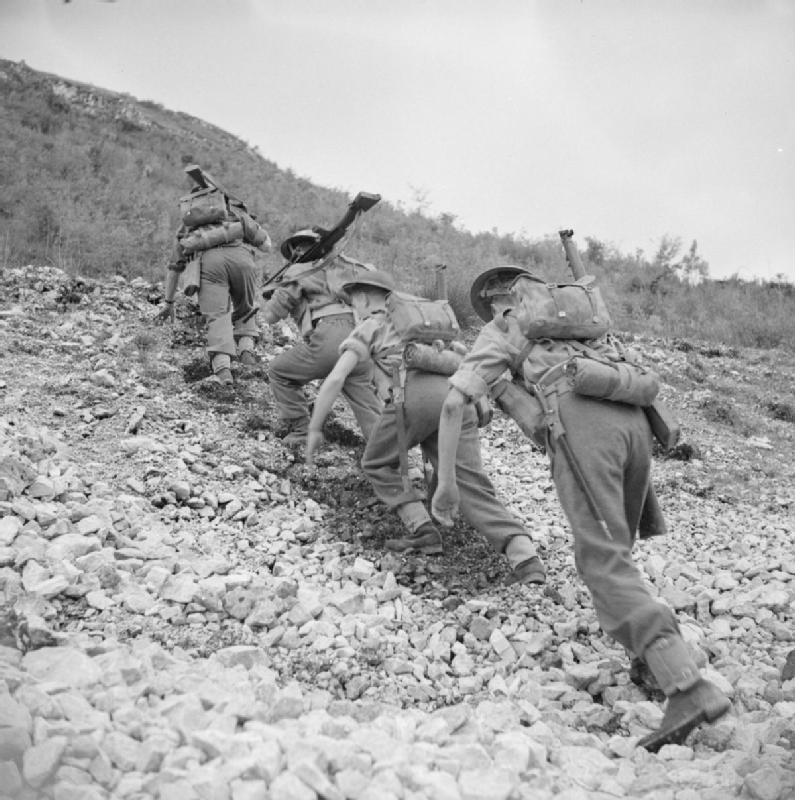
The 1st Battalion faced difficult, mountainous terrain and hostile weather over the winter of 1943 and 1944. Imperial War Museum, NA 8508.
This leave came a week after the action that would ultimately see Roger awarded the Military Cross. This is a medal for officers who displayed gallantry in the field. In Roger’s case, he was leading a patrol of 25 men in the countryside near the city of Minturno on 9 February, 1944, with their aim being to cause confusion and alarm in German positions nearby. They came under heavy fire from 40 Germans with machine guns from nearby farmhouses. Driving the Germans into the farm buildings, Roger and his men cut telephone wires, dismantled the German machine guns, laid booby-traps, and lit stored petrol on fire before returning in good order. The citation concluded that “it was entirely owing to the initiative, coolness and drive of Lieut. Spicer that this patrol was pressed home to its full advantage. His courage under fire and total disregard for his personal safety were an inspiration to all ranks. The patrol was a model of its kind and achieved results far in excess of its original scope.”
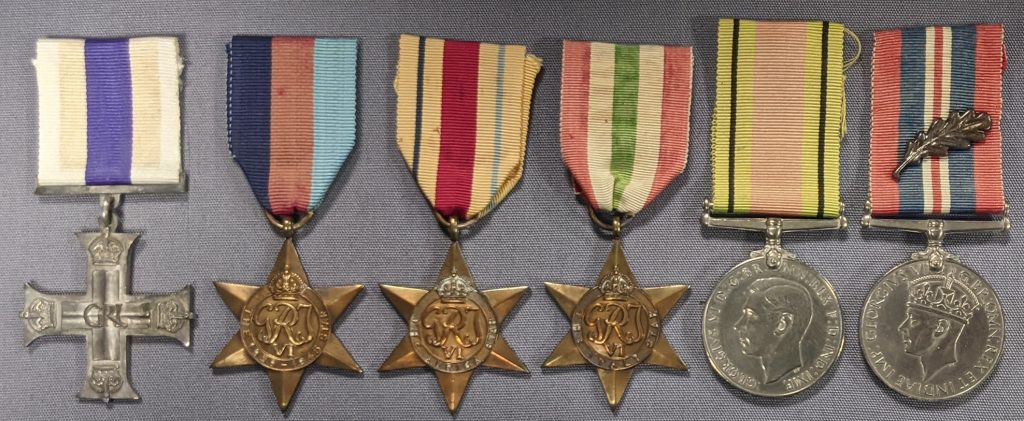
Roger’s medals, with his Military Cross on the far left. King’s Own Yorkshire Light Infantry Museum, Heritage Doncaster
After spending most of his time in Italy until now commanding a mortar platoon, Roger was hospitalised in the middle of May 1944 with an infected cut from shaving. In a letter dated to 21 May he describes his stay, and his hope that he wouldn’t get sent to a larger hospital much further back from the front lines. It wasn’t to last though, and before the end of the month he was back to the front.
The next letter Lancelot Spicer received from Italy wasn’t from his son, but from W.J. Hill, the 1st Battalion’s chaplain. Roger had taken up new duties as Intelligence Officer with the battalion headquarters. On 31 May headquarters had taken position in some abandoned German dugouts and were forced to take shelter when they came under shellfire. After shelling ceased, Roger went out to the wireless radio, in the open, as HQ needed to get in touch with A Company. When more shells landed. He was killed instantly. The chaplain took his remains to the British Military Cemetery just out Anzio that evening, where he was met by all the Battalion’s officers, most of the non-commissioned officers, and many men for the funeral. He was 22.
Lancelot spent the war as a politician within the Liberal Party, and returned to his role in the family paper business, where he was director. He collated his correspondence with Roger which, after cutting out some of the most personal segments, were published with the name Letters From My Son. On one of the last pages Lancelot remembers his son, describing him as “a wise soul passing through this world, surveying it as he goes, and giving what help he can on the way. And that is the memory I shall always have of him”.
Roger’s story is recorded in one episode of The History Report, a series of short podcasts written, recorded, and edited by young people from across Doncaster who worked with us over the summer. You can listen to Roger’s below, and the others will be coming to the Heritage Doncaster website soon.
All images of objects from the King’s Own Yorkshire Light Infantry Collection are shared under Creative Commons Attribution 4.0 International (CC BY 4.0), credit to Heritage Doncaster.