
The 105th Madras Light Infantry and the East India Company
In previous articles we’ve written quite a lot about the 51st Regiment of Foot, how they first became reorganised into light infantry, and ultimately became the King’s Own Yorkshire Light Infantry in 1881. The 51st were only half of the regiment, however. The 2nd Battalion KOYLI had a very different history. Before merging into the new KOYLI it was known as the 105th Madras Light Infantry. How the 105th was structured and how it worked is tied closely into how the British government understood India, and how India fit into the British Empire in the 1700s and 1800s.
British interests in India began with a desire for spices, tea, porcelain, and fabrics like silk and cotton, which could all be obtained in India or other countries in the eastern hemisphere. This is where the East India Company enters the picture. A private business venture formed in 1600, it used private investors’ money to pay for ships to and from India, paying back investors with the profits. As the EIC grew into a larger and larger business, they were eventually given a royal monopoly, that meant that they were the only British private company allowed to trade in Indian goods.
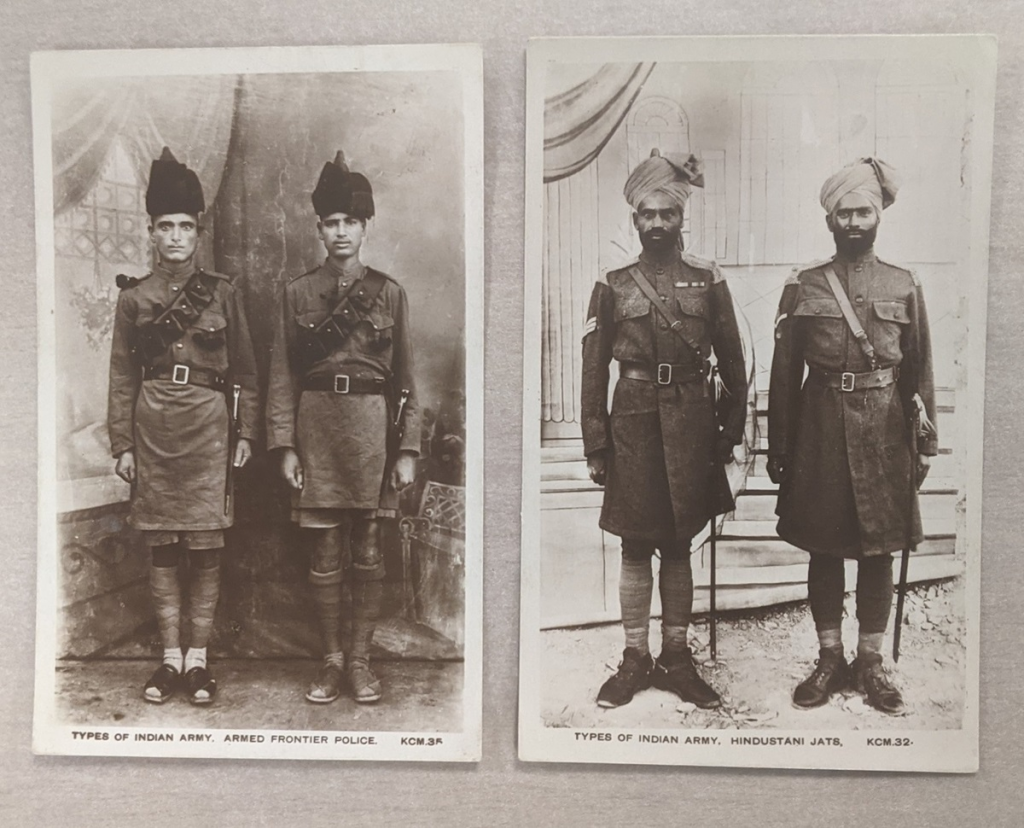
Britain and its armies would have a huge impact on the history and development of India for centuries to come. Here we see Indian soldiers serving in the British army in the 1930s, more than 300 years after the East India Company first started sailing to the subcontinent. King’s Own Yorkshire Light Infantry Regimental Museum.
The company’s ultimate goal was to extract as much wealth from India and its people as possible. Eventually the Company started buying land from Indian rulers to establish trading outposts called factories. These factories grew and grew over time, almost becoming small European states on the Indian coast. The government in Britain largely kept out of the Company’s business, as long as it kept paying tariffs and taxes on the goods it shipped into and out of the British Isles, which proved to be hugely profitable for the company’s directors, and the home government itself. Over the 1700s the Company became more and more involved in Indian politics, and gained the right to collect taxes in Bengal from the weakening Mughal Empire, then the dominant political power in the region. Soon East India Company territory was divided into three large presidencies, Bengal, Madras, and Bombay, and these presidencies needed soldiers to protect their territory, but also to expand their control over India.
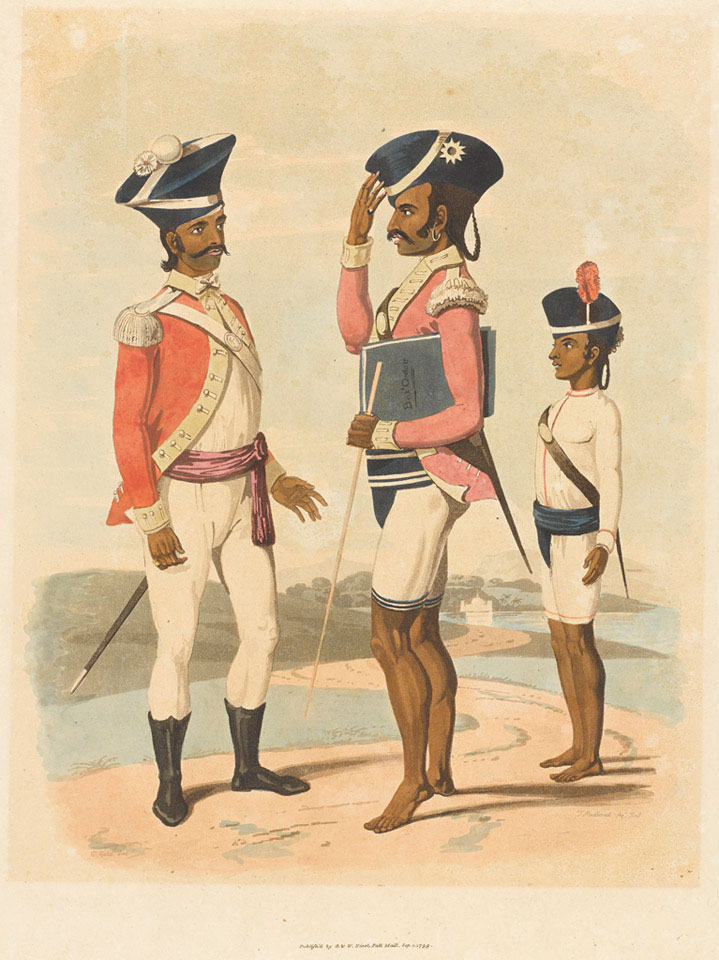
Indian soldiers of the Madras Presidency in about 1799 (NAM.1960-02-105-15).
Rather than invite government intervention in its affairs, the Company had each presidency form its own armies. The majority of soldiers were native Indians, but the officers in command were normally British, as the Company didn’t trust Indian soldiers in senior leadership positions. There were some dedicated regiments of European soldiers as well. The earliest ancestor of the 105th Madras Light Infantry was the 2nd Madras Europeans regiment, which was raised in 1766. Madras, now called Chennai, is on the south-east coast of India, and was the cornerstone of the Company’s interests in southern India. The regiment was expected to serve the Madras Presidency in its moneymaking efforts and political and military schemes. They fought with European weapons and with modern, European tactics that the Indian armies initially couldn’t contest, which saw the presidency’s spheres of influence grow quickly. However through multiple periods of reorganisation and renaming, the 2nd Madras Europeans were disbanded in 1799.
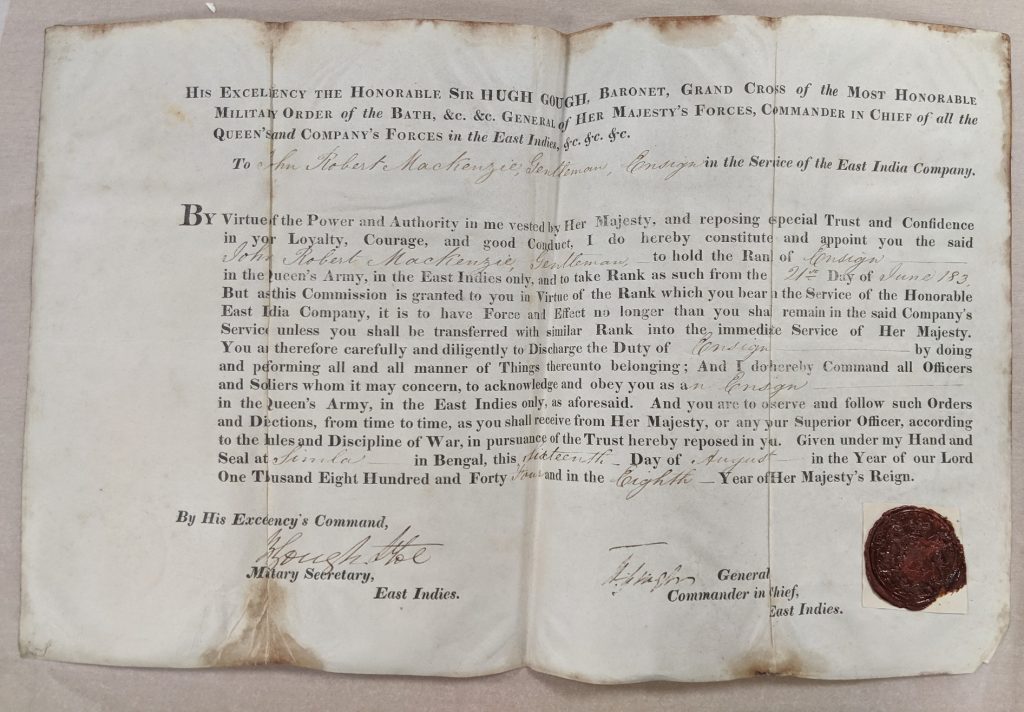
This is a commission certificate from 1844 for a man called John Robert Mackenzie. It appoints him to the rank of ensign (a junior officer), but specifies that he only has authority in the East Indies, and only for as long as he is employed by the East India Company. King’s Own Yorkshire Light Infantry Regimental Museum
As networks of semi-independent kingdoms and states grew around each presidency and larger Indian powers worked to stop dismantle the Company’s territories, military crises became more and more frequent. Together with financial and political mismanagement caused by the Company’s dogged pursuit of money at any cost, the government back in Britain was called in to support the company more and more often from 1800 onwards. In 1839 a new version of the regiment was formed, with the somewhat awkward name of the 2nd Madras (European) Regiment. They were retrained as light infantry 3 years later.

An Indian Mutiny medal on display in our medal gallery in the King’s Own Yorkshire Light Infantry Research and Collections Centre within City of Doncaster Archives on Chequer Road.
The regiment saw action outside of Madras territory, including in Burma in the 1850s, and saw action during the Indian Mutiny. Called a mutiny at the time, this event is known under multiple names nowadays, including the Indian Rebellion, the Revolt of 1857, and the First War of Indian Independence, alongside others. As Indian soldiers revolted across the country, parts of the British Army were brought in to supplement the East India Company’s forces, and Army officers took control of multiple Company regiments, which included the 2nd Madras in 1858. They were renamed again, to the 2nd Madras Light Infantry.
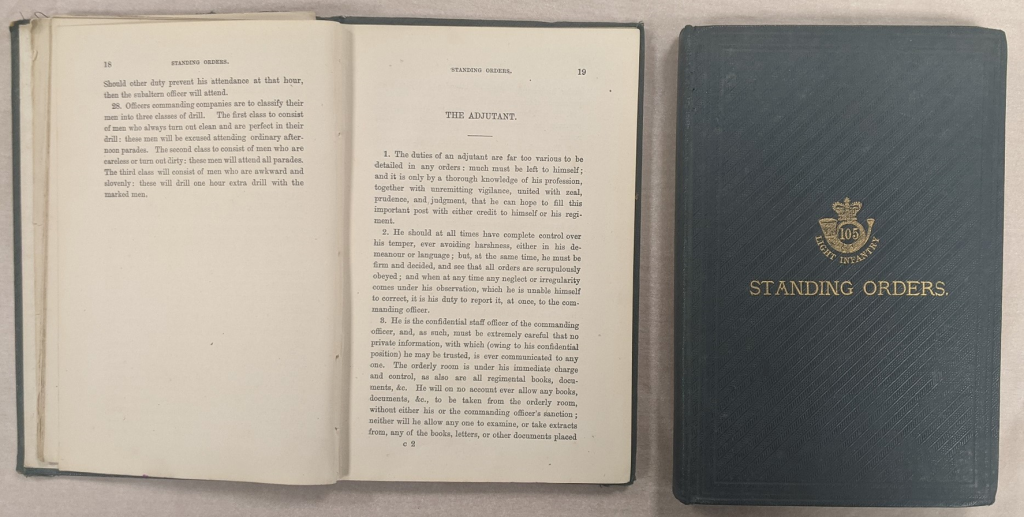
A pair of standing orders books for the 105th Madras Light Infantry. These detailed the roles and responsibilities of each rank in the regiment and their standard duties. King’s Own Yorkshire Light Infantry Regimental Museum.
The events that began in 1857 brought India under direct control of the British government, as the Company was no longer considered fit to govern. The armies raised by each presidency were all merged into the British Army over the years that followed. The Madras Light Infantry received their final number, the 105th, in 1862. They remained in India for a decade but, for the first time, received a deployment outside of the subcontinent when they were sent to Aden (now capital of Yemen). After two years they were sent to Europe for the first time as well, moving to England in 1874, then Guernsey in 1878 and Ireland in 1879. Given the soldiers of the regiment were all of European backgrounds, this might not have been entirely new to them, but it still represented a huge change in the regiment’s activities, especially considering its ultimate origins in Madras more than 100 years earlier.
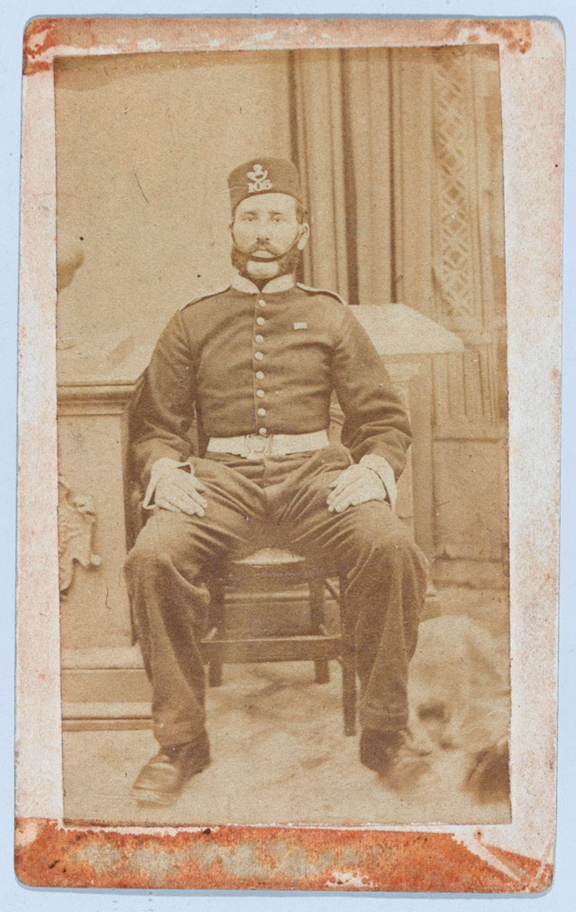
Private Joseph Benjamin George, photographed while serving in the 105th during its first ever deployment to the UK in 1875 (NAM.1999-10-6-1).
In 1881 the 105th were still in Ireland when they received the news. As part of ongoing programmes of modernising and reorganising the army, they were to be merged with another light infantry regiment, the 51st. The 51st had long ties to Yorkshire, and together they would now be known as the King’s Own Yorkshire Light Infantry.
All images of objects from the King’s Own Yorkshire Light Infantry Collection are shared under Creative Commons Attribution 4.0 International (CC BY 4.0), credit to Heritage Doncaster.