
Lance Corporal Frank Jones
This week’s blog will explore the life of Frank Jones, who joined the King’s Own Yorkshire Light Infantry (KOYLI) in 1883. He saw service in Burma before transferring into the reserves and then leaving the army altogether. So, what were our volunteers able to find out about Frank?
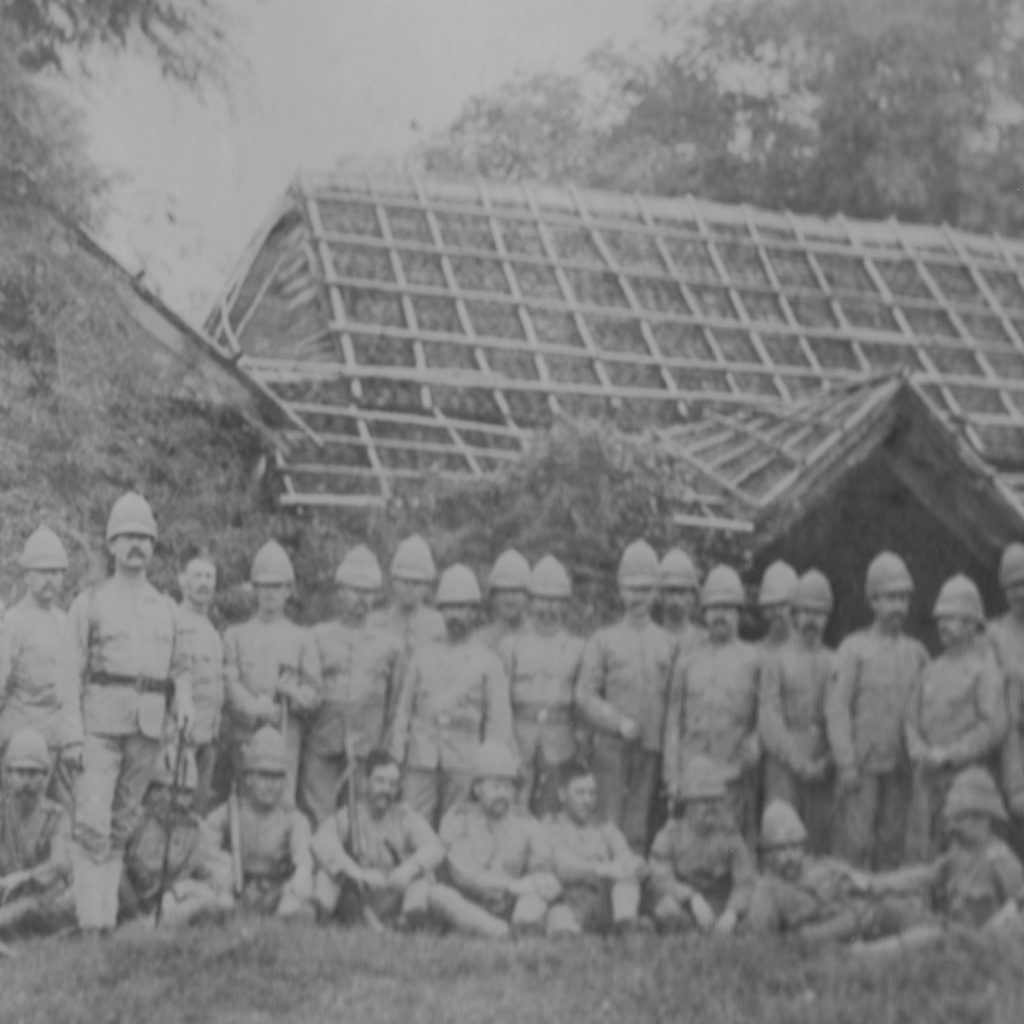
Frank Jones was born on the 11 September 1864, to Henry and Sarah Jones, in the parish of St. Silas’ Church in Broomhall, Sheffield. He was baptised in Sheffield Cathedral that February.
Frank and his family are recorded in the 1871 census, when they lived on Thomas Street in Ecclesall, again in Sheffield. His father was 39, and worked as a spring knife cutler, and his mother was 36. It was a crowded house as 6 year old Frank had six siblings. Henry, 18, Tom, 14, Sarah Ann, 12, and Rose, 9, were all older. Meanwhile Clara, 4, and Theresa 2, were younger.
Censuses are a great source of information in this period about family life, and we can see that by the 1881 census the family had moved to 19 Evans Street, and Frank, now 16, was working as a table knife grinder. However, it wasn’t to last.
On the 4 January 1883 Frank joined the 1st Battalion of the King’s Own Yorkshire Light Infantry as a private, at the regimental barracks in Pontefract. He signed up for 12 years, the standard at the time, and signed his name on his attestation papers (the contract signed upon joining the army), demonstrating that he could write. He is described in the papers as being 5 feet and 7 inches tall, weighing 120lbs and being of fair complexion, with blue eyes and light brown hair. He was also distinguished by burn marks on the back of his left shoulder and on his right foot.
Frank served as a private until September 1885, when he was promoted to lance corporal. Initially serving at home in the UK, forces from the KOYLI arrived in India in November 1885. He wouldn’t return home for 4 years.
The Third Anglo-Burmese War took place in November of 1885 and was the culmination of a series of wars that ultimately saw an independent Burma subjugated and incorporated into British India. Though the war ended that year, resistance continued into the 1890s. We don’t know exactly what Frank did while in Burma, but we know he was there as he received the India General Service Medal, with a clasp denoting service in Burma between 1887 and 1889. He returned to the UK in December 1889, and on the 15 December he married a woman named Mary Botham.
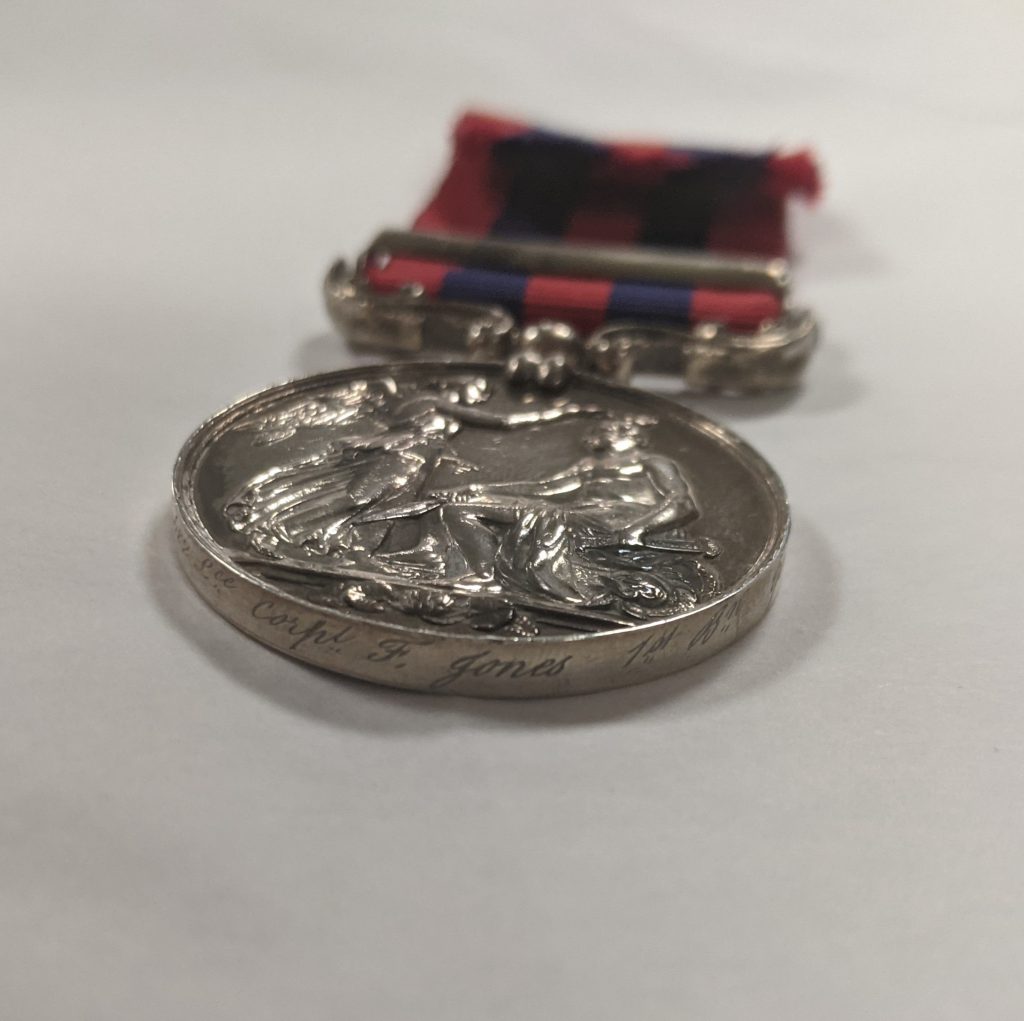
Frank’s military career from this point on becomes a bit less clear, but he appears to transfer into the reserves, remaining there until 1895. He is discharged on the 3 January, 11 years and 364 days after first signing up. However, he then re-joins the reserves in 1900 before leaving again four years later. By this time Frank had a family. In the 1901 census he is working as a general labourer in an ironworks in Sheffield. He and Mary had three children; Thomas Henry who was 10, 8 year old Annie and 6 year old Minnie. A fourth, Fred was born that year. Frank died on 10 March 1915, at the age of 50. He is buried at Tinsley Park Cemetery in Sheffield.
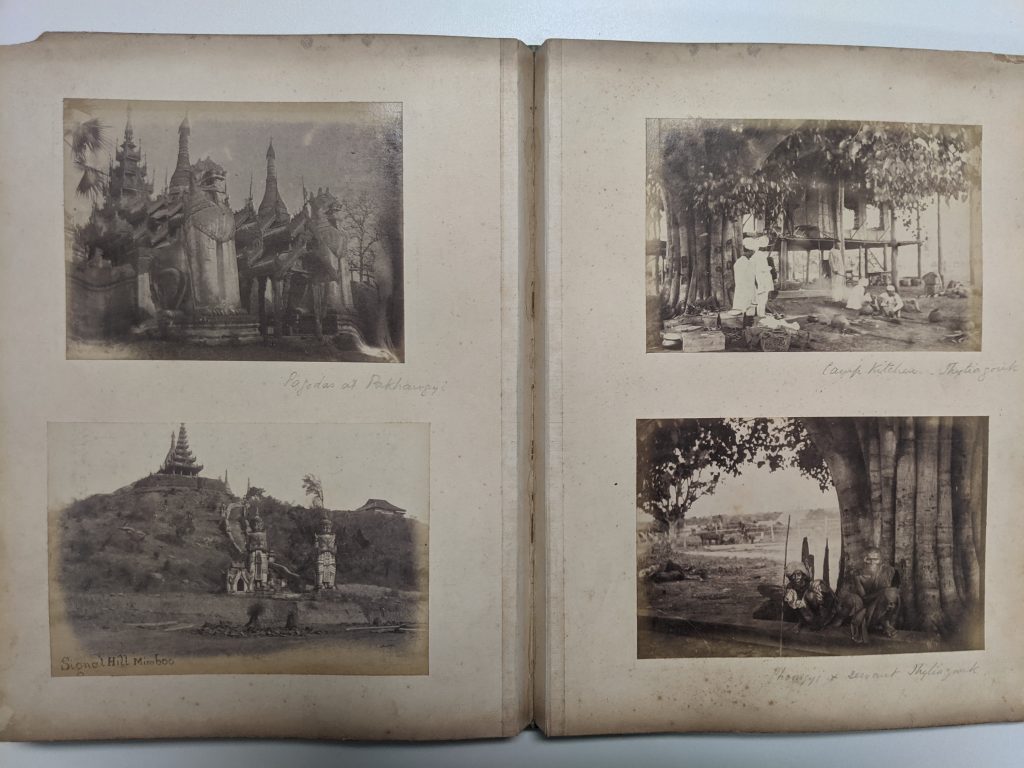
So as you can see even with gaps in the record the volunteers were able to piece together quite a good picture of Frank’s childhood and time in the KOYLI. It also leaves them plenty of room to come back to him in future research. Where was he deployed in Burma, for instance? What was his experience like in the reserves? There are always more questions to ask, and the research volunteers are ever keen to find the answers!
All images of objects from the King’s Own Yorkshire Light Infantry Collection are shared under Creative Commons Attribution 4.0 International (CC BY 4.0), credit to Heritage Doncaster.