
Doncaster, slavery and the country house
Nicola Fox, Collections and Exhibitions Officer (Social History)
In recent years, the uncomfortable truth of the links to Britain’s country houses and slavery have come to light thanks to many separate projects led by organisations such as the National Trust and English Heritage. Many of these stately homes were owned by wealthy families who invested in plantations in the Caribbean or were even built specifically from the profits of slavery. Furthermore, many of these families also benefitted from the abolition of slavery, when millions of pounds of compensation was paid to slave-owners for the loss of their ‘property’. However, many of the leading opponents to slavery and the slave trade were wealthy individuals who were no stranger to the opulent country house lifestyle.
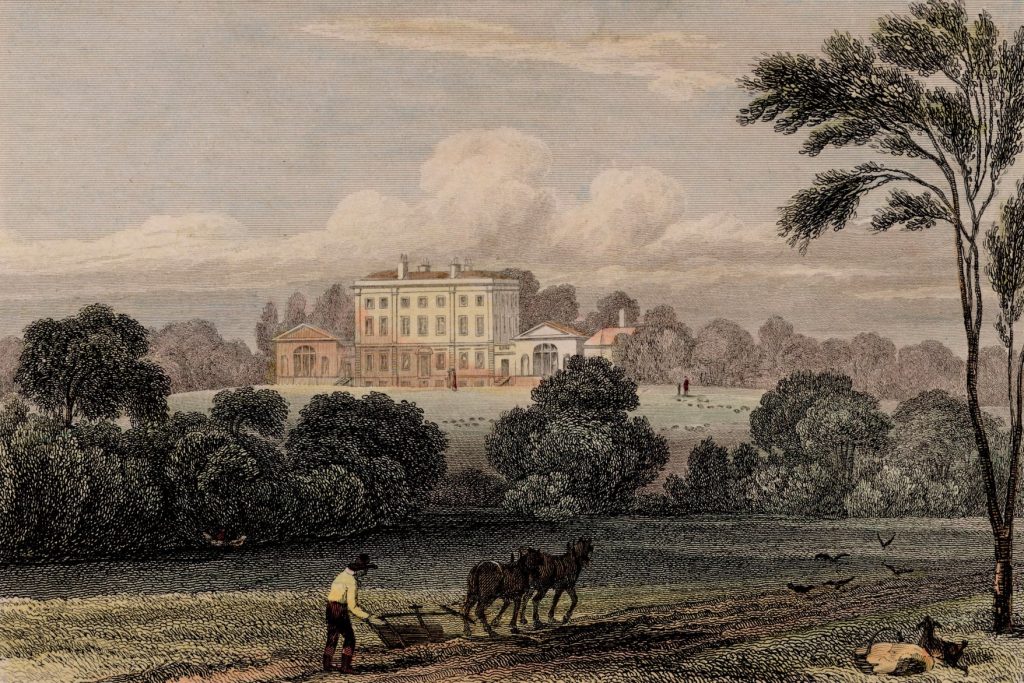
So what about Doncaster and its country houses? Were our finest buildings propping up a grossly immoral system or were their owners striving for justice? The truth, as ever, lies somewhere in the middle. Cusworth Hall was built in the middle of the eighteenth century by William Wrightson, who had inherited the existing medieval Cusworth Hall and estate from his father. Profits from his rental income, his salary as a government official, and inheritance from his first marriage funded the construction of the new house. By the time the house was finished in 1744, the British economic ties to slavery and the slave trade were becoming firmly established, although its existence made little impact on most people in society in general at this point. Therefore, Cusworth Hall was not built from the profits of slavery, although how much of its existence depended upon the labours of Wrightson’s local tenants is a moot point.
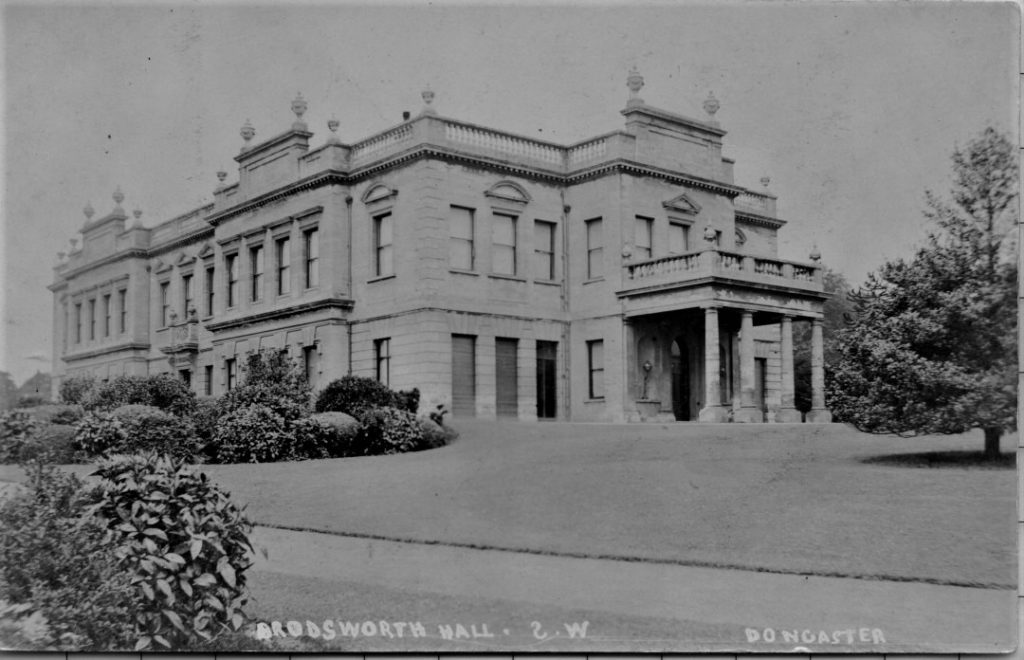
Much closer links to slavery can be found, however, at Brodsworth Hall. The original Old Hall was redeveloped and remodelled in the 1760s, and in 1791 the estate was purchased by Peter Thellusson. He was a merchant who was heavily involved in funding the slave-related production of goods in the Caribbean, and he lent money to both slave traders and plantation owners. He became extraordinarily wealthy, and as a naturalised British citizen from a background of trade and commerce, hoped to establish himself in high society. The only realistic possibility of becoming accepted amongst the wealthy landowning class was to become a landowner himself, which was what motivated him to purchase the Brodsworth estate. It was Peter Thellusson’s entanglement within slavery and the slave trade that enabled him to secure this country house for himself and his family. It was, therefore, the riches derived from slavery that enabled his great-grandson Charles Sabine Thellusson, who eventually inherited the estate, to build the current Brodsworth Hall in the 1860s.
As the eighteenth century drew to a close, a movement emerged calling for an end to the slave trade, as the reality of the horrors of transporting enslaved people across the Atlantic began to be realised and understood by more and more people. The Society for Effecting the Abolition of the Slave Trade gained popular support across whole sections of society following its work to raise awareness of the inhumanity of the trade. A campaign to encourage people to boycott sugar produced by slave labour was particularly successful, with up to 300,000 people taking part. Despite a wavering in support following the horrors of the French Revolution in the 1790s, opposition to the slave trade, and also the concept of slavery, was growing significantly in the first years of the nineteenth century.
The proponents of slavery were, however, extremely powerful. Many influential families were made extremely wealthy by this lucrative trade and they did not share a desire to see it come to an end. While many of the abolitionists claimed that owning slaves was incompatible with Christianity, some plantation owners used their Christian faith to justify owning slaves. One such planter was Samuel Martin, who owned slaves and a plantation in Antigua. While very much a progressive and enlightened slave owner compared to many of his contemporaries, he believed that black people were inferior to whites, and they were better enslaved with a kind and considerate master than being free. Although he insisted on treating his slaves with kindness and ensuring that they were well looked after, he tended to view them rather as a farmer might view a prize heard of cattle rather than as fellow human beings.
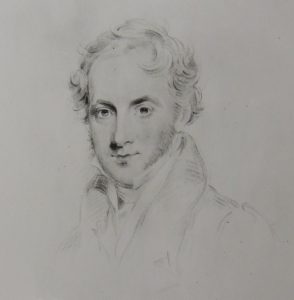
So where did the Wrightsons of Cusworth Hall stand on the subject? William’s grandson, another William, inherited the Hall in 1773, and during his tenure at Cusworth seems to have been very much in favour of the abolition of the slave trade. He served as MP for Aylesbury from 1784 until 1790, and in 1807 was appointed Chairman of an election committee contesting the seat of Yorkshire, which returned two MPs. William was on the side of Lord Milton, the son of his near-neighbour Lord Fitzwilliam of Wentworth Woodhouse, who was standing as a Whig candidate against the Tory Lord Lascelles of Harewood House, a family with strong ties to trans-Atlantic slavery. By the time that the 1807 election took place in May, the slave trade had in fact just been abolished, although the practice of slavery itself continued. Lord Milton, however, in his election address spoke of his gratitude towards his competitor, who in the previous Parliament was successful in achieving “this most desirable object”. At great expense, Lord Milton was elected alongside William Wilberforce, the long-time campaigner for abolition, to represent Yorkshire.
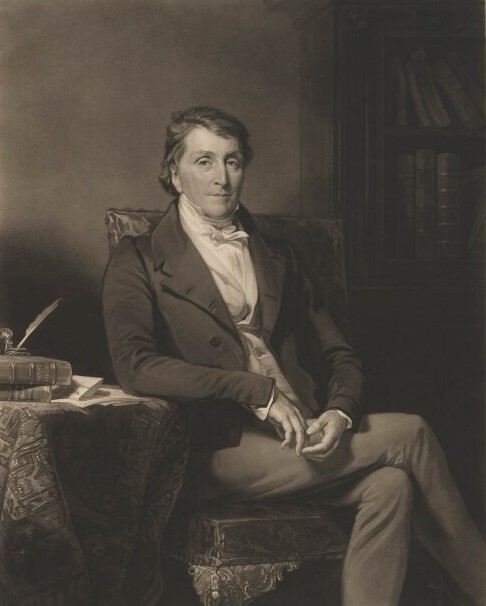
William Wrightson encouraged his own son, another William, in his own political ambitions. By the time he was ready to stand for Parliament in the 1820s, the slave trade had been abolished for many years, although slavery itself was still very much part of the fabric of the British Empire. However, the tide of public opinion was by this time strongly in favour of abolition. In 1825, William Wrightson III stood as a Whig candidate in East Retford. This constituency had already submitted anti-slavery petitions to Parliament in 1823 and 1824. Despite being elected, William was unfortunately unseated due to accusations by the losing candidate of corruption. In 1830, he was invited to stand for the constituency of Hull, an area with strong anti-slavery links thanks to the town’s association with William Wilberforce. In his campaign address William cited his support for the abolition of slavery, and once successfully elected, he presented Hull’s anti-slavery petitions to Parliament on the 10th and 15th November 1830.
It is clear then, that William and the rest of the Wrightson family were very much in favour of the abolition of slavery. Indeed, in 1832, when he stood at a candidate for the constituency of Northallerton, William declared in his campaign address that he had recently served on a committee of inquiry into the state of the West Indies, and he came out of it “with a firm desire to see the existence of slavery, a disgrace to any county, as speedily as possible, abolished”. He clearly found slavery abhorrent, but in the 1820s and early 1830s this did not particularly single him out as a pioneer for change, as the public mood by this time was strongly against the continuation of the practice. Doncaster itself was also collectively against slavery. A Doncaster Anti-Slavery Society was formed, and in 1824 the town presented a petition for ‘Negro Emancipation’. However, William’s later political career seems to demonstrate that his overriding interests and causes lay closer to home. He was in favour of Catholic emancipation, and of the passage of the Reform Bill in 1832. He was strongly against the corn-laws, and seeking their repeal consumed much of his time. Elected as an MP once again in 1835 for Northallerton, William served this constituency for the next thirty years. Although he spoke out against the proposal for a system of apprenticeships for freed slaves, which was in practice slavery in all but name, it does not seem that he was consumed by the injustice of slavery, rather that he was against it, and more personal causes based on local issues were his prevailing concern.
Furthermore, William’s private opinions on the matter of slavery were complicated by his personal life, as he was in fact an indirect beneficiary of slavery. In 1821, he married Georgiana Thomas, who was the eldest surviving daughter of Inigo Freeman Thomas, an absentee slave-owner with a plantation in Antigua. Inigo had inherited these Caribbean estates from his own father Arthur Freeman, a man who had even left four individual slaves to his wife in his will. Upon Arthur’s death, the land and people who worked upon it were passed to Inigo. Georgiana would have undoubtedly brought money from her father into her marriage to William that was directly acquired from the profits of slavery. While speaking out alongside other like-minded men against the condition of slavery, William’s own father-in-law Inigo was content to continue as the owner of people, despite being a much-loved and well-respected individual within his family and wider society. Furthermore, Inigo was eventually was awarded £2019 as compensation when slavery was abolished for Lower Freeman’s, an estate in Antigua which included 122 enslaved people.
The issue is further complicated by the number of objects kept within Cusworth Hall that were most likely produced from slave labour. In the eighteenth century, mahogany had become the wood of choice for the furniture and cabinet makers, but it was only produced in the Caribbean by enslaved Africans. Many homes from this period possessed items made from mahogany, from cabinets and tables, to tea caddies and writing desks, and Cusworth Hall was no exception. The sale catalogue from 1952 reveals an array of fine mahogany possessions, including chairs, fire screens, footstools, bookcases, a piano and even a wig stand. These expensive items, acquired from the time of the first William Wrightson onwards, would have eventually become the property of William and Georgiana. We can never know whether anyone within the family gave much thought to where the wood that was crafted into their furniture and accessories was sourced.
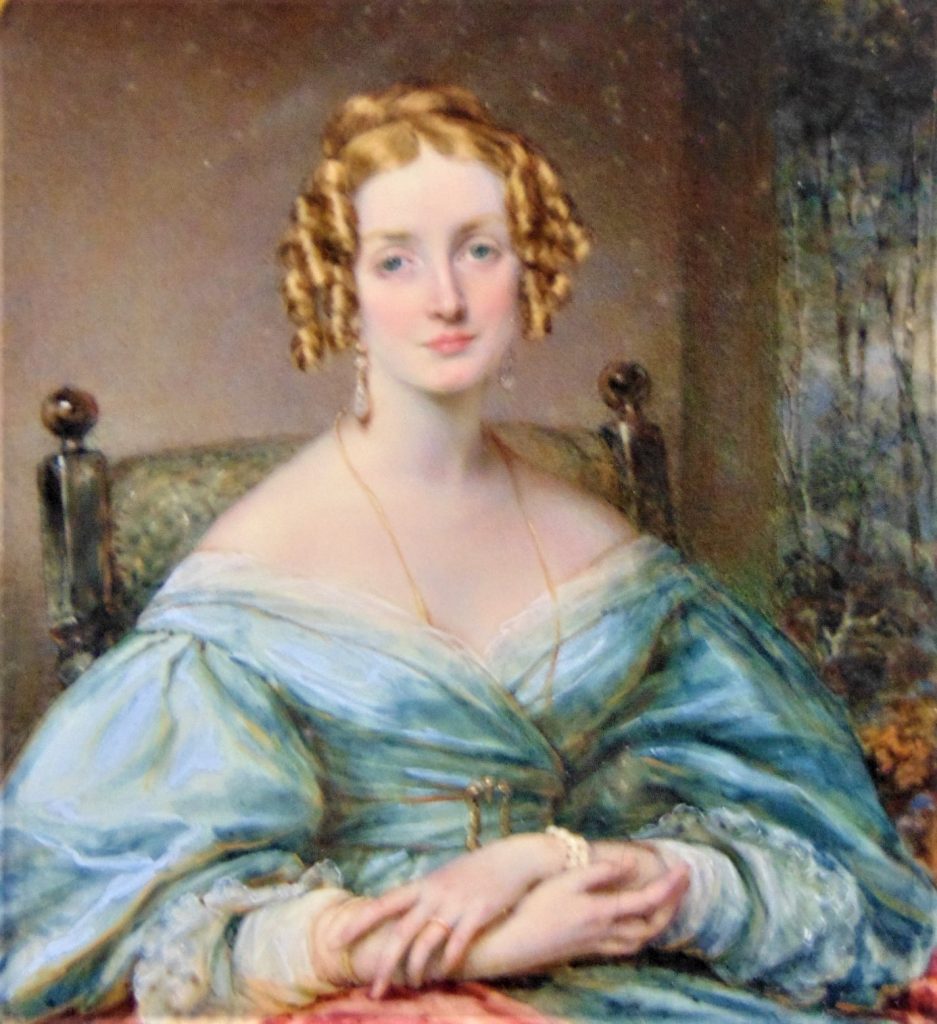
It also shocking to discover that a handful of other Doncaster residents benefitted directly from slavery; or to be more precise, from its abolition. In 1851, Sir Fitzroy Jeffreys Grafton Maclean was a tenant of the Cooke family living at Nether Hall in town. He was the owner of Sixmans estate in Barbados which he had inherited from his wife Barbara. In 1836 he was awarded compensation of £3676 1s 8d for the loss of this estate and the 185 people who lived and worked on it. An ‘Doctor of Physic’, John Abraham Mason of Doncaster, was awarded a percentage of the compensation paid on an estate in Jamaica. In 1829, Matilda Waterton of Woodlands Hall married a soldier called Edmund Jerningham from Adwick-le-Street. She was a cousin of Charles Waterton, the famous naturist, who managed the family estates in Guiana. Along with her four siblings, she made a claim on an estate in Jamaica, but was unsuccessful, and the compensation was awarded to the Liverpool merchants Sandbach Tinne.
It is unlikely that we will ever know exactly how much thought William and Georgiana gave to the subject of slavery and how much they had both inadvertently benefitted from its legacy. While being against the trade and practice of slavery in principle, to what extent did William truly abhor its existence and affects? It is perhaps unfair to judge from nearly two centuries in the future, but their story demonstrates just how complex and contradictory the subject remains.